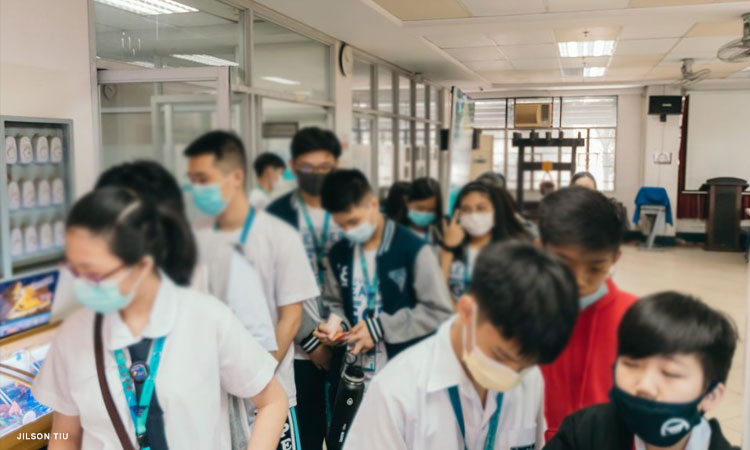


Metro Manila (CNN Philippines, August 26) — COVID-19 cases in the country may spike to 9,000 daily by the end of September up to October as more students go back to classrooms, the Department of Health said Friday.
With the reopening of schools, DOH Officer-in-Charge Ma. Rosario Vergeire explained that “mobility patterns” have increased.
“Ngayong nag-umpisa ang klase, dahil mas maraming lumalabas especially mga bata nandiyan na, plus yung mga magulang na naghahatid sa mga bata, talagang nakita natin na tumaas yung mobility patterns compared to the previous weeks,” Vergeire said in a press briefing.
[Translation: With the start of classes, with more children now out along with parents bringing their kids to school, we can really see that mobility patterns have increased compared to previous weeks.]
“So with that, kapag nakita natin yung cycle ng transmission ng sakit, dadami at tataas yung factors na pwedeng makaapekto sa mga kaso ngayon,” she added.
[Translation: So with that, when we look into the cycle of transmission of the disease, there will be more factors that could contribute to the rise of cases.]
She reminded the public to comply with the minimum public health standards and to get vaccinated against COVID-19 to prevent the continuous rise in infections.
“Ang projections maaaring mangyari, maaaring hindi mangyari, depende kung matutupad ‘yung mga nilagay natin sa assumptions. Ang assumption includes mobility, minimum public health standards, pagbabakuna at siyempre ‘yung opening of classes,” said Vergeire.
[Translation: Projections may or may not happen, depending if our assumptions are realized. The assumption includes mobility, minimum public health standards, vaccination, and of course, the opening of classes.]
As of this week, Vergeire said the daily average COVID-19 cases in the country is 3,231. This is 14% lower compared to last week’s 3,755 daily average.
As of August 22, the DOH data showed that 72.4 million Filipinos are fully vaccinated against COVID-19. Of this number, 9.8 million are adolescents while 4.6 million are children.