

Metro Manila (CNN Philippines, March 31) — The national government’s budget deficit eased to ₱105.8 billion in February following a contraction in public spending and a drop in revenue collection, data from the Bureau of the Treasury (BTr) showed Thursday.
The Treasury said the fiscal gap declined by 8.77% or ₱10.2 billion from a year ago, a welcome result as a higher budget deficit will force the government to borrow more funds to fill the gap.
The figure also pushed the year-to-date budget deficit to ₱129.2 billion.
Total expenditures in the month contracted by 5.16% to ₱318.2 billion “mainly on account of the completion of the ₱45-billion equity infusion to GFIs (government financial institutions) in February last year, in line with the implementation of RA No. 11494 or the “Bayanihan to Recover as One Act” (Bayanihan II).”
Interest payments also decreased by 9.42% or ₱2.9 billion lower versus a year ago.
Revenue collection last month, meanwhile, dipped by 3.26%, amounting to ₱212.4 billion.
The Bureau of Internal Revenue collected ₱136.6 billion for the month, 11.38% down from last year’s ₱154.1 billion.
The Bureau of Customs, on its part, collected ₱59.4 billion, surpassing the previous year’s performance by 25.96%.
The agency itself logged ₱4.2 billion in income, 7.37% lower compared to the same period last year.
Collections from other offices for the second month of the year stood at ₱10.4 billion, slower by 11.53%.
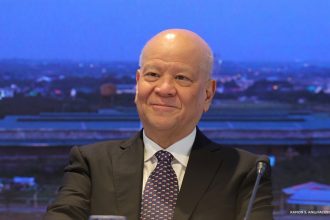
Reacting to the government data, Rizal Commercial Banking Corporation (RCBC) chief economist Michael Ricafort said keeping excise taxes on petroleum products would “sustain the government’s recurring revenue collections and prevent unnecessary widening of the country’s budget deficit, thereby helping limit/temper the increase in government borrowings.”
The shift to the new normal, the further easing of COVID-19 restrictions by placing more areas under the most relaxed alert level, the resumption of in-person classes, and the rising tourism across the Philippines could all beef up the government’s revenue collections, the analyst added.
“Thus, all of these measures to further re-open the economy towards greater normalcy would help narrow the country’s budget deficit and help also temper the growth in the government’s debt stock,” Ricafort said in an emailed statement.