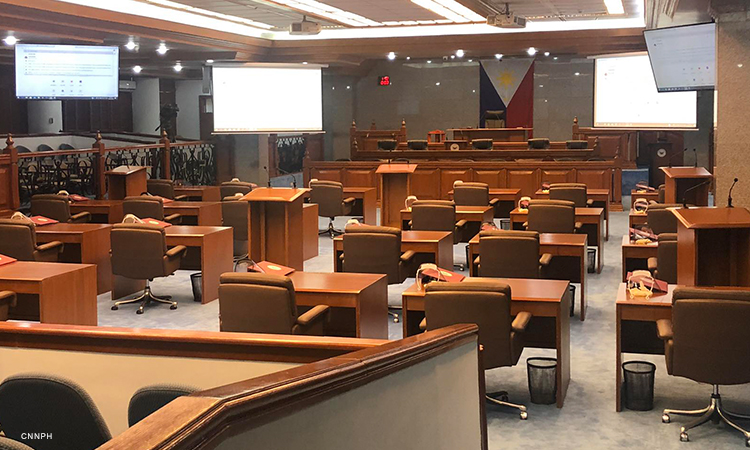


Metro Manila (CNN Philippines, November 9) — Senate President Juan Miguel “Migz” Zubiri on Wednesday said the chamber cannot restart deliberations on the Regional Comprehensive Economic Partnership (RCEP), a free-trade agreement among Asia-Pacific countries, due to the absence of a “formal notice” from the executive.
“Apparently, there have been no formal letters or endorsement of RCEP with this admin except that the President was the one who asked me to pass it,” Zubiri said during debates on the proposed budget of the Department of Finance.
“I guess his underlings have not sent us a formal notice to tackle this particular treaty,” Zubiri added, referring to President Ferdinand “Bongbong” Marcos Jr.
“We can’t act on anything that’s not on our table,” Zubiri said.
Senate Committee on Finance Chairman Sonny Angara agreed: “Clearly, the ball is in the court of the executive branch, your honor, they have to make that request.”
In a text message to CNN Philippines, Senate Minority Leader Aquilino “Koko” Pimentel III said the executive “should endorse again the RCEP treaty for Senate concurrence.”
Angara said Finance Secretary Benjamin Diokno committed to discuss it with colleagues in the Cabinet.
The RCEP is touted to make it easier for member states to import and export goods and services across the region through a modern, comprehensive, and mutually beneficial economic partnership.
Its members include the 10 countries of the Association of Southeast Asian Nations (ASEAN), as well as China, Japan, Australia, South Korea, and New Zealand.
Under the 18th Congress, the RCEP hurdled the committee level but failed to secure approval in the plenary due to concerns that local industries may be put at a disadvantage. Treaties like the RCEP need the concurrence of at least 2/3 of the members of the Senate for it to be ratified.
In May, Marcos said there’s a need to “take a look at it once more” to ensure that the local agriculture sector is ready to compete. In September, the chief executive said the Senate will prioritize the RCEP once the 2023 budget is passed.