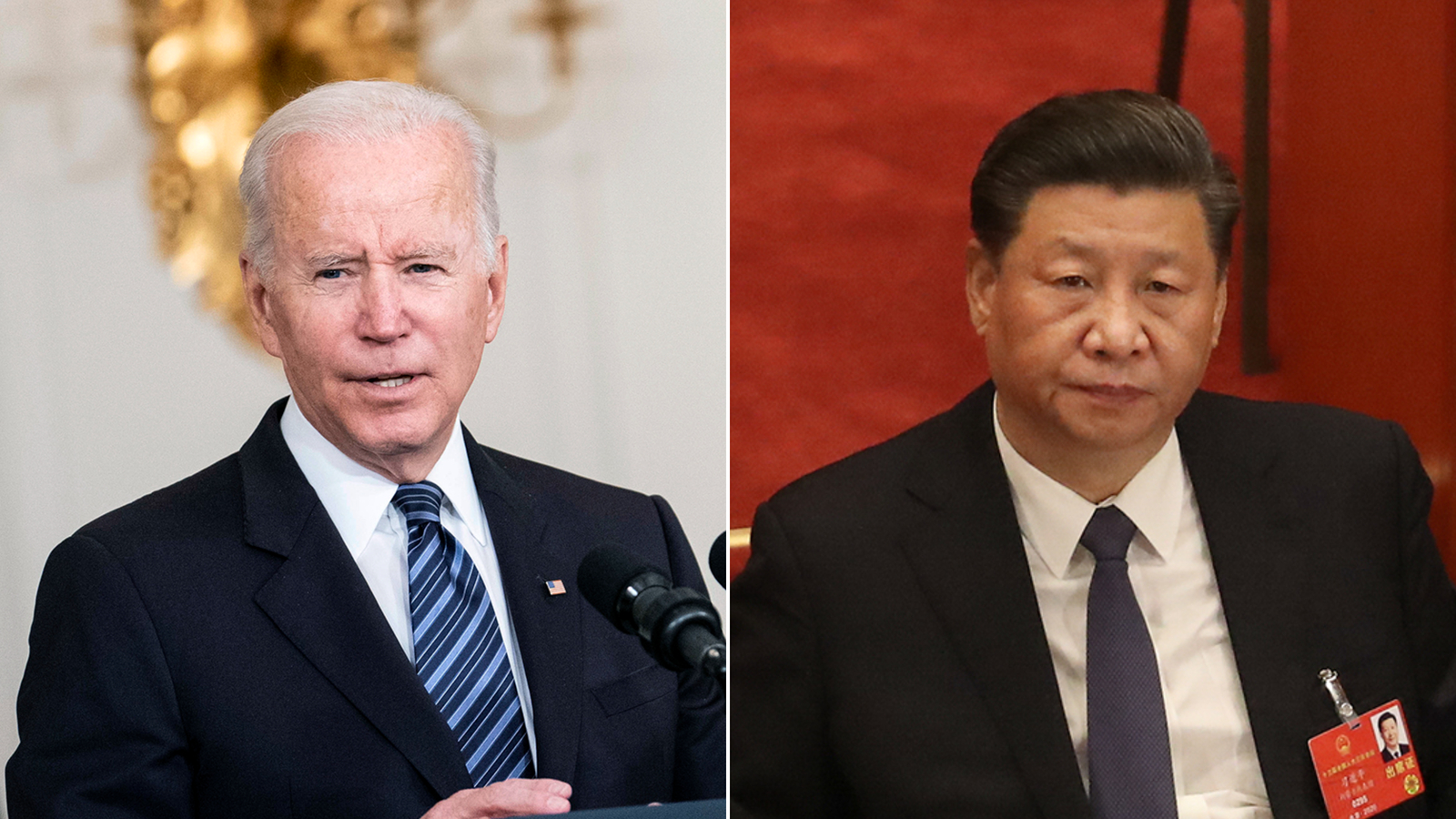


(CNN) — US President Joe Biden’s meeting with his Chinese counterpart Xi Jinping on Monday may last only a few hours, but could have consequences stretching months or even years as the world’s largest economies veer toward increasingly hostile relations.
The moments spent together on the sidelines of the Group of 20 summit here will amount to only a fraction of the time the two men have been in each other’s company since 2011. Biden has claimed that as vice president, he spent north of 70 hours with Xi and traveled 17,000 miles with him across China and the United States — both exaggerations, but still reflective of a relationship that is now perhaps the most important on the planet.
Biden hopes coming face-to-face again after nearly two years communicating only by phone and video-conference can yield a more strategically valuable result, even if he enters the talks with little expectation they can produce anything concrete.
“I know Xi Jinping. I’ve spent more time with him than any other world leader,” Biden told reporters a day ahead of his meeting, using another frequently cited — if questionable — statistic. “I know him well. He knows me. We have very little misunderstanding.”
It’s not unusual for Biden to point out the many years the two leaders have known each other. But for all of the times they encountered each other when they were each serving as vice president, his meeting Monday begins at a remarkably low moment in US-China ties.
Relations have deteriorated rapidly amid economic disputes and an increasingly militarized standoff over Taiwan. The tensions have led to a decline in cooperation on areas where the two countries once shared common interests, like combating climate change and containing North Korea’s nuclear program.
In a national security strategy document released last month, Biden for the first time identified China as posing “America’s most consequential geopolitical challenge,” and wrote the country was the “only competitor with both the intent to reshape the international order and, increasingly, the economic, diplomatic, military, and technological power to advance that objective.”
There was almost no expectation among American officials that any of those issues could be resolved simply by getting Biden and Xi in the same room. The prospect of a joint statement to be released afterward was considered a nonstarter.
Just arranging the meeting itself required US and Chinese officials to establish lines of communication after Beijing furiously cut off most channels following House Speaker Nancy Pelosi’s visit to Taiwan over the summer.
“I don’t in any way think that the two leaders are going to sit down and be able to solve all their differences or problems,” a senior administration official said ahead of the talks. “But I do think that we believe that some of these steps could be important along the way.
Biden’s aides have not set a time limit for the meeting, though Jake Sullivan, the US national security adviser, said he expected the talks to run “a couple hours” but could extend longer.
“It’s a meeting on the margins of an international summit. So it’s not itself a kind of summit where they’re coming together in a third country or in Washington and Beijing,” he said. “So, we haven’t set a time limit on the conversation.”
Sullivan said Biden would be “totally straightforward and direct” in the meeting, and expected Xi to be similarly candid in return.
Of most interest to Biden and his aides is establishing some level of understanding with Xi about where the administration views the relationship with China, and learning from him how he sees ties with the United States going forward.
The White House has used the phrase “building a floor” to describe the goal of the talks, suggesting both that Biden hopes to stop relations from falling any further and that he sees the potential for improvement.
“We just got to figure out where the red lines are and what are the most important things to each of us going into the next two years,” Biden told reporters Sunday in Cambodia, where he was attending summit meetings with Asian leaders before traveling to Bali.
For Xi, the trip to Bali also marks his first journey abroad since the onset of the Covid pandemic, which prompted the Chinese government to impose strict lock downs and draconian restrictions. His emergence on the physical world stage also comes on the heels of the Chinese Communist Party electing him to a historic third term as its leader.
Even a week ago, most inside the White House were expecting Biden to enter the talks comparatively weakened by Democratic losses in the midterm elections. But better-than-expected results for Democrats left the president feeling as if he was entering his meetings this week with the wind at his back, according to top aides.
“I know I’m coming in stronger, but I don’t need that,” Biden said of his own improved political fortunes on Saturday.
US officials previewing the meeting have stressed the Biden administration is not looking to come out of it with specific “deliverables,” including a joint statement listing areas of potential cooperation. Rather, the setting is aimed at offering both Biden and Xi a significant opportunity to better share their respective countries’ goals and perspectives.
“Xi is not an enigma to President Biden,” a senior administration official told CNN. “He knows him. And he is mindful of where Xi is trying to take China. He sees China as a competitor, and he feels confident the US can win that competition.”
China’s pandemic-era isolation, US officials say, had made it relatively harder in recent years to get a read on Beijing’s intentions abroad as Xi declined to travel outside of China — but they believe that is all about to change.
“We can expect them to be more assertive on the world stage,” the senior administration said. But, they added: “What that looks like is difficult to know right now.”
Sullivan said this week that finally substituting the pandemic-era video calls with a face-to-face meeting for the first time since Biden took office “takes the conversation to a different level strategically and allows the leaders to explore in deeper detail what each of them see in terms of their intentions and priorities.”