

Metro Manila (CNN Philippines, October 8)— When Ferdinand “Bongbong” Marcos Jr. was sworn in as the Philippines’ 17th president on June 30, he floated one simple promise— to get things done.
The son of the late dictator Ferdinand E. Marcos was determined to follow the lead of his father. “He got it done. So will it be with his son. You will get no excuses from me,” said Bongbong Marcos, who was then fresh from a landslide victory in the May polls.
Fast forward to three months later, Marcos’ presidency has been nothing short of eventful. From calamity response, Cabinet movements, and high-profile foreign trips, we take a look back at the chief executive’s first 100 days in office — steps the government took and how officials responded to controversies.
Weathering calamities
The new administration’s disaster response was tested in the early days with a magnitude 7 earthquake and typhoons ravaging parts of Luzon.
Marcos traveled to the areas hit by the calamities to assess the damage, and ordered officials to provide quick assistance to victims.
The President said he will also push for the passage of a measure that will create the Department of Disaster Resilience.
High prices, low peso
Bringing down the prices of basic goods and keeping the average of the peso at ₱51 to ₱53 against the US dollar were among Marcos’ plans as revealed during his first address to the nation in July.
Basic consumer needs, however, continued to increase as inflation rates soared.
READ MORE: High prices still hounding Filipinos in first months of Marcos presidency
In its suggested retail price list for prime commodities released in August, the Trade department cited increases ranging from 3.29% to 10%. Consecutive fuel price hikes also prompted transportation agencies to adjust fares.
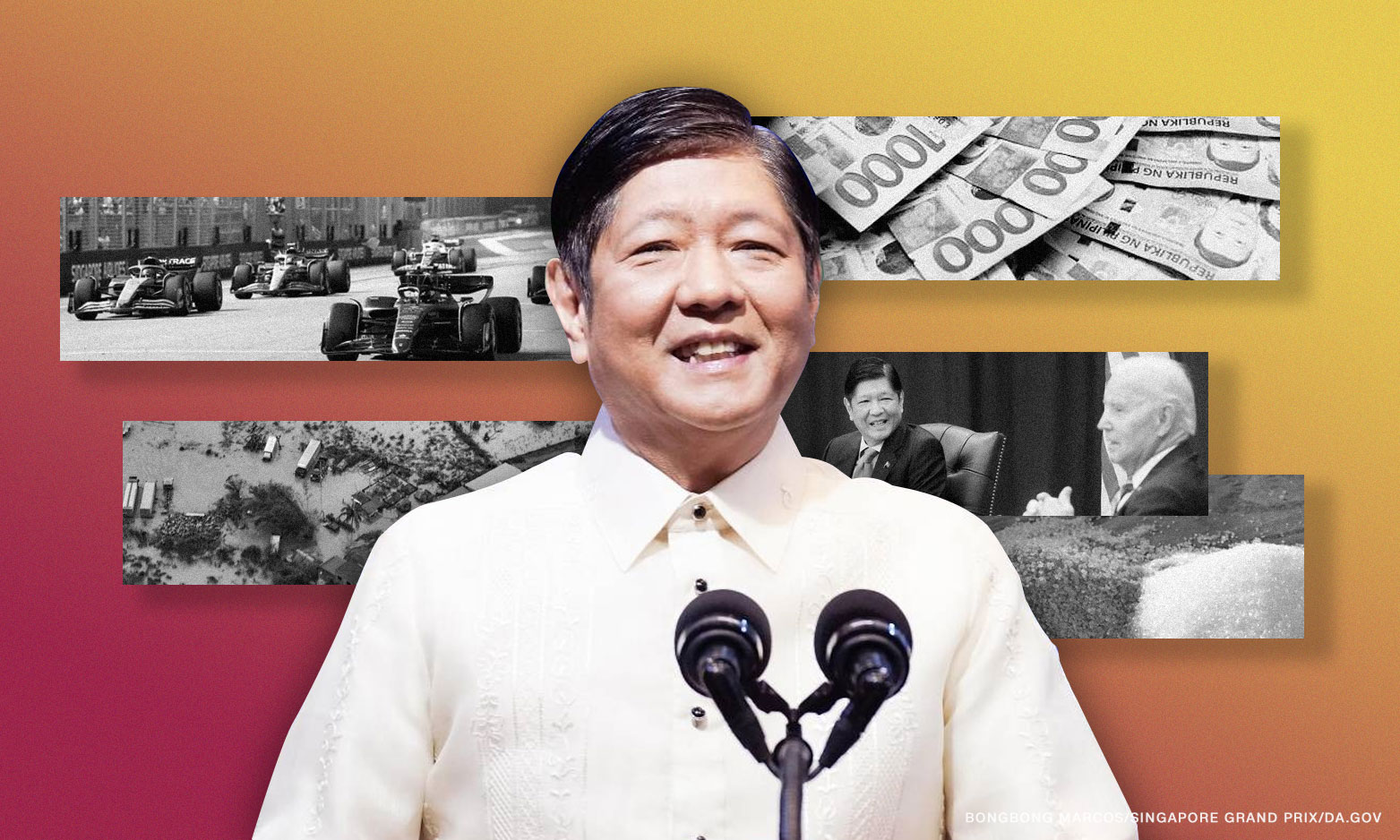
As for the peso, its value dropped to a new all-time low against the dollar at ₱59 on Oct. 3. As of writing, this was the 12th time the peso set record lows in 2022.
Due to these factors, the administration garnered a -11 net approval rating for its performance in addressing inflation, according to a recent Pulse Asia survey.
Former Finance Secretary Margarito Teves, however, said there is still “room for improvement” as other factors like the Russia-Ukraine war and the ongoing pandemic play a part.
“Inflation should be managed a bit better. Maybe to the same level as some of the areas where the president garnered a higher approval rating,” Teves told CNN Philippines. “One hundred days is too short. The problems that the President and the government are facing are considered unprecedented.”
‘Illegal’ order, agency overhaul
Also grabbing headlines was the issue on the Sugar Order No. 4, which supposedly allowed the importation of 300,000 metric tons of the commodity without the express approval of the President.
Some signatories of the order have resigned, with Marcos appointing new names in an overhaul of the Sugar Regulatory Administration.
Securing investments, strengthening alliances
The President flew to three countries in a span of one month: his inaugural state visits to Indonesia and Singapore, and a trip to the United States for the United Nations General Assembly and other engagements.
Bilateral deals covering different sectors were inked during Marcos’ stay at the neighboring Southeast Asian countries. Around $18 billion worth of investment pledges were also secured from all the trips combined.
But a highlight from the travel? Marcos’ seeming pivot to the United States — a different tune from his predecessor Rodrigo Duterte, who often criticized the country’s long-standing ally while keeping close ties with China and Russia.
Meeting his counterpart Joe Biden, Marcos told America: “We are your partners. We are your allies. We are your friends.”
Cabinet search still ongoing
Back home, the government announced a slew of resignations of Cabinet members, just a few days before Marcos’ 100th day mark.
His longtime spokesperson-turned-executive secretary Vic Rodriguez stepped down in a wish to spend more time with family. Trixie Cruz Angeles meanwhile cited health reasons for leaving her post as press secretary.
Commission on Audit chairman Jose Calida also tendered his resignation, but no reason was stated as of press time.
While concerns were raised over this development, political analyst Jean Franco sees a bright side.
“Because at the very least, the administration can finally settle once the appointments that are going to be made have been finally approved,” Franco told CNN Philippines. “Some people might have really just wanted to be there to help the administration settle.”
The new administration has also yet to name a secretary for the Department of Health (DOH) — something critics have questioned due to the ongoing COVID-19 pandemic.
Marcos, however, explained that the department is undergoing reforms, and that the focus for now is to keep it running.
Silence on controversies
Marcos also faced a fair share of controversies months into his presidency, the most recent being his second Singapore trip to watch the Formula One Grand Prix.
Malacañang was initially mum amid reports that the President, as well as members of his family, flew to the neighboring country as Super Typhoon Karding battered parts of Luzon.
Confirming it later on, the Palace labeled the trip as “productive” as the chief executive had bilateral talks on the sidelines of the race. Questions on the source of funding were also raised, but looking into the issue would be “irrelevant,” according to new Executive Secretary Lucas Bersamin.
The first family has also hosted a number of events, including birthday celebrations for Marcos himself, his wife Liza, and his mother Imelda in Malacañang.
READ: Imee Marcos defends Imelda’s party in Malacañang, family gatherings in Palace likely to continue
A ‘functional’ government
Despite these issues, some of Marcos’ colleagues in government believe he has done a good job in his first 100 days in office.
His cousin, House Speaker Martin Romualdez, highlighted the Philippines’ engagement with the international community. Senate President Migz Zubiri lauded the President’s choice for Cabinet members and economic team, and also labeled him as the “best salesman for the country.”
Marcos, for his part, noted how his administration was able to “put out fires” early on — making things work despite the challenges and being able to assemble a “functional” government.
“I think what we have managed to do in the first 100 days is put together [a] government which is functional and which has a very, very good idea of what we are targeting in terms of strict economic targets,” he told reporters during an event earlier this week.
“And more importantly, we have galvanized government once again into governing,” he added.