
Metro Manila, Philippines — The Philippine government has marked the eighth anniversary of the 2016 arbitral award by reiterating its commitment to peace amid what it said were “unlawful actions” in the disputed South China Sea.
The July 12, 2016 Hague ruling debunked China’s historic and massive claims in the South China Sea, and eight years later, the Department of Foreign Affairs (DFA) said the Philippines has been “unwavering” in its “commitment to the rule of law and the peaceful settlement of disputes”.
“Over the years, the Philippines has continued to demonstrate this commitment to peace even in the face of the unlawful actions which have caused serious incidents in the South China Sea, without ever diminishing our resolve to protect and promote our people’s interest and the full and responsible enjoyment of our legally settled maritime entitlements and its accompanying rights and jurisdictions,” said the DFA.
Manila said the ruling has become a legitimate source of international law, as was evident in the growing support from countries — the list now includes 27 nations mostly from the West.

“We are encouraged by the expressions of support made by other States that confirm the final and binding status of the Award, including the G7’s consistent reaffirmation that it is a significant milestone and a useful basis for the peaceful management and resolution of differences at sea,” the DFA statement read.
The Philippine government also welcomed the International Tribunal for the Law of the Sea (ITLOS) Advisory Opinion on Climate Change which referred to the award as a “legal authority in their respective oral and written statements, underscoring its unassailable status as part of the corpus of international law”.
U.S. calls out China’s ‘blatant disregard for international law’
In a statement posted on the website of the U.S. Department of State, Washington has reaffirmed its support to the “final and legally binding” award. The U.S. maintained that the tribunal firmly rejected China’s massive claims in the South China Sea.
U.S. Secretary of State Antony Blinken described China’s actions as a “blatant disregard for international law as well as the safety and livelihoods of Filipinos.”
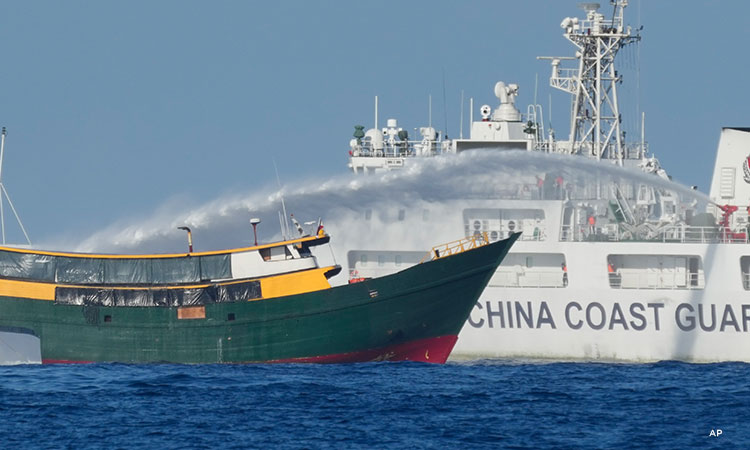
“Over the past year, the PRC’s use of water cannons, dangerous maneuvers, and destructive tactics – including ramming, forcible towing, and boarding that has resulted in damage to Philippine vessels and injury to Philippine service members – has routinely interfered with the lawful exercise of high seas freedoms in areas where the Arbitral Tribunal determined the PRC has no lawful territorial or maritime claims,” Blinken said in the statement.
“We continue to call on the PRC to abide by the 2016 arbitral ruling, to cease its dangerous and destabilizing conduct, and to comport its conduct as well as its territorial and maritime claims in the South China Sea to the international law of the sea as reflected in the Convention,” he added.
China has refused to recognize the award, calling it illegal, null and void.
“China does not accept or recognize it, and will never accept any claim or action based on the award,” the Chinese Embassy said in a statement on March 25.
Beijing maintains that its sovereignty and relevant rights and interests in the South China Sea were “established in the long course of history, and are solidly grounded in history and the law. This shall under no circumstances be affected by any illegal award”.