

Metro Manila, Philippines – The United States and the Philippines will carry out more than 500 joint military activities in 2026, approved this week by top commanders from both nations as a sweeping show of defense cooperation.
The plan, finalized during the annual Mutual Defense Board-Security Engagement Board (MDB-SEB) at Camp Smith, Hawaii, includes large-scale drills such as Balikatan 2026 along with dozens of smaller training events and subject-matter exchanges. Officials said the expanded schedule underscores both countries’ commitment to deterrence, disaster response, and regional stability under the 1951 Mutual Defense Treaty.
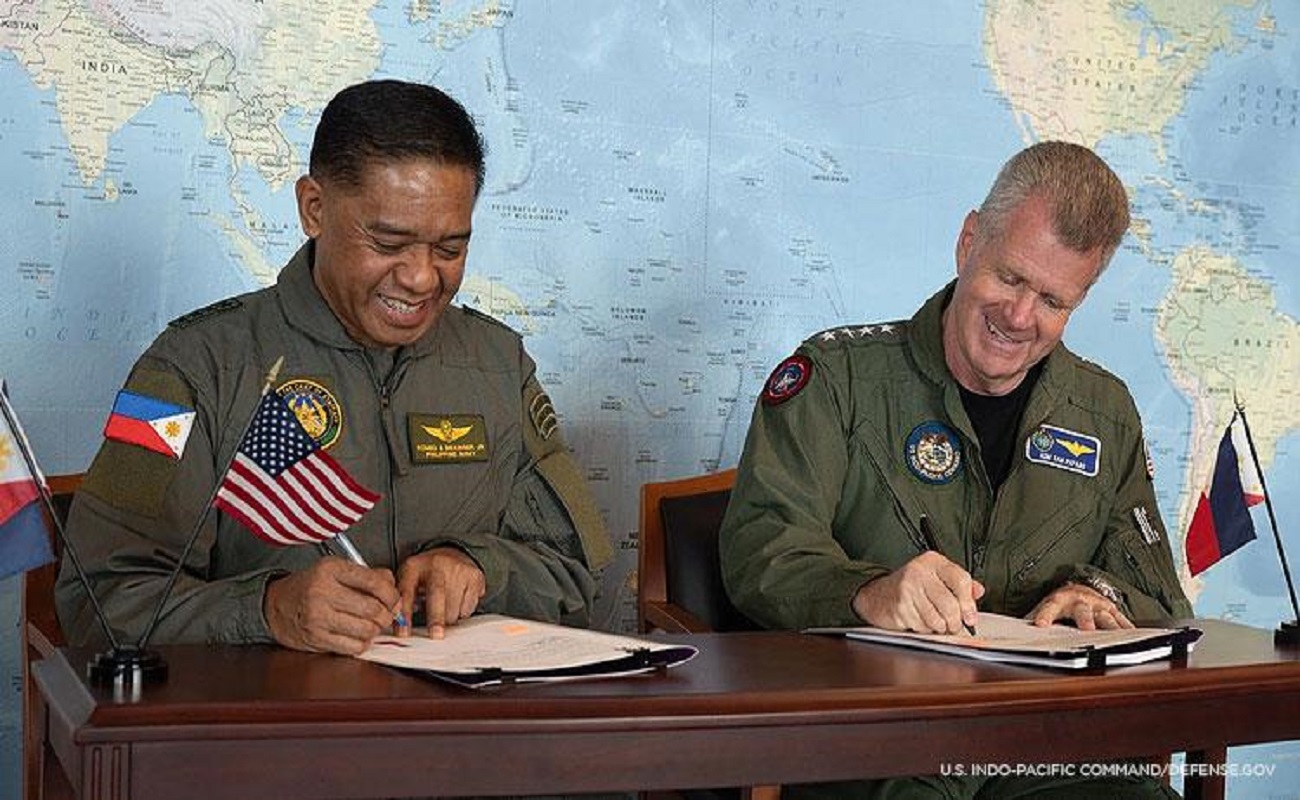
Adm. Samuel J. Paparo, commander of US Indo-Pacific Command, hosted Gen. Romeo Brawner, chief of staff of the Armed Forces of the Philippines, for the two-day meeting. The leaders signed the annual “8-Star Memo” approving the extensive activities list, which they described as the most ambitious slate of joint engagements to date.
“The US-Philippine alliance remains a cornerstone of peace and stability in the Indo-Pacific,” Paparo said.
“Through these engagements, we demonstrate not only our readiness, but also our enduring partnership and shared responsibility for a free and open Indo-Pacific,” he added.
Brawner said the Philippines is committed to expanding cooperation across both security and humanitarian missions.
“This partnership strengthens our capabilities, ensures our mutual defense, and prepares us to respond together to any crisis,” he said.
Maritime Cooperative Activities (MCAs), which bring together US, the Philippines, and other regional navies for joint patrols and training, were highlighted as a major success over the past year. Officials said the operations help safeguard freedom of navigation and sharpen interoperability in contested waters.
Following the conclusion of the MDB-SEB, each US Indo-Pacific Command service component began planning with its Philippine counterparts to implement next year’s engagements.
The meetings build on a framework that dates back to 1958 with the creation of the Mutual Defense Board, expanded in 2006 with the Security Engagement Board to cover nontraditional threats such as terrorism and natural disasters.