

Manila, Philippines – At least two for every 100 infrastructure projects inspected by the military and police have been found to have never been built or never existed at all, a spokesperson from the Armed Forces of the Philippines (AFP) said on Tuesday, Dec. 2.
A joint inspection done by the AFP and the Philippine National Police (PNP) – two agencies commissioned by the Department of Public Works and Highways (DPWH) in its bid to tag anomalous contracts and get to the bottom of the corruption scheme – yielded that contractors did not break ground in 252 sites.
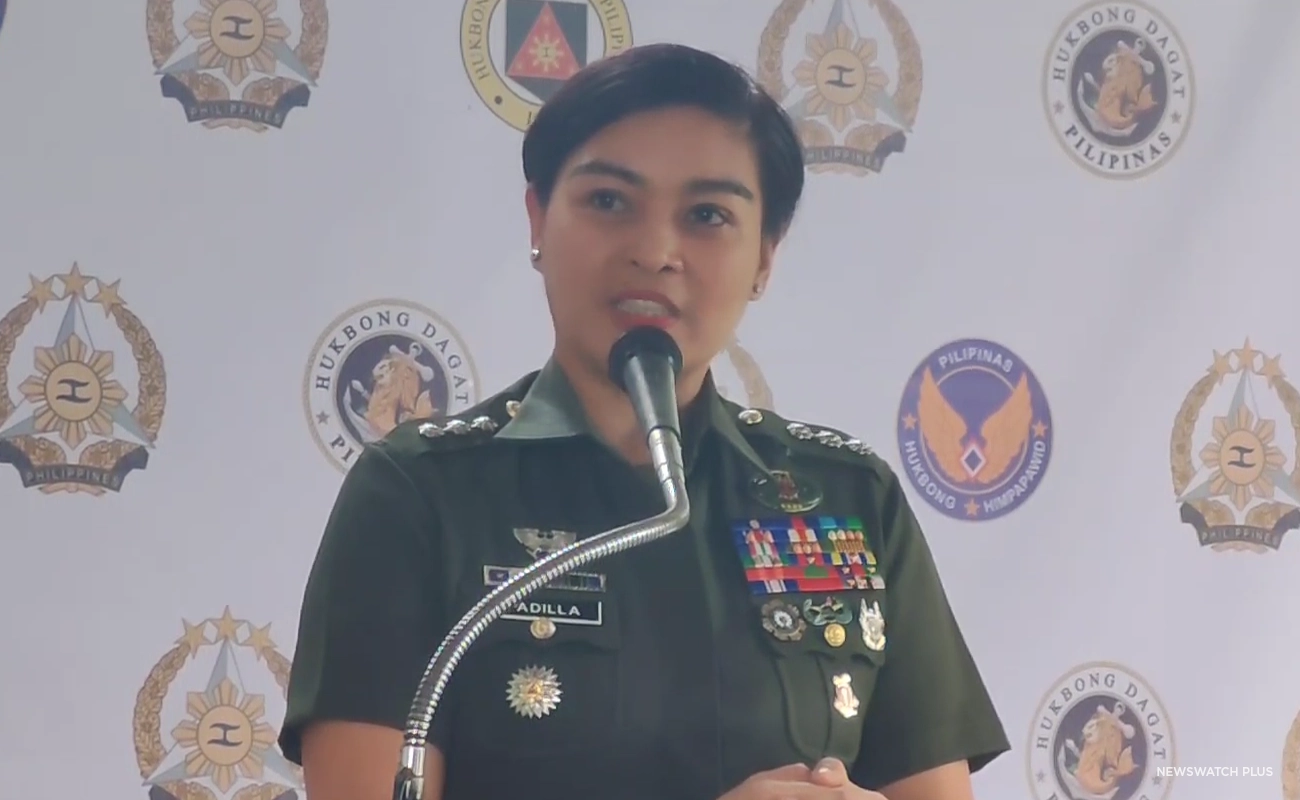
“Ten thousand na po yung ating na-inspect from the side of the Armed Forces of the Philippines. And it turned out that a total of 252 of these na mga naikot na po namin are ghost projects from 2016 to present,” Colonel Francel Margareth Padilla, spokesperson for the AFP, told a press briefing in Camp Aguinaldo on Tuesday, Dec. 2.
[TRANSLATION: We have inspected 10,000 from the side of the Armed Forces of the Philippines. And it turned out that a total of 252 of these that we made the rounds of are ghost projects from 2016 to present.]
The first tranche announced on Thursday accounted for just a third of the targeted 30,000 projects that the DPWH wanted authorities to locate and document. The public works agency earlier tapped the military and police, providing the latter coordinates for the project sites, in its bid to expedite its investigation into the flood control mess.
“Patuloy po kaming nag-koconduct ng inspections to complete itong required of us,” Padilla said.
[TRANSLATION: We continue to conduct inspections to complete what’s required of us.]
The military has yet to provide a list of the 252 ghost projects, but it did say that the tally has been submitted to the Independent Commission for Infrastructure (ICI), which is the independent body tasked to gather evidence, aid in the prosecution and file cases with the courts.
That omnibus list counts all questionable public works contracted out by government agencies nationwide. The military earlier said its funds for its so-called Tatag ng Imprastruktura para sa Kapayapaan at Seguridad (Tikas) projects are directly released to the DPWH – the latter being the implementer that handles the entire procurement process from planning to building to construction.
Military facilities like barracks, drainage systems, firing ranges and training facilities fall under the Tikas program.