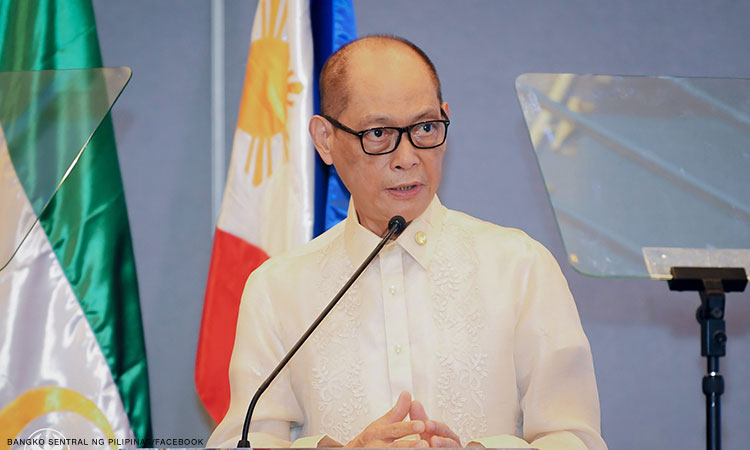

Metro Manila (CNN Philippines, September 4) — Finance Secretary Benjamin Diokno has proposed a nationwide screening of students wanting to qualify for free education in state-run universities and colleges (SUCs), as he stressed that the current implementation was “unwieldy, inefficient, and wasteful.”
Over the weekend, the finance chief said there is a need to review the free college education program and the government must “optimally allocate resources funded largely by taxpayers for education.”
“An indicator of wastefulness is the rising dropout rate. The proposed reform also aims to reduce the threat to the robust private school system,” he said.
In a statement, Diokno laid out his proposals, which include the following:
— focus on strengthening the K-12 program;
— conduct a nationwide test to filter those who should be entitled to free education;
— allow those who passed the nationwide exam and are entitled to free education to use their entitlement (a four-year voucher) to enter or reject their assigned state university, and if the latter, choose an accredited private university; and
— reduce the number of existing SUCs over time through mergers.
The assigned SUCs for the students would be based on their scores, Diokno noted.
“He may refuse to enroll in an SUC assigned to him and instead attend any government-accredited private university that will admit him. Of course, the voucher will be released on an annual basis and will be based on the satisfactory performance of the government scholar,” he said.
On strengthening K-12 implementation, Diokno said it targets to provide a firm foundation for the poor, giving them “a better chance of entering college, and completing the same.”
“That should be our focus. The other goal of the K-12 program is to prepare the student for gainful employment or higher education. Many are not interested to go to college; they just want better jobs,” he said.
“These set of proposals are not perfect, but these could immensely improve the allocation of scarce government resources,” he added.
Diokno expressed similar concerns earlier about the program’s sustainability, prompting Commission on Higher Education Chairperson Prospero de Vera to defend the free tuition for higher education during a House hearing on the agency’s proposed 2024 budget.
De Vera said providing free education is the “best anti-poverty strategy” as the Universal Access to Quality Tertiary Education has boosted Filipinos’ access to college education.
“We’ve been implementing free higher education for five years now. The results are out there to see. Number one, participation in higher education has significantly increased—41% of university students are actually enrolled in universities vs. 30+% in the previous years. That’s a significant increase,” de Vera previously said.
Mixed reactions from lawmakers
Some senators had mixed reactions to Diokno’s proposal to screen aspiring college students seeking free education.
Sen. Sonny Angara said the only time it should be reviewed is “with a view to making richer families pay.”
“Multi-millionaire families should pay tuition so that more resources can go to support poorer families and students,” Angara said.
Sen. Francis Escudero, meanwhile, said that shelling out a bigger budget for flood control, which the lawmaker said “hasn’t worked,” must be revisited instead.
“I don’t understand why Secretary Diokno is so ‘stingy’ when it comes to investing in our country’s ‘human capital’ and yet liberal and magnanimous when it comes to ‘flood control’… If at all, it is this allocation that should be reviewed and revisited,” Escudero added.
Sen. Koko Pimentel, on the other hand, expressed support for Diokno’s proposal.
“I can see the point of Secretary Diokno. Free college education should be for those 1) who want to go to college 2) who have the aptitude to study in college 3) who can secure a competitive slot in college (determined thru competitive examination). Secretary Diokno has a very valid point,” he said.