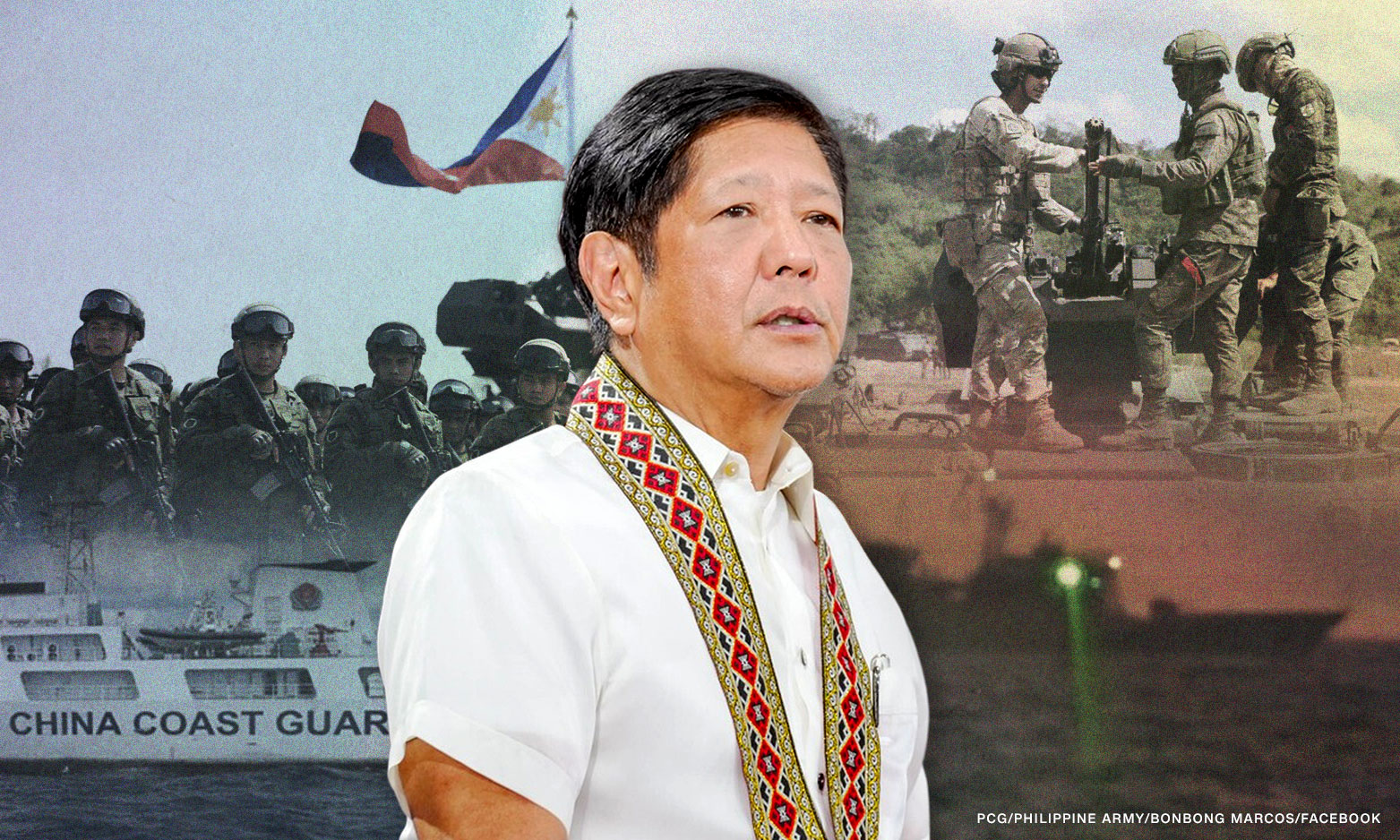

Metro Manila (CNN Philippines, July 1) — The country’s foreign policy had seen an apparent reset during President Ferdinand Marcos Jr.’s first year in power, as he strengthened Philippine-US ties which his predecessor had weakened.
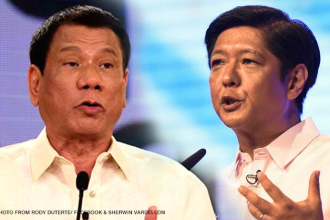
Whereas the pro-Beijing former President Rodrigo Duterte said it was “time to say goodbye” to Washington a mere months into assuming office, Marcos said it is only natural for the Philippines to look to the US – its long-standing defense ally – in the face of growing tensions in the disputed areas in the South China Sea and the Indo-Pacific region.
In a highly contentious move, the president also granted America wider access to Philippine military bases earlier this year, against the backdrop of US’ deepening geopolitical conflict with Beijing.
Despite such recalibrations, the president had stressed that his administration is not siding with either of the two rival powers.
In a speech in January, Marcos maintained that his foreign policy is only guided by national interest. In his own words: “I don’t work for Beijing, I don’t work for Washington, D.C. I work for the Philippines.”
According to political analyst Dennis Coronacion, this attempt at neutrality and balance could be Marcos’ bid “to make up for what the previous president had lost during his administration.”
Observers noted that while moving away from the US, Duterte adopted an appeasement policy with Beijing to boost investment and trade opportunities despite Chinese incursions in the West Philippine Sea (WPS). By the end of his administration, however, the economic rewards reaped by Manila were ultimately underwhelming, they said.
Rekindling, expanding alliances
The similarities between Marcos’ and Duterte’s foreign policy were seen shortly after his election victory, as he called Beijing the “strongest partner” of Manila and declared his intention to bring Philippine-China relations to a higher gear.
However, Marcos distinguished himself from his predecessor by also reviving the country’s defense alliance with the US while maintaining close economic ties with China.
There were already indications in the final year of Duterte’s term that Manila was again gradually bolstering cooperation with Washington after what was largely seen as a failed economic strategy of currying favor with China. But this revival of the alliance with the US became more pronounced when Marcos assumed office.
In Marcos’ first year, the two nations staged their largest-ever joint military exercises, the US pledged to help modernize the Philippine armed forces, and US President Joe Biden said he “can’t think of any better partner to have” than his Philippine counterpart.
But perhaps most striking was Marcos’ decision to expand the Enhanced Defense Cooperation Agreement (EDCA), effectively helping the US scale up its military footprint in the country.
The agreement saw the identification of four more EDCA sites in the country, in addition to five existing ones, that could temporarily host US military logistics and personnel on a rotational basis.
Defense analysts see the move as part of efforts to deter Beijing’s expansionist claims in the South China Sea, as well as its actions against self-governing Taiwan, which China claims as its territory. China condemned the EDCA expansion and warned that this will “seriously endanger regional peace and stability and drag the Philippines into the abyss of geopolitical strife.”
The Marcos administration, however, stated that strengthening US military presence in the country is just meant to boost the Philippines’ own defense capabilities, relief operations, and disaster response.
“Should there be such an attempt to use the EDCA sites for offensive action, then that would be outside the parameters of what we have discussed and what the EDCA sites are for,” Marcos had said. “But to be fair, the United States has never brought up the possibility that the United States will use the EDCA sites as staging areas for any offensive action.”
Meanwhile, the Marcos administration has also been trying to boost security ties with “like-minded” nations in the Indo-Pacific region, including Japan and Australia.
For international studies professor Renato de Castro, the Philippines needs to do this since it does not yet have the military capability to confront China.
“So, we have to leverage on our treaty alliance with the United States and, of course, our security partnerships with like-minded countries,” De Castro told a forum.
“Alliance provides you deterrence. It would basically force China to think twice or thrice to use force against the Philippine Coast Guard, against the Philippine Navy, and the Philippine Air Force,” he said.
Weighty promises
Since winning the polls, Marcos has made pronouncements that raised expectations for a more hardline approach towards hostile behavior by China in the WPS, something critics said his predecessor failed to do.
In his maiden State of the Nation Address, the country’s chief diplomat vowed not to abandon “even one square inch” of Philippine territory to any foreign power. Before that, Marcos committed to talk to China “consistently with a firm voice” regarding the WPS dispute, and to assert the 2016 landmark Hague ruling which recognized the Philippines’ sovereign rights to areas within its exclusive economic zone (EEZ).
His word was put to the test when in February a Chinese Coast Guard vessel aimed a military-grade laser at a Philippine Coast Guard ship, temporarily blinding crew members. The incident happened near Ayungin Shoal, which is part of the Philippines’ EEZ.
This prompted the Department of Foreign Affairs (DFA) to file a diplomatic protest, while the president summoned Chinese Ambassador Huang Xilian to Malacañang to express his “serious concern over the increasing frequency and intensity of actions by China” against the Philippines.
READ: DFA: Chinese harassment in West PH Sea a ‘daily’ occurrence
Despite recognizing the aggressive actions by the Chinese, however, Marcos has made clear that he shares Beijing’s view that the territorial dispute is not the sum of the two countries’ relations. He maintained warm relations with the Asian power, which his administration continues to see as an important ingredient in the country’s post-pandemic economic recovery.
This did not sit well with critics, including progressive groups which slammed Marcos’ willingness to resume negotiations with China on joint oil and gas exploration in the area. It is “enraging,” fisherfolk group Pamalakaya said, “that Marcos can comprehend entering a joint venture with a country that illegally occupies and plunders our territorial waters.”
In the group’s assessment of the chief executive’s first year, Pamalakaya vice chairperson Ronnel Arambulo said: “Walang mapagpasyang hakbang ang administrasyong Marcos para itaguyod ang ating karapatan sa karagatan, sa kabila ng matibay nating batayan tulad ng 2016 arbitral ruling.” [Translation: The Marcos administration had no definitive step to uphold our rights in the waters despite having a strong basis like the 2016 arbitral ruling].
Next steps?
There have been calls for the government to bring the issue of China’s bullying to the United Nations General Assembly (UNGA) and to have the international body sponsor a resolution calling on Beijing to respect Manila’s arbitral victory.
One of the move’s proponents, Senator Risa Hontiveros, said that while UNGA resolutions are not legally binding, they carry “significant political weight.”
According to National Security Council (NSC) Assistant Director Jonathan Malaya, the council and the DFA are now discussing the idea.
“I cannot speak on the record on this…This is a very sensitive matter, ‘no? But we are in discussions,” he said on CNN Philippines’ special program Pangulong Marcos: Ang Unang Taon [President Marcos: The First Year]. “Siguro [Perhaps] that’s what I can say, because this is something that has been raised repeatedly.”
Political analysts Coronacion and De Castro both said they believe it is high time for the government to raise the issue before the UNGA.
“Long overdue na nga ‘yan eh [It’s long overdue],” Coronacion said. “It should’ve been raised during the time of former President Duterte. But of course, we all know that he had a different foreign policy stance. So, sa tingin ko nararapat sa panahon ngayon. [But I think now is the right time.] We should explore all our options in terms of protecting our maritime territory.”
Retired Senior Associate Justice Antonio Carpio has also pushed for the move, expressing confidence that the country “will win there.”
“I think it’s time to bring this issue, because we have a ruling that’s binding, legal, and final already. We have the support of the G7, we have the support of the EU (European Union), we have the support of many coastal states, and we have to bring up the issue to the entire world,” he said in a virtual forum.
“We need world opinion on our side, because China has to feel the pressure that it is isolated. Because if China thinks that nobody cares about what’s happening in the South China Sea, then China will use force. So, it’s time,” Carpio added.
In the meantime, De Castro said the government also has to prepare its armed forces and continue to boost alliances should the Philippines find itself caught in the crossfire between the US and China.
“We have a mutual defense treaty with the United States, so we cannot simply declare we’re neutral. Because an alliance is a two-way street. We expect assistance from the United States and of course, the United States expects assistance from the Philippines,” he said.