
Metro Manila (CNN Philippines, December 4) — The Philippines has signed a partnership with the World Economic Forum (WEF) to boost the country’s coastal ecosystem restoration and conservation efforts to tap the rapidly rising demand for carbon credits.
The cooperation agreement was announced at the COP 28 in Dubai by the World Economic Forum.
In a statement, the WEF said the Philippines is the second nation after Indonesia to join the World Economic Forum’s so-called Blue Carbon Action Partnership that helps countries craft a national roadmap on blue carbon that will allow them to access climate financing.
Indonesia signed that cooperation agreement with the WEF in Davos, Switzerland in January this year.
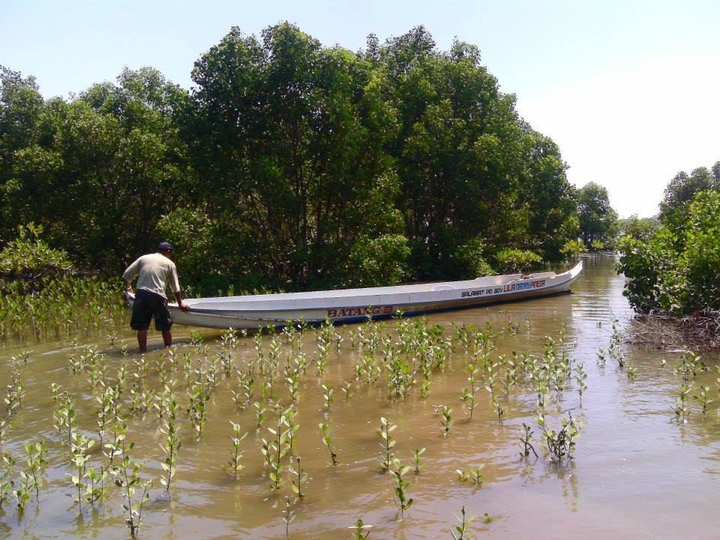
Blue carbon is the carbon from the atmosphere and the ocean stored in coastal and marine ecosystems like mangrove forests, tidal marshes and seagrass meadows.
According to the Blue Carbon Project by the University of the Philippines, these “[m]angrove forests, tidal marshes and seagrass meadows sequester carbon hundred times faster than terrestrial forests and store more permanently in their sediments.”
“Blue carbon ecosystems are widely recognized for their critical role in regulating greenhouse gas levels and in climate change mitigation,” it added.
“When blue carbon benefits are recognized and valued by governments and businesses, who commit and invest in the restoration of mangrove, seagrass and salt marsh ecosystems around the world, everybody wins – people, nature, climate and ultimately, the planet,” Alfredo Giron, Acting Head of the Ocean Action Agenda and Friends of Ocean Action at the World Economic Forum, said in a statement released on Monday.
Environment Secretary Antonia Loyzaga said in the same statement that the Philippines will work with the WEF in “unlocking the Philippines’ potential to provide nature-based climate solutions for the rest of the world whilst supporting our programs for protected areas and preparing the country for participating in the new blue economy.”
In a live streamed panel discussion on the sidelines of COP28 in Dubai, Environment Undersecretary Analiza Teh said the country is studying its carbon policy.
“We are in the process of formulating our blue economy roadmap and also the blue carbon economy in partnership with UNDP and Canada,” she said.
“Right now, we have already issued guidelines on carbon accounting verification certification system. But we want to expand this by developing a carbon policy regulatory framework and the carbon pricing policy.”
Meanwhile, the Asian Development Bank said it would allot $10 million in climate support to help the Philippines reach its climate action goals.
RELATED: DENR: PH at COP28 to urge developed nations to fulfill climate commitments
“The battle against climate change will be won or lost in Asia and the Pacific and nowhere is this more evident than in the Philippines,” ADB president Masatsugu Asakawa said at a dialogue during the COP28 on Monday.
The High-Level Dialogue on Finance Coalitions was attended by the ADB, Finance Secretary Benjamin Diokno, and Secretary Loyzaga, among other delegates.
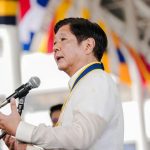
President Ferdinand Marcos Jr. has continuously rallied for support in the fight against the effects of climate change.
While Marcos was not present at COP28, in his speech read by Special Assistant to the President, Antonio Ernesto Lagdameo Jr. said he wanted support for the country to host the climate ‘loss and damage’ fund designed to help nations most vulnerable to the adverse effects of climate change.
RELATED: PH calls for action vs. climate change, adherence to rules at UNGA
According to the ADB, the Philippines is one of the countries most vulnerable to climate change.
CNN Philippines’ Lois Calderon and Pia Garcia contributed to this story