
Metro Manila (CNN Philippines) — “Take care of the earth and she will take care of you.”
This rings true for the mining industry, often seen as a short-term gambit that potentially poses risks to the environment. What the public may not be aware of is that mining companies are mandated to ensure environmental protection before, during, and after the mining operation. In achieving this, the industry adheres to various policies and regulations for sustainable mining.
Mining is one of the most highly regulated industries in the country, making it one of the most scrutinized as well. Responsible mining companies comply with various laws, regulations, and ordinances issued by the national government and local government units. The government, particularly the Mines and Geosciences Bureau (MGB), is on top of licensing mining companies and regulating their operations throughout the mine life. This includes requiring them to obtain the necessary environmental certifications and to submit plans such as the Environmental Compliance Certificate, the Environmental Protection and Enhancement Program, and the Final Mine Rehabilitation and Decommissioning Plan (FMRDP).
Even before the commencement of mining operations, companies must submit their rehabilitation or decommissioning plans to ensure the protection of the environment beyond the life of the mine. The FMRDP is more than just a plan to rehabilitate a mine site, but is also a commitment of the mining companies to the community and the environment.
Throughout its operations, a mining company is required to use the best available and appropriate anti-pollution technology and facilities to protect the environment. But what is equally important is the progressive rehabilitation being undertaken by mining companies such as the revegetation of mined-out areas to restore, as near as possible, disturbed areas to their original state or pre-agreed productive end use. Progressive rehabilitation is a staged approach to ensure that rehabilitation is being done continuously even during the operations of the mine.
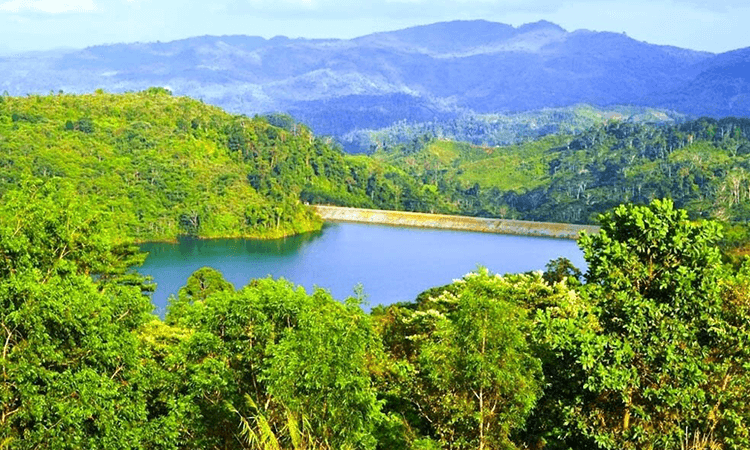
Since mining’s land use is temporary compared to other activities brought about by other industries, the land can be repurposed subsequently for a more productive and sustainable land use. With proper planning and implementation of activities together with the guidance of regulatory agencies, rehabilitated mine sites can be transformed into self-sustaining ecosystems that are compatible with the environment and the community.
Carmen Copper Corp., which is operating in Toledo City, Cebu, partnered with eight people’s organizations to rehabilitate 100 hectares of mined-out areas as part of the community-based reforestation project. The holistic approach of this project is also envisioned for the members of the people’s organizations to earn from this project and to raise awareness for environmental sustainability.
In Agusan Del Norte, Agata Mining Venture Inc. has converted its mined-out areas into ecotourism sites. To ensure the community’s livelihood at the end of the mine’s life, plants and tree species were carefully selected. The company has planted more than 420,000 seedlings of mixed species of forest and fruit-bearing trees, as well as plants, the majority of which are endemic species covering 440 hectares.
Meanwhile, Rio Tuba Nickel Mining Corp. is on the last stretch of planting five million trees in Rio Tuba, Palawan. So far, the company has planted more than 4 million surviving trees in various areas covered in its mine rehabilitation and reforestation programs. Mature trees can remove harmful gases such as carbon dioxide. According to the Arbor Day Foundation, a mature tree can absorb as much as 48 pounds of carbon dioxide and release oxygen in exchange.
Also in Palawan, Berong Nickel Corp. is expected to finish the rehabilitation of its mine within the next four years. With a 77% completion rate, the rehabilitation of the mine is ahead of schedule after starting rehabilitation works in June 2022 covering 209 hectares of silt control structures, 109 hectares of surface mine, and 25 hectares of stockpile area.
The mining industry is arguably the largest industrial planter of trees in the Philippines. As of June 2023, data from the MGB shows that since 1989, a total of 48,955,946 trees were planted by mining companies, of which 44,008,839 have survived to become fully grown trees covering a total of 40,546.32 hectares of land which is equivalent to nearly 10 times the total land area of the City of Manila.
With these innovative and responsible practices being undertaken by mining companies, the industry is further underscoring its commitment to contribute to the betterment of the environment, the communities where they are located, and even the country.