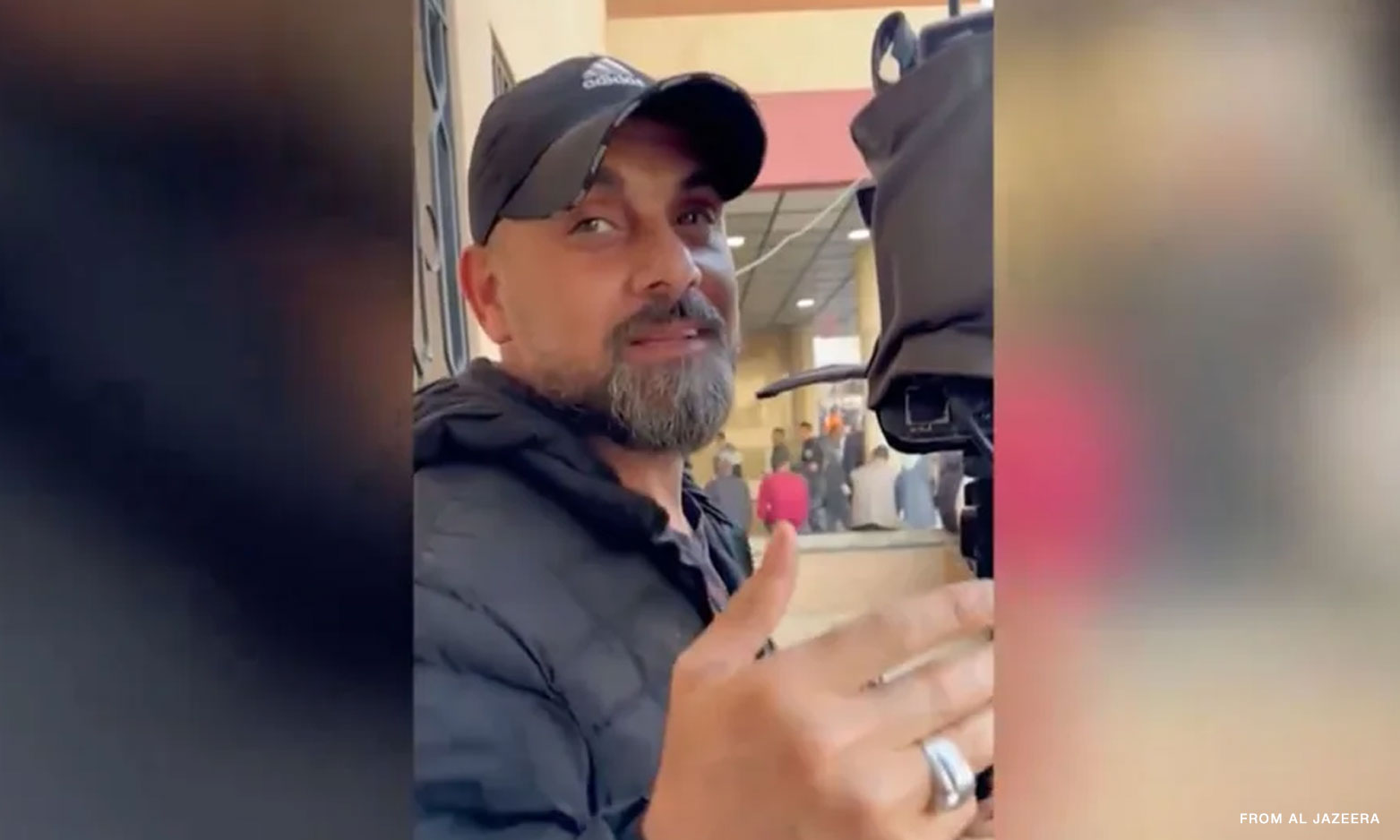

Jerusalem (CNN) — An Al Jazeera journalist has died after being badly injured during an Israeli attack in southern Gaza and then forced to wait five hours for medical attention, the network said on Friday.
Camera operator Samer Abu Daqqa died of wounds sustained in the attack, the Qatar-based network said, adding that he was bleeding for hours before medical personnel could reach him due to heavy shelling in the city.
Al Jazeera correspondent and Gaza bureau chief Wael Dahdouh was also injured in the attack, the Qatar-based news network said in a statement to CNN on Friday.
Dahdouh was eventually evacuated to a hospital, but Abu Daqqa’s injury was too severe to survive, according to Walid Alomari, Al Jazeera’s bureau chief for Jerusalem and the West Bank. “Too many in Gaza bleed and die because ambulances can’t reach them,” he said.
Al Jazeera said it did not have further information about Abu Daqqa’s injuries due to poor telecommunications in the area.
The network went on to accuse the Israeli forces of targeting its journalists and families in a statement on Friday.
“The network holds Israel accountable for systematically targeting and killing Al Jazeera journalists and their families,” the statement said.
CNN cannot independently verify the allegations. CNN has reached out to the Israeli military for comment but has not immediately heard back.
According to the Committee to Protect Journalists’ (CPJ) data, Abu Daqqa is the first Al Jazeera journalist to have been killed in the latest Israel-Hamas conflict since October 7.
Four other Al Jazeera journalists were injured, CPJ says, including three in southern Lebanon and Dahdouh, who had also lost his wife, daughter, son and grandson in an Israeli attack on Khan Younis late October.
Al Jazeera extended its condolences to Abu Daqqa’s family in Gaza and Belgium in its statement, which called for accountability.
“Al Jazeera urges the international community, media freedom organisations, and the International Criminal Court to take immediate action to hold the Israeli government and military accountable for these acts of carnage and crimes against humanity,” the statement added.
Under fire
Abu Daqqa and Dahdouh were on assignment in the southern city of Khan Younis when they came under fire.
Dahdouh later recounted the moments leading up to the incident. He said it took place when they were heading back to an ambulance belonging to the Palestinian Civil Defense after they were done filming in an area of Khan Younis that was hard to reach.
“Suddenly, something happened, a big thing, I couldn’t tell what it was, I only felt something big happened and pushed me to the ground, the helmet fell and the microphone,” Dahdouh told Al Jazeera while on a hospital bed before being informed his colleague had lost his life.
“I saw there was an intense bleeding from my shoulder and arm, and I realized if I stayed, I will be bleeding there in that location, and no one will reach me,” he added.
Dahdouh said he pushed himself to walk and eventually managed to reach Civil Defense staff hundreds of meters away.
But he said they were not able to head to where Abu Daqqa was to rescue him at the time, fearing that they could be targeted.
Al Jazeera said on air that Abu Daqqa was bleeding for five hours and no-one could reach to him due to the situation around him.
At least 17 others were killed and dozens of others were injured early Friday morning after artillery fire struck the city’s Haifa school and a residential home in the area.
Three civil defense workers in Gaza whose rescue efforts at the school were being covered by the al Jazeera team were also killed, according to the Hamas-controlled Ministry of Interior.
CNN has reached out to the Israel Defense Forces for comment on its military operations in the area.
Khan Younis has been heavily bombarded by the Israeli military since a fragile truce between Hamas and Israel broke down on 1 December.
The IDF on Thursday called on people in Gaza to move from parts of Khan Younis to displacement shelters in the same area to “ensure safety,” the latest in a series of social media messages from the IDF telling Palestinians to flee from one place to another to avoid the Israeli offensive against Hamas.
IDF Arabic spokesperson Avichay Ardaee posted on X telling people in Khan Younis to move from several “blocks” in the city to three shelters for displaced people in western part of the area and warned against using eastern roads due to IDF advances.
As of December 15, preliminary investigations by the Committee to Protect Journalists (CPJ) found at least 64 journalists and media workers were among the thousands killed in Gaza since Israel’s siege began on October 7, following Hamas’ deadly terror attacks.
The majority of journalists killed in this war have been Palestinians, alongside four Israeli and three Lebanese members of the press, according to CPJ. Thirteen journalists have also been reported injured, 13 are missing, and 19 have reportedly been arrested, the organization said.
CPJ said Friday it was alarmed by the drone strike that killed Abu Daqqa and wounded Dahdouh and called on “international authorities to independently investigate the attack and hold those responsible to account.”
Speaking to Al Jazeera, CPJ President Jodie Ginsberg reiterated a call for the protection of journalists and emphasized the importance of their work in Gaza, which she called an “unprecedented” challenge.
“We’re really only left with Gaza journalists doing this really important documentation work,” she said.
‘Why don’t you join your family abroad?’
Abu Daqqa’s colleagues have been paying tribute to his bravery following his death, with Al Jazeera investigative reporter Tamer Al-Mishal describing him as “professional” and “a great cameraman and editor [who] doesn’t fear anything.”
“I spoke to him a few days ago and told him ‘Why don’t you join your family abroad?’ And he told me they will be back soon when this war is over,” Al-Mishal said.
Abu Daqqa had decided not to leave Gaza, Al-Mishal added, noting that the cameraman had worked for more than 20 years for Al Jazeera.
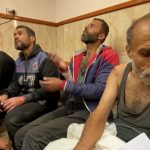
Al Jazeera aired video showing the journalist’s friends and family crying over his body at the Al Nasser medical complex near Khan Younis. His mother Umm Maher was seen being carried by two people saying, “He hasn’t seen his children, he hasn’t seen his children.”
Abu Daqqa’s wife and children – three boys and a daughter – are currently in Belgium, according to Al Jazeera.
“We miss a great dear friend and father of three [boys] and a girl… Yes, he had an opportunity to work in Belgium, but he favored his beloved Gaza over Belgium,” Alomari said.
Hiba Akila, another colleague of Abu Daqqa, remembered him as a cheerful co-worker.
“Samer was not only an optimistic, joyful person who loved life, but he was also a journalist who upholds his journalistic mission, always giving us a boost whenever we felt pain and desperation,” said the Al Jazeera correspondent in a broken voice as she reported live from Rafah on Friday night.
“When we were supporting and comforting Samer that soon he will meet his family, he would say, ‘I will not go to them, they will come here, and we will be together in Gaza,’” she added.