
Metro Manila (CNN Philippines, November 15)— An anti-communist group must be abolished over issues of red-tagging environmental human rights defenders and indigenous peoples, a United Nations (UN) special rapporteur said on Wednesday.
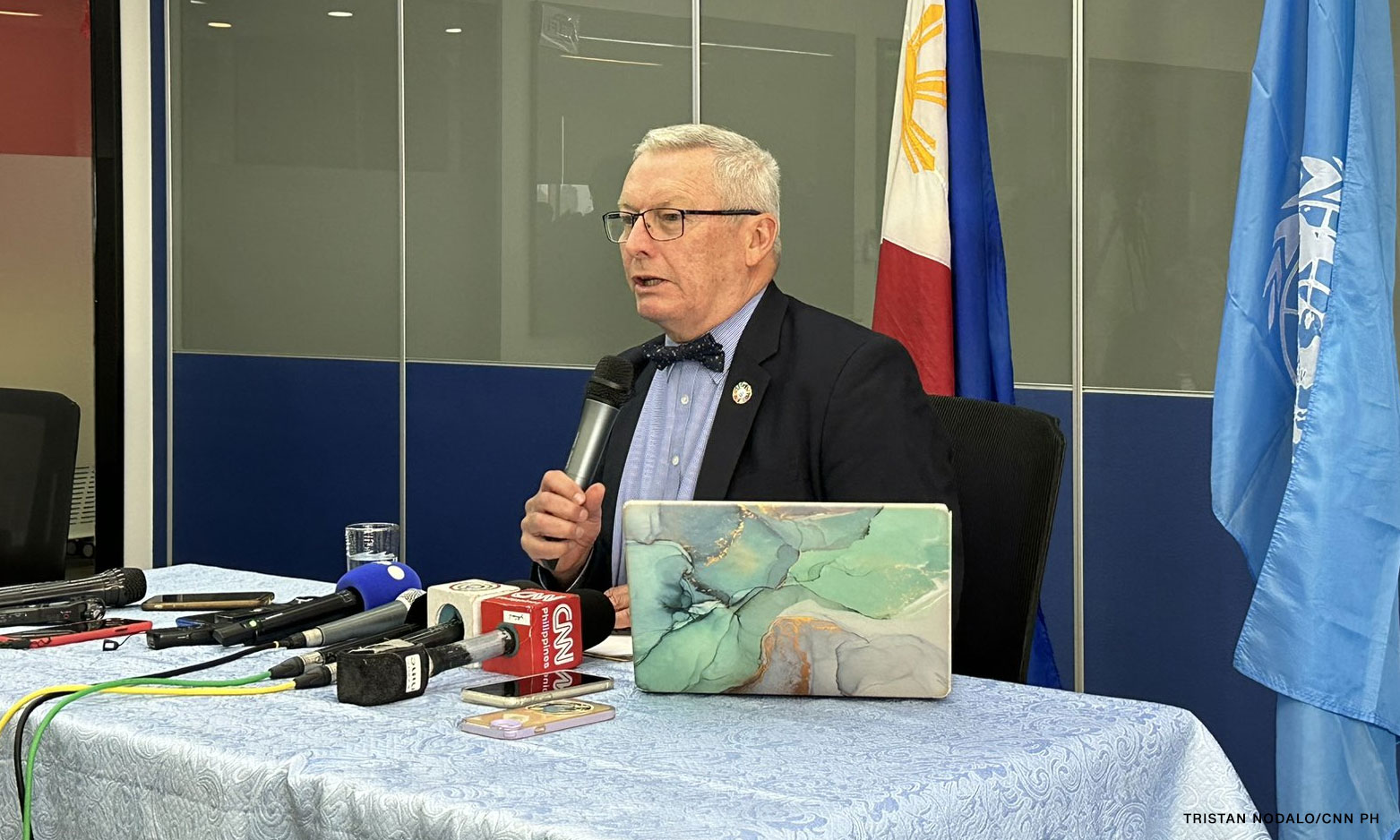
In a briefing, Ian Fry, the UN special rapporteur on the promotion and protection of human rights in the context of climate change, urged the government’s response to climate change “must be undertaken with the full support of the community.”
He said continued attacks on defenders would undermine the Philippines’ credibility in the international community, albeit having a “good on paper” climate response.
“I just got a sense that it’s moved beyond its mandate and its usefulness,” Fry said of the National Task Force to End Local Communist Armed Conflict (NTF-ELCAC). “This needs to be disbanded outright and the government needs to develop another approach to deal with terrorism issues.”
“It’s clear that this unit is operating with impunity and therefore needs to be abandoned,” he added.
Fry said red-tagging was not only happening during the past administration but “it continues today and this is a serious concern.”
He said he received complaints from civil society organizations and indigenous people groups that the government “was using the Anti-Terrorism Act, and its NTF-ELCAC to intimidate communities who oppose mining and dam projects.”
In September, rights watchdog Global Witness said the Philippines has remained the most dangerous country for environmental defenders in Asia for a decade.
Fry’s visit also came after environmental activists Jhed Tamano and Jonila Castro were reportedly abducted by four armed men on Sept. 2 in Orion, Bataan. They denied that they voluntarily surrendered to the authorities.
The activists are facing perjury raps filed by the military, which accused them of recanting their sworn statements.
National Security Council (NSC) Deputy Director General Jonathan Malaya told CNN Philippines that the recommendation was “unfair” as Fry “never bothered to dialogue with us at the very least since may [there are] complaints laban sa [against] NTF-ELCAC.”
“We have a call to him that the next time he comes to Manila, please meet with us, so that your report can be considered as complete,” he said, adding the council is open to discussing the concerns.
In a briefing, Justice Secretary Jesus Crispin Remulla said the UN human rights expert must not interfere with the country’s system — a similar stance the Philippine government has been posturing in relation to the International Criminal Court’s investigation on former President Rodrigo Duterte’s bloody war on drugs.
RELATED: PH gov’t ends engagement with ICC following rejected plea vs. drug war probe
“Internal mechanism ‘yan sa gobyerno wag silang makikialam diyan,” he said. “Wag silang makikialam kung paano natin gusto patakbuhin ang ating gobyerno.”
[Translation: It’s an internal mechanism of our government. They should not interfere with how we want to run our government.]
During his briefing, Fry said he had met government agencies, which he did not specify, to talk about the NTF-ELCAC and those agencies said they will study the issue. He added it’s up to the Philippine government to adhere to the recommendations.
The UN Human Rights Council said special rapporteurs are part of its special procedures, which are “independent fact-finding and monitoring mechanisms that address specific country situations or thematic issues in all parts of the world,” according to a news release provided to reporters.
Fry began his 10-day official country visit on Nov. 6 to meet communities, government officials, and civil society organizations.
He said he went to the Jalaur Mega Dam Project near Iloilo and met Tumandok tribe representatives, noting that “much of the dam site and land to be inundated by the stored water is on ancestral indigenous land.”
He is set to present a comprehensive report of his findings and recommendations to the UN Human Rights Council in June 2024, according to the news release.
CNN Philippines correspondent Tristan Nodalo contributed to this report.