




Despite the rainstorms, the 22nd Cinemalaya Philippine Independent Film Festival showcased over a dozen feature films and shorts over two weeks this August, with screenings across the metro packed with cinephiles and moviegoers. This year’s festival featured memorable performances from some of the country’s top actresses, as well as several impressive child actors, showing that the future of Philippine cinema is in good hands. From deeply affecting social dramas to shocking horror tales, it was a solid year as always for Cinemalaya.
As with every year, the hope is that these films will eventually be screened in cinemas all across the country. As we await what is to come for each of the entries, here are our short thoughts on five of the most memorable films that premiered at Cinemalaya 22:
1. Mag-Iina (The Mothering)
Thought-provoking, daring, and gloriously off-the-wall, Dagitab director Giancarlo Abrahan’s new horror drama follows a woman (Janine Gutierrez) who returns to her family’s ancestral home as the 40th day of her estranged father’s death approaches. There, she reunites with her grieving mother (Agot Isidro), her sketchy aunt (Cherry Pie Picache), her disturbing nephew (Lucas Andalio), and her terrifying grandmother (Jackie Lou Blanco).
What follows is a tense, suffocating tale about how some people can’t outrun the evils of their past (an allegory about the Philippines, surely). Every element of the film is designed to inspire anxiety, from the production design to the score, creating a haunted house that is frightening not because of the ghosts but because of the people who dwell in it. The cast is fully committed to the film’s strange, unsettling world, with Andalio joining the ranks of great “creepy child” characters and the monstrous Blanco delivering her best “psycho-biddy” performance.
2. Kaka Sa Yawan
In Alpha Habon’s coming-of-age drama Kaka Sa Yawan, we follow Niko, a young man from Manila who returns to Mindoro to fulfill a promise to his childhood Mangyan friend, Ayan. The film moves between two timelines: when Niko and Ayan first meet on the island and Niko’s first trip back nearly ten years later.
Habon is a wonderful writer, crafting a touching, funny, and charming script despite treading on familiar themes of friendship and grief. The “flashback” sections featuring the children, however, are far more affecting and effective in conveying what the film is trying to say than the present-day storyline. Still, the emotions run deep, and audiences will likely be reaching for tissues by the end. The film also features lovely cinematography capturing the lush natural beauty of Mindoro, along with delightful performances from its trio of child actors.
3. Ganggang
Filmmaker JL Burgos makes his narrative feature debut with Ganggang. Like Kaka Sa Yawan, this is a coming-of-age drama about kids in the province whose fragile, young friendships are heavily tested. Ganggang, however, goes much deeper, placing its young protagonists in the middle of a violent community overtaken by military personnel hunting supposed rebels in the area.
Burgos’ impeccably structured film is far from subtle. In his 2024 Cinemalaya-winning documentary Alipato at Muog, Burgos tackled the issue of enforced disappearances, a subject he carries into his narrative feature. What begins as a seemingly light story about boys and their fighting spiders gradually becomes a pointed critique of military violence and abuses of power. It is undeniably on-the-nose, but the story is told with such emotion and care that the heavy-handedness almost feels necessary to drive its point home. Ganggang may be rough around the edges, but it is an important film that will spark the right kind of conversation.
4. A.ni.mál
Hilarious and unfiltered, A.ni.mál is a dark comedy that shines a spotlight on problematic politicians and their complicit families. When the mayor’s daughter and aspiring social media influencer Lily secretly videotapes the governor in a compromising situation with his dog, she threatens to release the footage online unless the governor gives the dog to her, setting off chaos within their family and political party.
Part-The White Lotus, part-Veep, the film uses handheld camerawork, long takes, and rapid-fire dialogue to create a truly unhinged world where the powerful will do whatever it takes to get what they want. The cast goes all in, particularly Maxine Ignacio as Lily and Bituin Escalante as the governor’s wife, who rampages through the film’s middle section. At two hours, it could use some cuts, but its first 90 minutes are an entertaining roller-coaster ride and a deranged dive into the world of the powerful.
5. Status: Rejected
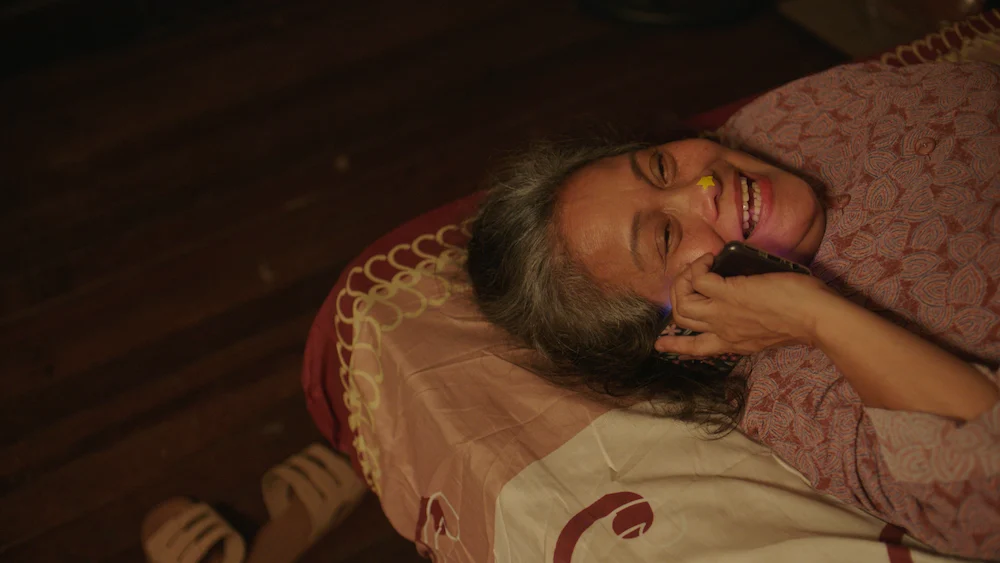
69-year-old widow Virginia dreams of visiting the United States to see her son, but after several visa rejections, she is beginning to lose hope. Her daughter, who still lives in the Philippines, tries to convince Virginia to give up on this dream, but when she has an online encounter with an American man who promises her a better life, Virginia is swept back into the possibility of starting anew.
Beneath the surface, this is a story about loneliness later in life and the feeling of becoming a burden to your family as you age. Actress Ruby Ruiz is perfect as the lonely but feisty Virginia. With a story like this, you can already sense it barreling toward its obvious conclusion, but Ruiz is so effortlessly engaging and Virginia so well-realized that you’re okay to see it through. She isn’t perfect, but you root for her happiness, and that’s largely thanks to Ruiz’s awards-worthy performance.
Cinemalaya 22 once again proved that Philippine independent cinema remains vibrant, ambitious, and full of fresh voices, with this year’s lineup offering plenty to celebrate and discuss. Now, all that’s left is to hope these films find the audiences they deserve as we look ahead to another exciting crop of filmmakers and stories at next year’s Cinemalaya.