


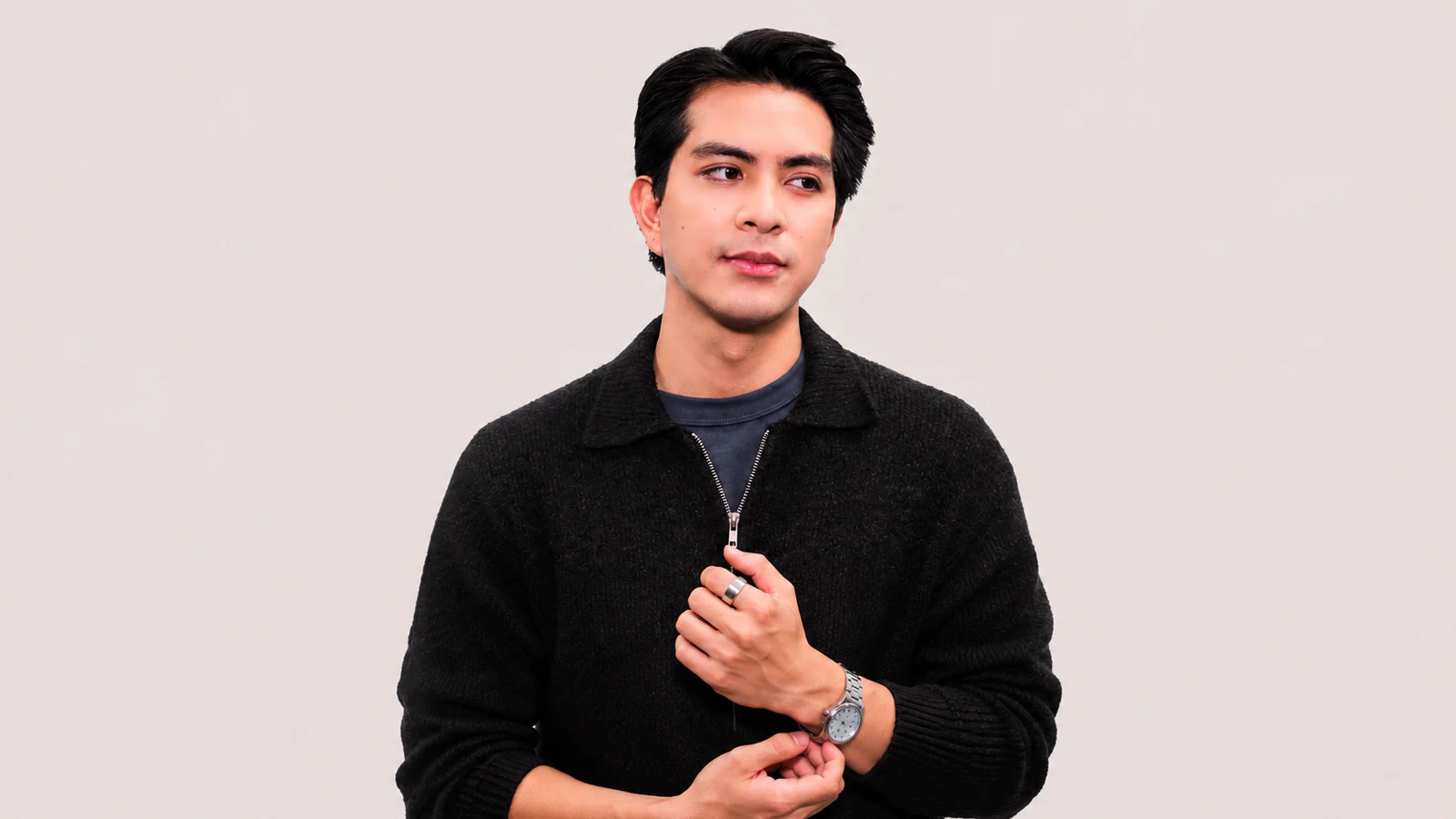


On paper, Reph Bangsil looks like the kind of guy people assume has always had life figured out.
He’s attractive, confident on camera, comes from a family of entrepreneurs, drives beautiful cars, travels often, and built a career many people his age are still chasing. Scroll through his socials long enough and it’s easy to flatten him into something simple: another aspirational internet success story. The kind born with advantages. The kind who probably never had to struggle.
Spend enough time talking to Reph though and that assumption starts falling apart pretty quickly.
Beneath the polished videos and carefully framed lifestyle content is someone who spent years rebuilding himself quietly. Someone who failed, restarted, burned out, questioned his direction, and slowly figured out that success online doesn’t automatically mean fulfillment offline. These days, Reph seems more interested in understanding what else he has to offer beyond aesthetics, cars, and internet growth, and how the platform he built can actually mean something to the people watching him.
That shift didn’t happen overnight either. In a lot of ways, it started with cars.
More Than “The Car Guy”
For as long as he can remember, Reph has been drawn to cars.
As a kid, he remembers praying he’d grow up fast enough to finally get a driver’s license. Years later, at nineteen, he used years’ worth of saved Christmas money to buy a two-door Toyota Corolla online for ₱35,000.
He laughs recalling it now because the purchase wasn’t exactly practical. More than anything, he was drawn to things with character. Vinyl records, classic films, vintage fashion, restoration culture. He liked the idea of showing up to school in a car that looked like it already had a story behind it.
“I’m an old soul,” he says. “I like old songs, old music. I like learning about history. I like old fashion.”
That fascination eventually became part of how people understood him online.
When TikTok exploded locally around 2021, Reph found himself in the right place at the right time. He already understood cameras, knew how to speak naturally to audiences, and had years of experience in entrepreneurship, hosting, and digital marketing behind him. Short-form video simply gave him a space where personality mattered more than polished production.
The format suited him almost immediately. His content felt aspirational without becoming intimidating, and he became recognizable for videos that felt polished while still approachable enough to seem personal.
But as his audience grew, so did the pressure to maintain that version of himself online.
When The Internet Starts Shaping You Back
Reph understands social media better than most people realize. He knows audiences respond to relatability. He knows algorithms reward familiarity. He knows people are more likely to engage with content that feels personal and conversational.
“For example, I noticed that when I do speak in Tagalog, fluently, directly, it’s something they can relate to,” he explains. “It’s shareable. It’s something that doesn’t feel foreign.”
The numbers reflected that shift. Eventually though, it stopped feeling entirely like him.
“My language changed,” he says. “And it did well, but I felt like I was losing my real way of speaking to them, which was Taglish or English.”
That realization made him rethink the kind of creator he wanted to become. Because behind the polished content people were seeing online were years of uncertainty audiences never really saw.
The Years People Didn’t See
After graduating college, Reph briefly tried corporate life and almost immediately realized he was unhappy.
“I felt like my skills were underutilized,” he recalls.
Coming from a family of entrepreneurs didn’t automatically make things easier either. Contrary to what people assume, there was never a guaranteed path waiting for him after college. He had to build his own.
He experimented with businesses, e-commerce projects, digital marketing work, hosting gigs, and side ventures that quietly filled most of his twenties. Some worked. Others didn’t. Most of it happened outside public view.
“Those were a lot of struggling years,” he says about the period between 2018 and 2021.
Even his success in motoring content eventually came with burnout attached to it. Before TikTok reshaped the creator landscape, Reph was already hosting for automotive channels, spending entire days filming car content that eventually drained the joy out of something he genuinely loved.
“I was just so sick of talking about cars,” he admits.
At one point during the pandemic, he sold his older vehicles and stepped away from the automotive space almost entirely. He briefly tried shifting into motorcycles instead, partly because he still needed some connection to the motoring world, even while trying to distance himself from it.
Eventually, he found himself returning to both cars and content creation.
By this point in the conversation, another thing starts becoming clear too: Reph approaches setbacks very differently from most people.
Behind The Calmness
What stands out most about Reph isn’t necessarily the lifestyle people see online, but how calmly he talks about uncertainty.
“I don’t see failures as failures,” he says at one point. “I believe that it gets better whatever scenario you’re in.”
It’s hard not to wonder where that kind of resolve comes from, especially in an industry where people burn out quickly and constantly feel pressured to reinvent themselves online.
Then, midway through the conversation, Reph casually reveals something most people following him still don’t know.
“At four, I had cancer.”
He recalls being a child during a massage when the masseuse noticed something unusual. Doctors later found what they initially believed was a malignant tumor, and surgery had to happen almost immediately. He still remembers classmates lining up outside his hospital room to visit him, pastors praying over him, and cameras documenting the entire experience.
Later, the tumor turned out to be benign.
For Reph’s deeply Christian family, the experience became a testimony of faith and was eventually featured on The 700 Club, where his story aired while he was still a child.
What’s striking is that he never built his public identity around that story. In fact, most audiences online still have no idea it happened.
“I was able to build a life without people knowing that,” he says.
Still, hearing him talk about it suddenly reframes the way he approaches life now. Reph doesn’t sound fearless so much as deeply aware that life can shift instantly, which may be why he approaches opportunities, failures, and uncertainty with less panic than most people his age.
“Everything I have after that, it’s extra,” he says quietly. “You’re already grateful to have your life.”
That perspective also explains why his priorities online seem to be changing.
What He Wants His Platform To Become
A few years ago, lifestyle content built around cool cars, nice outfits, and aesthetic moments was enough to hold attention. Now, Reph feels audiences searching for something more meaningful from the creators they follow.
“They don’t care for day-to-days anymore,” he says. “It’s more like, why should I watch you?”
That question seems to sit underneath a lot of the content he wants to create moving forward. Recently, he’s become more interested in talking openly about insecurity, failure, burnout, and the pressure people feel while constantly comparing themselves online.
“There are a lot of people at thirty who think their life’s just… where is this going?”
By this point, he’d gone through enough pivots to know life rarely moves in a straight line. The businesses, the burnout, the identity shifts online, and the moments where he questioned whether he even wanted to continue creating content at all all shaped the way he thinks about purpose now.
That’s also why he wants to become something broader than a motoring creator.
“I don’t want to be tied down to just motoring, or just brand deals, or just fashion, or just lifestyle,” he says. “I kind of want to be bigger than that.”
He’s no longer chasing scale for the sake of it.
During the interview, Reph recalls a line his father would always tell him: “Kung walang kwento, walang kwenta.” If there’s no story, it’s not worth it.
That idea seems to shape the direction he’s moving toward now. Not content for the sake of visibility, but stories people can actually carry with them after scrolling past the video.
“My plan moving forward is talking about everything I failed at,” he says.
It’s an interesting shift for someone whose audience could’ve easily stayed attached to the polished version of success. The cars, the travels, the aesthetics, the lifestyle. Reph seems aware that while those things may attract attention, they’re not necessarily what people remember.
“A lot of people are struggling secretly,” he says. “Sometimes they just want someone to talk to.”
When he describes the creator he hopes to become someday, the answer feels less about influence and more about reliability. Someone steady. Someone people feel safe being honest around.
“I just want to known as kuya,” he says, “someone people can go to.”
Maybe that’s ultimately what Reph is trying to build now: not just stories people stay for, but the kind of presence that reminds people they don’t have to figure everything out alone.