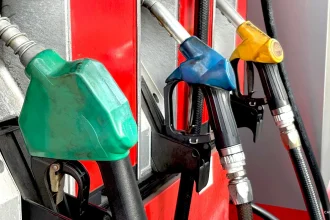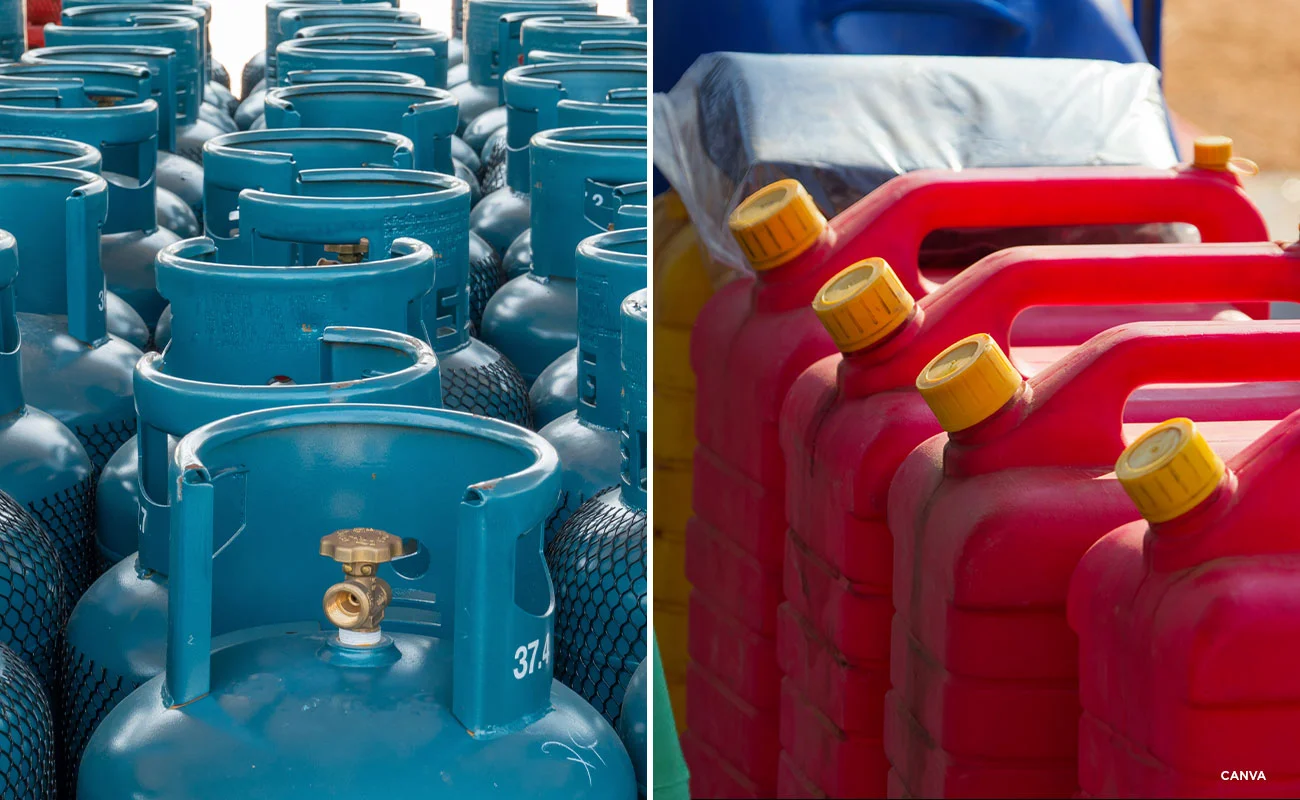

Metro Manila, Philippines – The long-awaited suspension of fuel excise taxes is finally happening—but the government has limited it to liquefied petroleum gas (LPG) and kerosene, leaving out diesel and gasoline whose soaring prices have burdened the transport sector and other industries.
“Bakit inuna ‘yung suspension ng LPG and kerosene… Ang inaasahan ng publiko is diesel and gasoline [Why prioritize suspending LPG and kerosene? The public expected diesel and gasoline],” Senator Sherwin Gatchalian asked finance officials in a Senate hearing on Monday, April 13, shortly after President Ferdinand Marcos Jr. announced the policy.
The suspension corresponds to consumer savings of ₱3.36 per kilo of LPG and ₱5.60 per liter for kerosene.
Gatchalian acknowledged that expanding the same policy to diesel and gasoline would have an impact on government revenues, but noted that the times call for such extraordinary action.
In response, Finance Undersecretary Karlo Adriano explained that the policy-making Development Budget Coordination Committee (DBCC) recommended the move to the president as the “most efficient way” to deliver subsidies to sectors most affected by the crisis.
Adriano said data showed that around 50% of kerosene consumption comes from the poorest households.
“Yung pagsu-suspend ng kerosene is really targeted for the lower to middle-income households [Suspending the excise tax on kerosene is really targeted at lower- to middle-income households],” Adriano said, similar to LPG.
“So ‘yung approach ng DBCC is targeted [The DBCC’s approach is targeted]. What is the most efficient way to deliver these subsidies particularly for the poorest of the poor and middle income class,” he added.
He said concerned agencies have coordinated with stakeholders to make sure that consumers will immediately benefit from the tax suspension.
On the other hand, Adriano said studies show that about 85% of diesel consumers and 50% of gasoline consumers belong to the wealthy sectors.
“If we provide this excise tax break for diesel ang pinakamakikinabang dito [the biggest beneficiaries] is the richest of the rich,” he said.
Instead, the DBCC opted to support a ₱10-per-liter fuel discount for public utility vehicles, Adriano said.
Gatchalian said he had initially viewed excise tax suspension as a last resort, but noted that it remains the fastest way to provide relief to consumers, especially as the government’s distribution of fuel subsidies and other forms of assistance has been slow.
He then asked whether the latest announcement meant the administration has had a change of heart and is no longer suspending excise taxes on diesel and gasoline.
Adriano said he has yet to review the president’s executive order, but noted that the DBCC recommended a monthly review of the policy. Gatchalian, however, urged that the review be done weekly, in line with the recent week-to-week fuel price adjustments.