
Metro Manila, Philippines – The government said its agreement with Iran to ensure safe passage through the Strait of Hormuz will not immediately bring down fuel prices, as the arrangement was aimed at securing steady oil supply.
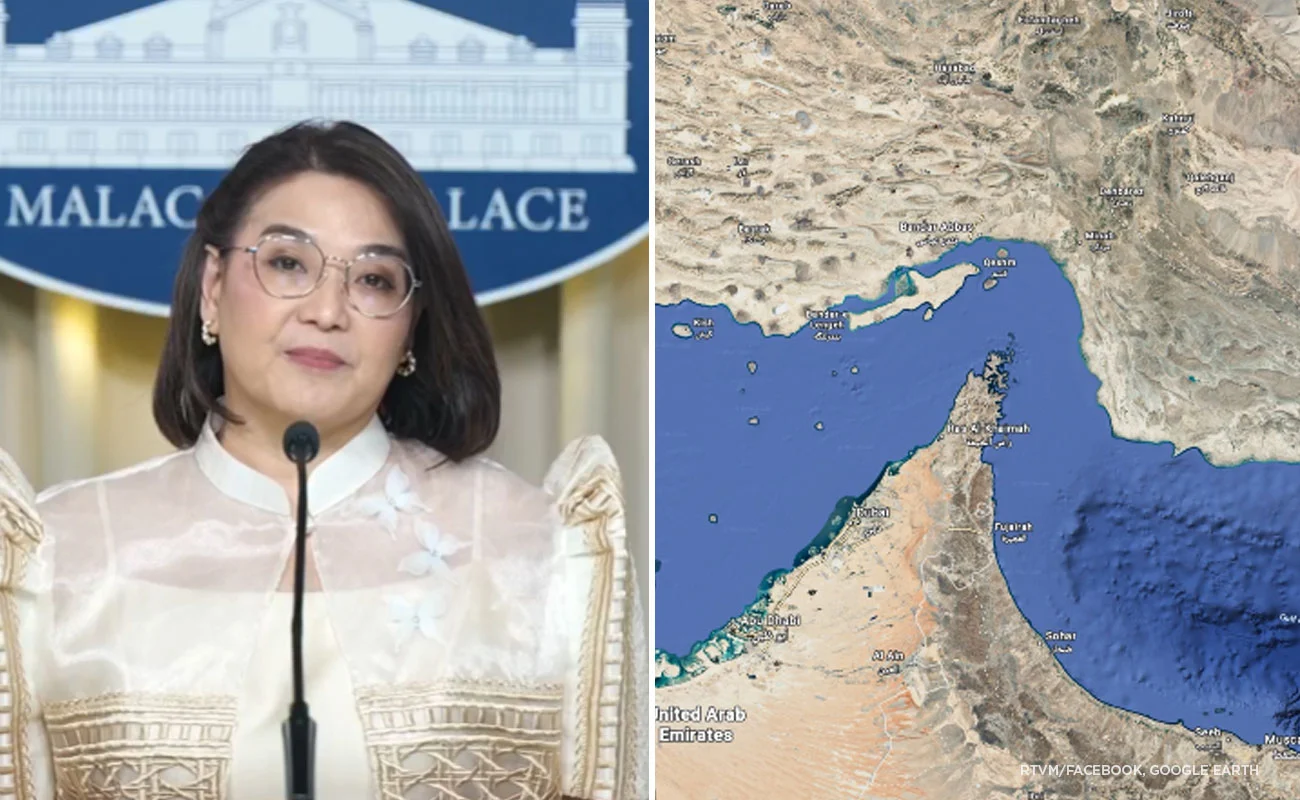
Palace press officer Claire Castro said the deal focuses on oil deliveries without disruption.
“Hindi po pinag-uusapan dito ang halaga. Ang pinag-uusapan po dito ay iyong patuloy na supply ng produktong petrolyo sa ating bansa,” she said during a Malacañang briefing on Monday, April 6.
[Translation: Price was not discussed. The talks were about the continued supply of petroleum products to our country.]
The Department of Foreign Affairs had announced that Iran assured the “safe, unhindered, and expeditious passage” of Philippine-flagged vessels, energy resources and Filipino seafarers through the strategic waterway where 20 percent of the world’s oil supply passes.
Castro said the agreement’s immediate benefit is supply stability and that fuel cost is based on global market forces and international suppliers.
“Ang premium cost po ang nagdidikta po nito ay international traders and suppliers, so wala pong authority ang government na i-slash po ito,” she said.
[Translation: Premium costs are dictated by international traders and suppliers, so the government has no authority to slash them.]
The Strait of Hormuz, a narrow passage between Iran and Oman, is a vital chokepoint through which roughly a fifth of the world’s oil supply passes daily.
Castro said ensuring unimpeded access through the strait allows Philippine-bound shipments to move more efficiently despite the geopolitical risks.
“Kung tayo po ay nabigyan na ng pagkakataon na makadaan nang walang restriction at walang pagpigil, alam natin ang epekto nito – mas madali, mas mabilis na makakakuha ng supply ng petrolyo,” she said.
[Translation: If we are allowed to pass without restriction or obstruction, we know the effect — it becomes easier and faster to obtain petroleum supply.]
Castro said “Philippine-flagged vessels” does not necessarily refer to ships owned by the Philippine government, but to vessels registered with Philippine authorities and operated or chartered by Filipino entities.
“Hindi po iyon teknikal or literally na barko ng Pilipinas,” she said.
[Translation: These are not ships owned by the Philippines.]