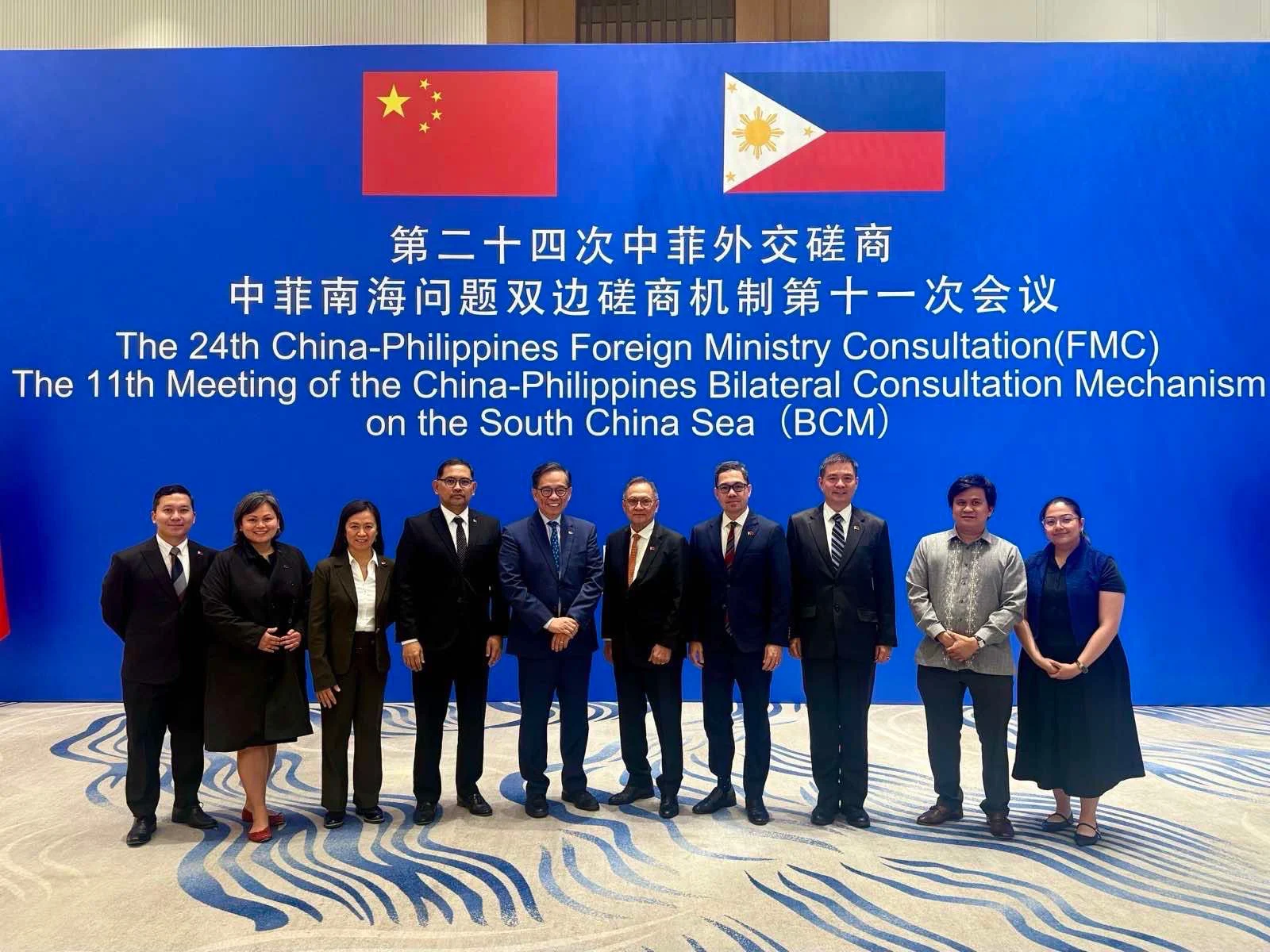

Metro Manila, Philippines – The Philippines and China held back-to-back high-level talks in Quanzhou on March 27–28, tackling tensions in the South China Sea while exploring initial cooperation in oil and gas, alongside broader economic and energy ties.
The Department of Foreign Affairs said the 24th Foreign Ministry Consultations (FMC) and the 11th Bilateral Consultation Mechanism (BCM) on the South China Sea provided a platform for “frank and candid” discussions on key bilateral concerns.
The Philippine delegation was led by Foreign Affairs Undersecretary Leo Herrera-Lim, while China was represented by Vice Foreign Minister Sun Weidong.
At the FMC, both sides discussed strategic, political-security, and law enforcement issues, with Manila reaffirming that engagements with Beijing are guided by national interest while pursuing practical cooperation in non-sensitive areas.
Amid global uncertainties, particularly developments in the Middle East, officials also discussed the importance of stable access to energy and fertilizers, as well as potential cooperation in renewable energy, trade, and agriculture.
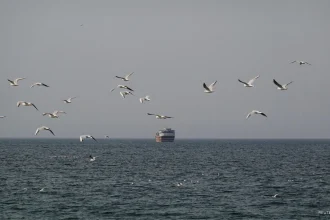
At the BCM, both sides held a “frank and thorough exchange” on the South China Sea, with the Philippines reiterating its position under international law and raising concerns over incidents affecting Filipino personnel and fishermen.
Manila emphasized the need to uphold the 1982 UNCLOS and the 2016 arbitral ruling, while pushing for diplomacy and communication to manage tensions at sea.
Officials said both sides made progress on confidence-building measures, including maritime communication and technical cooperation, as well as initial exchanges on possible oil and gas cooperation.
The talks also highlighted people-to-people exchanges, tourism, and connectivity, including proposals for visa-free arrangements and new direct air routes.
The meetings build on earlier engagements in Cebu and Beijing and are expected to pave the way for a possible meeting between the two countries’ foreign ministers later this year.
Malacañang, meanwhile, said any potential energy cooperation with China will be transparent and aligned with Philippine interests.
Palace press officer Claire Castro said the Philippines remains sincere in its dealings and has no secret agreements on joint oil exploration.
“Unang-una po, hindi po kailanman naging hindi sincere ang bansang Pilipinas… sa lahat ng pagkakataon, ang Pilipinas ay laging sincere sa pakikipag-usap at pakikipagnegosasyon,” Castro said.
[Translation: The Philippines has never been insincere… it has always been sincere in dialogue and negotiations.]
“Wala po siyang secret deal. So, kung anuman po ang maaaring idulot ng anumang negosasyon, at ito ay magiging maganda para sa Pilipinas, iyan naman po ay hindi tututulan ng Pangulo,” she added.
[Translation: There is no secret deal. If any negotiation benefits the Philippines, the President will not oppose it.]
Castro said there is no joint oil exploration agreement with China, but the government remains open to future discussions.
“Sa ngayon po ay wala pa pong joint exploration with China pero hindi naman ibig sabihin na hindi magkakaroon,” she said.
[Translation: There is no joint exploration for now, but that does not mean it will not happen.]
President Ferdinand Marcos Jr. earlier said shifting global dynamics, including disruptions in oil supply linked to the Middle East conflict, could prompt countries to revisit energy cooperation.
The joint oil expiration was first discussed during the Duterte administration but talks bogged down over sovereignty issues, among others.