
Manila, Philippines – The central bank’s policymaking Monetary Board kept borrowing costs untouched on Thursday, March 26, during an off-cycle meeting it held amid what it described as “fast-changing developments and uncertain economic conditions.”
The unscheduled rate review was nearly a month ahead of a scheduled April 23 meeting, but made in wake of President Ferdinand Marcos, Jr.’s declaration of a state of national energy emergency as global crude prices spiral out of control amid the Middle East war.
The Bangko Sentral ng Pilipinas’ (BSP) key policy rate stayed at 4.25 percent.
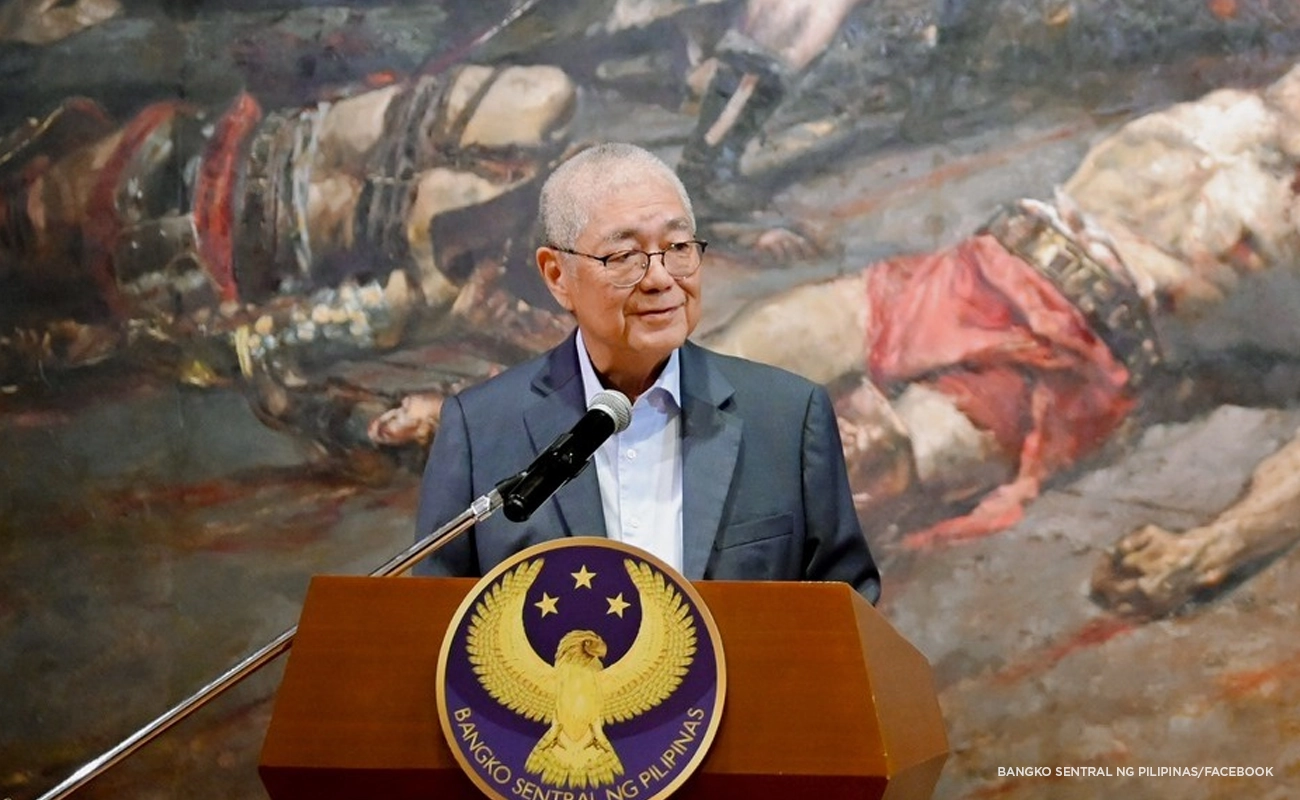
“I hope it (rate hold) reassures markets that we are assessing the situation constantly,” BSP Governor Eli Remolona told a virtual press briefing on Thursday.
Still, the central bank did not rule out the likelihood of reversing its loose monetary cycle when the so-called “second-round effects” from the oil price shock become clear.
But tightening money supply via higher borrowing costs would do little when the price pressures are not coming from the demand side.
“Normally, with inflation going where it’s going, we would have hiked. But because it was driven by supply shocks, we felt a hike wouldn’t do very much. And at the same time, because growth was relatively weak, growth would temper any rise in inflation,” Remolona said.
“Once we see second-round effects from those shocks, I think it would be appropriate for monetary policy to tighten and address the inflation arising from them,” the central bank chief said.
PESO, STOCKS FALL
Currency markets responded with the peso losing more ground for a second straight session to court its historic low of P60.30 per dollar.
The exchange rate was P60.23 against the greenback, 13 centavos weaker than Wednesday’s finish.
Stocks slid 0.99 percent to 5,984.20, reversing gains from the day before.
“Investors engaged in profit-taking and likely maintained short-term positions amid persistent uncertainty in the Middle East,” Regina Capital managing director Luis Limlingan said in a research note.
“Sentiment was further weighed down by inflation concerns, with expectations that price growth could exceed the BSP target ceiling of 4% after BSP maintained key policy rate in an off-cycle meeting,” he added.