


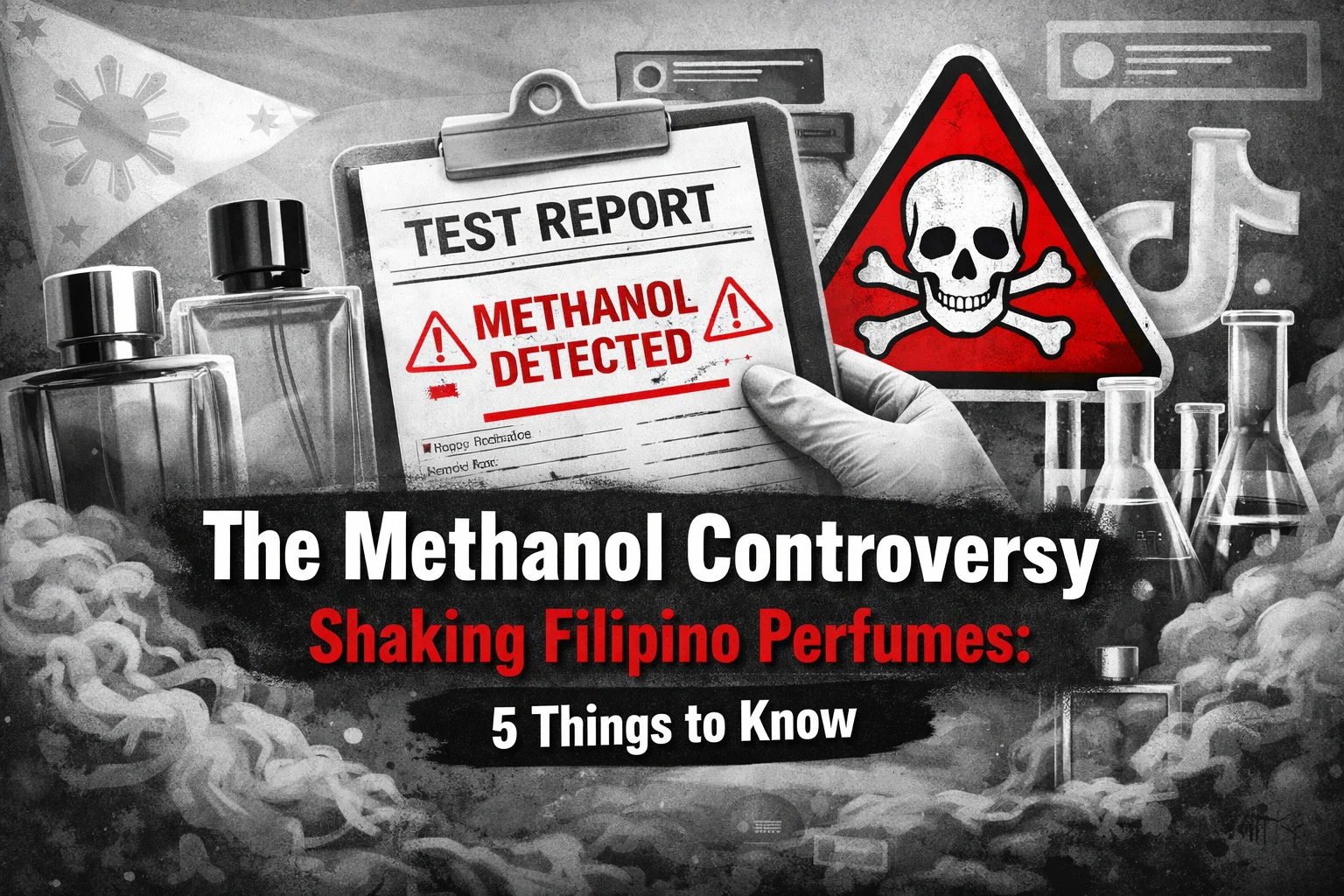
Filipino fragrance TikTok has spent the past few days talking about one thing: methanol. What began as circulating test screenshots and short-form videos has now spilled into Reddit, Facebook groups, Threads, and brand comment sections, with consumers questioning whether some local perfumes are actually safe to wear. This is still largely a fast-moving social media story rather than a formal regulator-led crackdown, but the reaction has been strong enough that it is already changing how people talk about local fragrance brands online.
1. It started on TikTok
What seems to have pushed the conversation into overdrive was a wave of TikTok and reposted social content claiming that some local perfumes showed high methanol content in testing. These quickly made their way into forums like r/fragheadph, where users began dissecting the claims and asking for verification. The issue here is not just the content itself, but how fast it spread without a central authority confirming or debunking it. What people are reacting to is a mix of claims, speculation, and partial information moving in real time.
2. Methanol can be deadly
The reason this story has hit such a nerve is simple, methanol is not something consumers expect to be debating in a perfume conversation. The Philippine FDA has previously stated in multiple advisories that methanol is not allowed to be part of a cosmetic product, citing the ASEAN Cosmetic Directive. Health authorities also treat methanol exposure seriously. Repeated methanol vapor exposure can lead to headaches, giddiness, sleep disturbance, stomach issues, and visual problems, while the U.S. FDA has warned that substantial methanol exposure can cause blurred vision, nervous system damage, seizures, coma, and even death. In other words, even before any new claims are fully proven, the word itself carries enough regulatory and health weight to trigger panic.
3. The loudest conversations are happening in fraghead communities, not traditional beauty media
The issue is being driven by user discussions rather than official statements. TikTok, Reddit, and Facebook fragrance groups have become the main spaces where people are sharing screenshots, naming brands, and comparing experiences. Some posts claim very high methanol percentages, though these remain publicly unverified. The speed of these conversations has pushed the issue beyond niche frag circles and into broader awareness.
4. Reactions are split between fear, skepticism, and accountability
If you scan the discussions, three clear reactions keep coming up. The first is fear. Some buyers say they have stopped using local perfumes altogether, pulled bottles from their rotation, or switched back to designer and Middle Eastern scents while waiting for clarity. The second is skepticism. Even worried users are asking whether the screenshots are reproducible, whether a lab can be identified, and whether a single test should be treated as proof for an entire brand or multiple batches. The third is accountability. Many commenters are saying that whether the contamination came from a supplier or the brand itself, the seller still has a responsibility to verify what goes into the product before it reaches consumers. That last point is what makes this bigger than gossip: the conversation has moved from “is this true?” to “what systems should have prevented this in the first place?”
5. The backlash is already pushing the local perfume scene toward a receipts-first culture
Even without an official conclusion, expectations are changing. Consumers are now asking for certificates of analysis, ingredient transparency, and proof of alcohol sourcing. This comes on top of previous concerns raised about unsafe or questionable ingredients in some locally sold fragrances. Methanol may be the trigger for the current conversation, but the larger issue is trust. Buyers are starting to expect documentation, not just marketing.
The story is still unfolding, and social media is moving faster than formal verification. That makes it easy for speculation to blur into fact. What is clear is that the local fragrance space is being pushed toward higher standards. What started as a TikTok controversy is turning into a credibility test for the entire category.