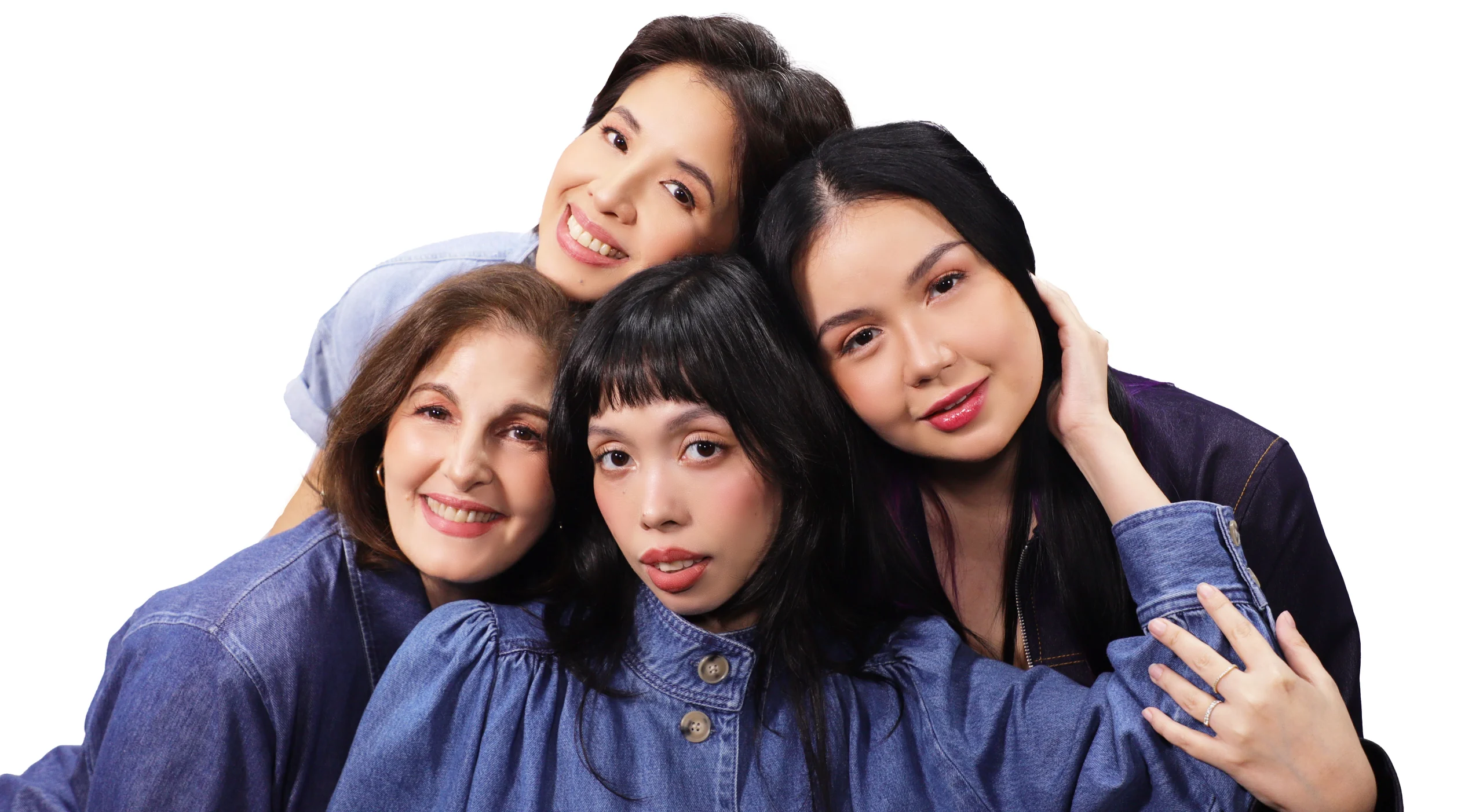

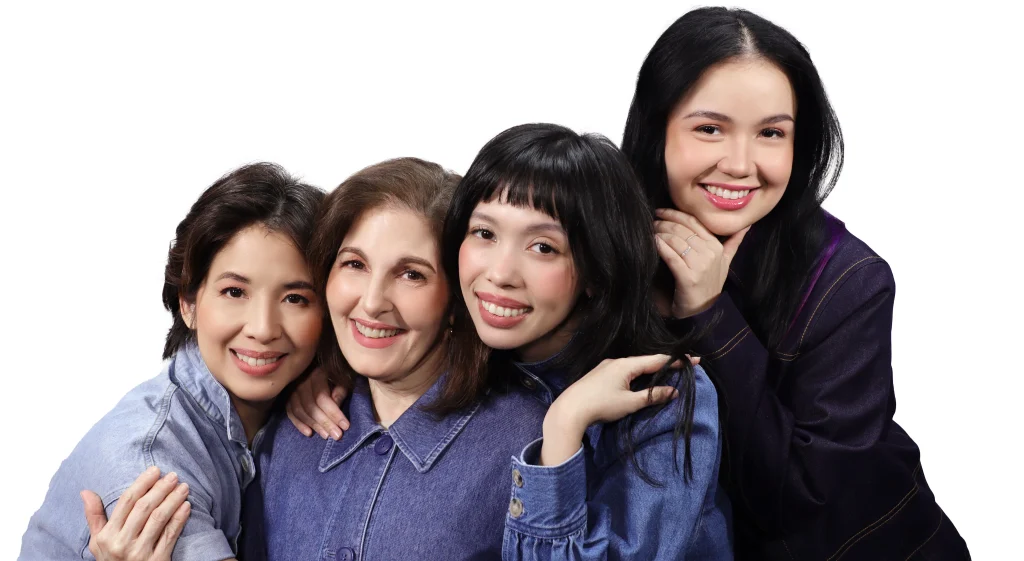
When the four actresses of anthropology gather around the table, the first thing you notice isn’t performance energy or the careful politeness that sometimes accompanies interviews. It’s familiarity. The conversation flows with the loose rhythm of friends who are comfortable interrupting one another, circling back to earlier jokes, and letting silence sit for a moment before someone breaks it with another story.
Even before the interview properly begins, their personalities announce themselves.
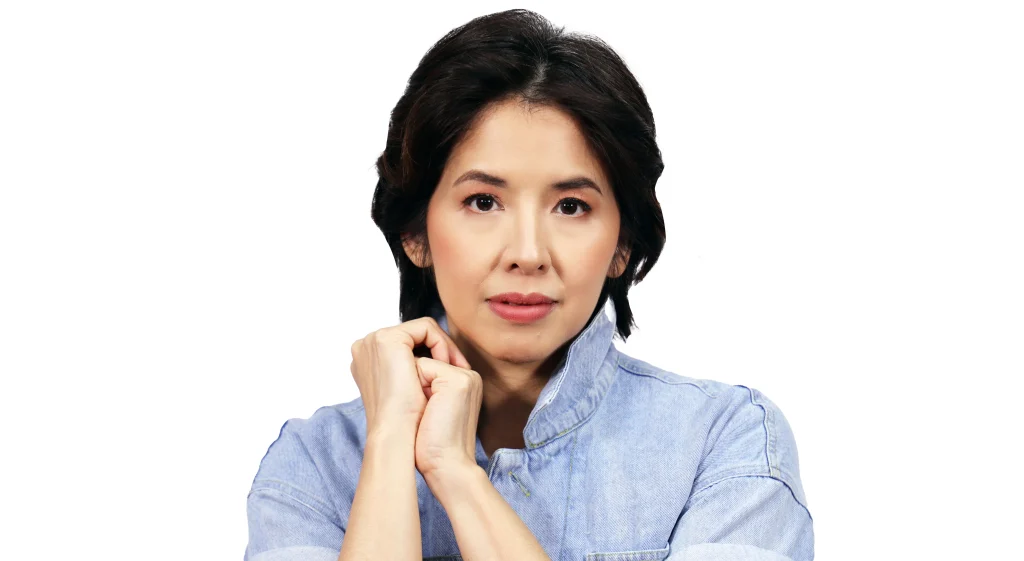
Jenny Jamora has the air of someone who’s always thinking two steps ahead of the conversation. She speaks with deliberation, the way people do when they’re used to considering both the emotional and intellectual weight of what they’re saying. There’s an intelligence to her presence that doesn’t feel intimidating so much as grounded, as though she’s already mapping the ideas behind the play while everyone else is still finishing their coffee.
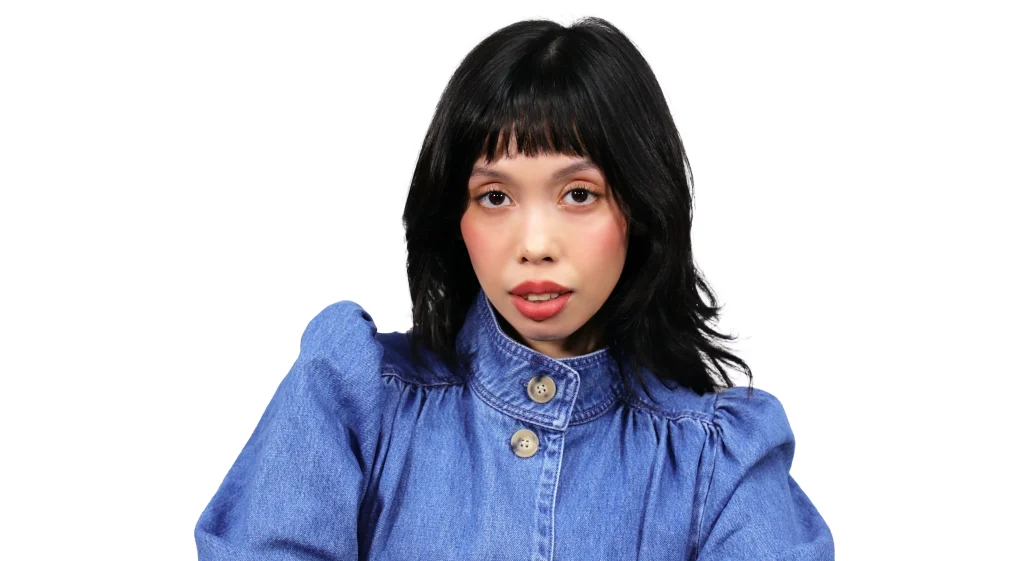
Right beside her sits Maronne Cruz, who initially projects the calm composure of a cool girl who has seen it all before. There’s a slight distance in the way she carries herself, an easy self-possession that suggests she’s not easily rattled. But it doesn’t take long for that composure to crack open in the nicest way. The coolness gives way to something unexpectedly gentle and thoughtful in the way she speaks, listens, and laughs. She still has the face reminiscent of a pre-Raphaelite painting, but the surprise is that she’s warmer than that first impression lets on.
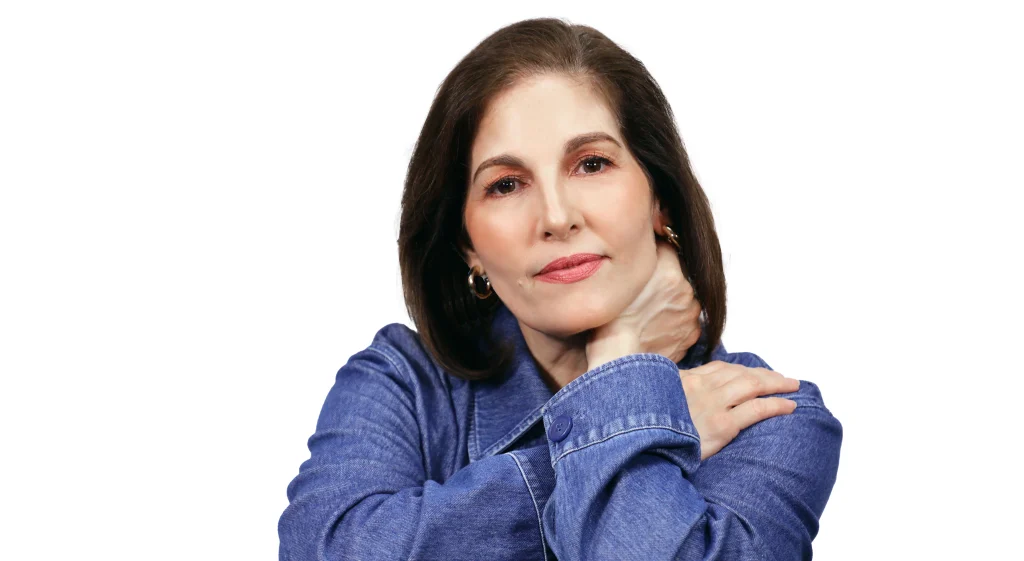
Across the table, Jackie Lou Blanco radiates warmth that feels almost maternal, the sort that makes people instinctively relax around her. She listens with her whole face, leaning in when someone’s telling a story, nodding in understanding before offering her own perspective. When someone says something vulnerable or reflective, she’s the first to respond with empathy. You get the sense she’d be the one bringing snacks to rehearsal and checking that everyone has eaten.
And then there’s Mikkie Bradshaw-Volante, who seems entirely incapable of letting the room become too serious for too long. She’s funny, quick, and disarmingly easygoing, the person who punctures heavy moments with a perfectly timed remark. When the conversation veers toward existential questions about grief or artificial intelligence, she’s the one reminding everyone to laugh before things spiral too far.
Put the four of them together and the dynamic becomes unmistakable. Sitting there, watching them bounce off one another, it’s easy to think of that very specific kind of female solidarity that feels instantly familiar and safe. The kind where, hypothetically speaking, if someone in the room suddenly confessed she had accidentally killed a man, the reaction probably wouldn’t be horror or judgment but rather, “Okay. But what did HE do?”
Not because girlhood is built on violence, bitterness, or blind loyalty. It isn’t. If anything, that instinct comes from knowing, in ways both big and small, how hard it can be to move through the world as a woman. It comes from understanding each other’s stress, anger, exhaustion, hurt, and the quiet ways women are often expected to endure more than they should. The joke, or rather the idea of it, says less about men than it does about women’s tendency to meet each other first with understanding. That, more than anything, feels like the essence of girlhood.
Which is why it’s so striking that the women sitting around the table seem almost nothing like the characters they portray in anthropology. Director Kaisa Borromeo describes the four women in the play as “flawed, lost and looking for connection.” Watching the cast laugh, tease one another, and slip so easily into the rhythms of easy company, it’s hard to imagine them inhabiting women who feel so fractured. And yet that distance between actor and character may be exactly what makes them so compelling to watch.

A Story That Feels Uncomfortably Close to Reality
The production found its way to them when the creative team began searching for a play to stage for Women’s Month. They initially considered another work by Lauren Gunderson, who is known for writing stories centered on women. That particular script wasn’t available, so Gunderson suggested anthropology instead.
When the cast read it for the first time, excitement wasn’t the dominant reaction.
“It was eerie for me,” Jamora recalls. Cruz describes the script as “unsettling.” The material didn’t resemble anything they had encountered before, which made the reading experience feel slightly disorienting. “I remember thinking, I don’t think I’ve seen material like this,” she adds.
At the center of anthropology is a premise that sounds almost speculative: a woman builds a grief bot, an artificial intelligence trained on the digital traces of someone she has lost. The AI learns the rhythms of the person’s speech, their patterns of thought, the fragments of personality scattered through emails, texts, and recordings.
On paper, it sounds like science fiction. But what makes the play work is that it never treats technology as some distant fantasy. Instead, it uses it to get at something much older and more human: grief, loneliness, longing, and the ways people try to fill the spaces left behind by loss.
That tension becomes especially vivid when Jamora speaks about her own experience. During a recent period of grief, she found herself turning to ChatGPT, not because she thought it could replace real comfort, but because grief has a repetitive quality that can leave you feeling as though you’ve already asked too much of the people around you.
“I felt I’d exhausted my time just telling everybody,” she says. “It gave me what I wanted in times that I felt like I was too much.”
It’s one of the most unexpectedly honest moments in the conversation, and also one of the most revealing. The point isn’t that technology can somehow solve grief. It’s that grief can push people toward forms of comfort they might never have considered otherwise. No one at the table reacts with surprise. If anything, there’s immediate understanding. The silence that follows feels less like judgment and more like recognition.
That honesty reveals the emotional core of anthropology. Beneath its technological premise lies a much older story about abandonment, longing, and the complicated ways people try to repair what has already been broken.
Each of the four women in the play is holding onto something fragile. One character wants to be chosen. Another hopes for forgiveness after years of absence from her children’s lives. Another wants, simply and painfully, to feel wanted.
Jamora’s character, Merril, is driven by a slightly different ache.
“Merril wants to be enough,” Jamora explains. “There’s a lot of sense of abandonment in her. When someone’s abandoned, that question becomes permanent. Why was I not wanted? Why was I not enough?”
That question reverberates throughout the play.
The women are bound to one another through complicated relationships, but they don’t always know how to reach each other without also reopening old wounds. They argue. They misunderstand one another. They hurt each other. They love each other badly, sometimes desperately, and not always in ways that look generous from the outside.
The cast appreciates that complexity, especially because so many stories about women still soften their edges. Women are often expected to be inspiring, nurturing, graceful in their suffering, and easy to root for. Even when they’re written as “complex,” there is usually pressure to make them palatable by the end. anthropology resists that.
Cruz points out how often women are expected to remain legible and sympathetic, when real women are often far messier than that. Blanco, meanwhile, pushes back against the idea that strength only matters when it resembles masculinity. There is power too, she says, in “nurturing, care and love,” in the traits often dismissed as overly feminine. Bradshaw-Volante takes it further, noting that the play doesn’t need to loudly declare itself as an “all female cast” in order to be meaningful. “We can just exist, that’s already political,” she says.
That feels especially resonant now, in a moment when public conversations about women’s bodies, autonomy, and choices continue to be shaped by people in power, many of whom still speak about women as though they are subjects to be corrected or controlled. Against that backdrop, a play that lets women be messy, hurting, difficult, and deeply human feels not just timely but necessary.
Why anthropolgy Matters Right Now
When asked what they hope audiences will take away from the play, the answers all circle back to the same thing. Jamora hopes people leave wanting “to have a conversation.” Bradshaw-Volante, with a laugh, puts it more simply: “Call your mom. For God’s sake. Call your mom.” Cruz hopes the play leaves audiences “valuing and craving connection,” while Blanco says she wants it to inspire people “to connect.”
Because in the end, anthropology isn’t really about artificial intelligence so much as it is about people, and the awkward, imperfect effort of trying to reach one another across grief, pride, misunderstanding, and time. Watching the four actresses laugh together across the table, one thing becomes clear: the warmth filling the room has nothing to do with perfection. It comes from seeing each other clearly, flaws and all, and choosing to stay anyway.
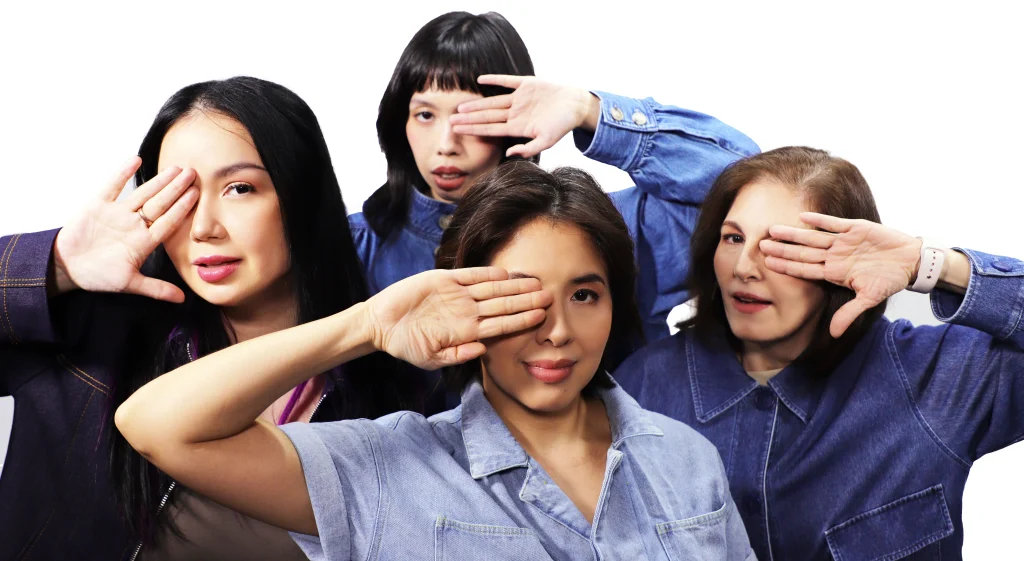
anthropology runs March 13 to 29, 2026 at the Doreen Black Box Theater, Ateneo de Manila University. The production is presented by Barefoot Theatre Collaborative and directed by Kaisa Borromeo, with performances by Jenny Jamora, Maronne Cruz, Jackie Lou Blanco, and Mikkie Bradshaw-Volante.
Get your tickets here: bit.ly/anthropologytickets