
Tokyo, Japan – Japan should operate all of its available nuclear power plants to offset the impact of the Iran war on electricity bills, Yuichiro Tamaki, the leader of a Japanese opposition party, said on Monday.
Japan relies on the Middle East for around 95% of its oil supplies and 11% of its liquefied natural gas imports, with around 70% and 6% respectively coming via the Strait of Hormuz, which is effectively closed due to the war.
“Unless we make full use of nuclear power as a carbon-free power source with less dependence on overseas sources, electricity bills will inevitably rise,” Tamaki, who heads the Democratic Party for the People, said on X.
New Prime Minister Sanae Takaichi is also staunchly pro-nuclear and Japan’s public is gradually becoming more supportive of nuclear power.
Japan shut down all 54 of its nuclear power reactors – which provided roughly 30% of the country’s electricity – after the 2011 Fukushima Daiichi plant nuclear meltdowns. Thirty-three remain operable but only 15 have been restarted.
Another nine reactors have applied for restarts, according to Japan Atomic Industrial Forum data, but their specific resumption dates are yet to be determined.
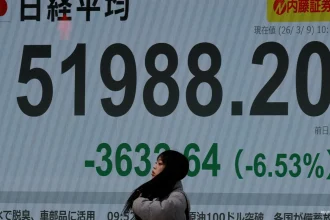
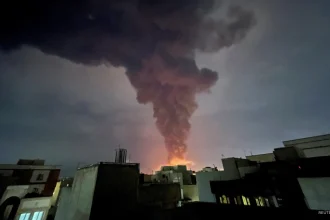
Oil prices surged over 20% on Monday, hitting their highest in years, as the expanding U.S.-Israeli war with Iran fuelled fears of tighter supply O/R, with industries in Japan already reporting an impact.
Mitsubishi Chemical 4188.T on Monday started to cut ethylene production at its plant in Ibaraki north of Tokyo, the company said.
With the Iran crisis widening, a Japanese lawmaker said on Sunday that the government instructed a national oil reserve site to prepare for a possible release of crude. Japan holds emergency oil reserves equivalent to 254 days of domestic usage, but no decision has been taken on whether to release part of the stockpile.
(Reporting by Kantaro Komiya and Katya Golubkova; additional reporting by Kaori Kaneko and Kentaro Okasaka; Editing by Edwina Gibbs and Saad Sayeed)