
Metro Manila, Philippines – The Department of Foreign Affairs (DFA) criticized what it described as “malicious” attempts to misrepresent a provisional understanding between the Philippines and China on resupply missions to Filipino troops stationed at Ayungin Shoal in the West Philippine Sea.
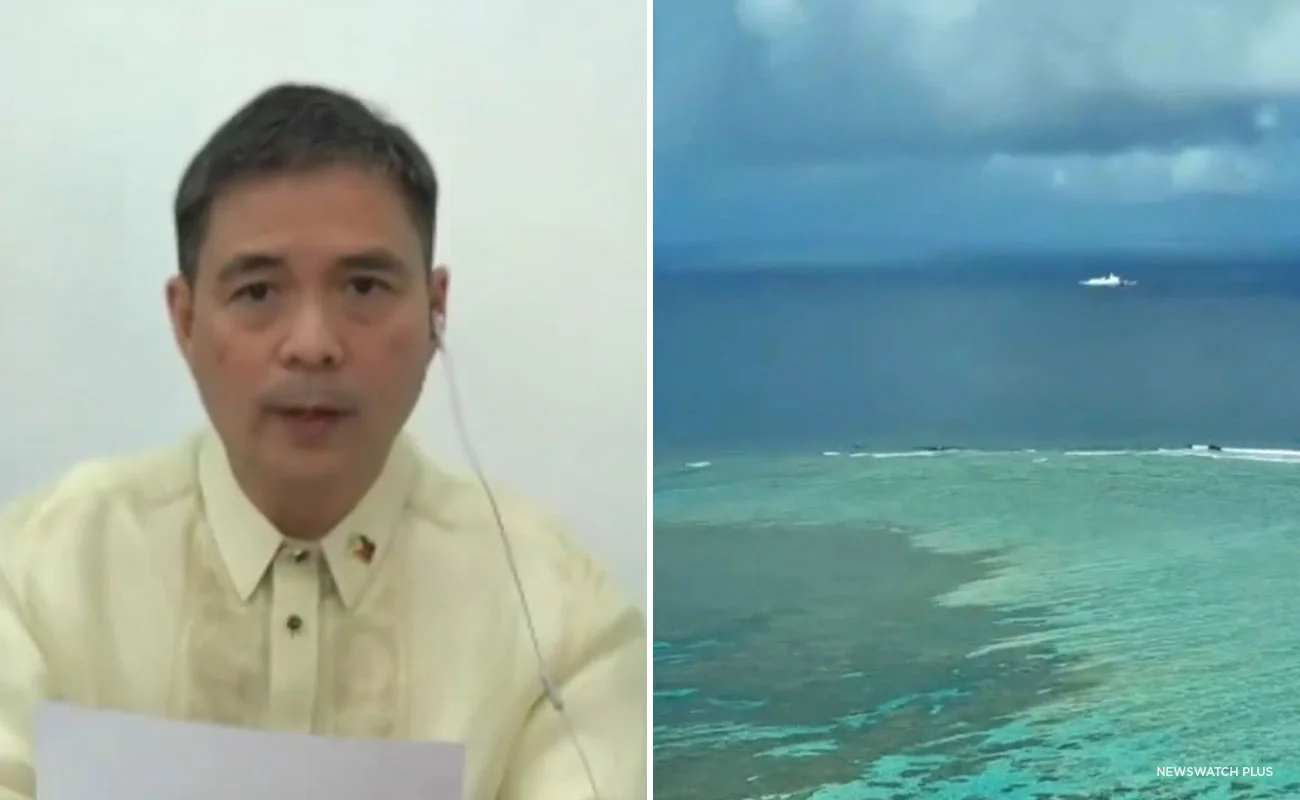
DFA spokesperson for maritime affairs Rogelio Villanueva Jr. said public criticism of the arrangement has been fueled by misinformation and misinterpretation of international law.
“To portray the provisional understanding as a singular application of UNCLOS provisions demonstrates either a fundamentally unfounded interpretation of international law or a malicious attempt to deliberately misconstrue the Philippine position and government efforts,” Villanueva said during a press briefing on Wednesday, March 4.
The provisional understanding covers routine rotation and resupply missions to the BRP Sierra Madre, a grounded Philippine Navy ship that serves as an outpost at Ayungin Shoal.
Villanueva said the arrangement is designed to prevent incidents at sea and reduce the risk of misunderstandings between Philippine and Chinese vessels during resupply operations.
The DFA said the understanding is not a provisional maritime agreement under the United Nations Convention on the Law of the Sea (UNCLOS), contrary to claims made by some critics.
He explained that the arrangement is simply a mechanism intended to help manage tensions while allowing the Philippines to continue its routine missions to support personnel stationed on the BRP Sierra Madre.
According to the DFA, the understanding does not require the Philippines to seek permission from China before conducting its resupply missions, nor does it allow Chinese authorities to board or inspect Philippine vessels.
The arrangement also does not compromise the country’s sovereignty, sovereign rights or jurisdiction, Villanueva said.
The provisional understanding was reached in July 2024 following discussions between Manila and Beijing through the Philippines-China Bilateral Consultation Mechanism.
At the time, both countries said the arrangement was intended to help de-escalate tensions in the South China Sea and manage differences through dialogue.
Villanueva said the arrangement has allowed the Philippines to carry out 13 rotation and resupply missions to the Sierra Madre since it took effect.
“All these missions had no reports of untoward incidents,” he said.
Villanueva said the arrangement still faced criticism from some commentators who question its implications.
“Indeed, there is an inherent inconsistency and dullness of reasoning when critics criticize a document that they have not even seen,” he said.
The DFA said it will continue implementing the understanding while expecting China to abide by the same commitments.
Villanueva reiterated Manila’s position that the 2016 South China Sea arbitral ruling settled maritime entitlements in the region and declared China’s sweeping claims based on the so-called nine-dash line to have no legal basis under international law.
He said the country remains committed to protecting its sovereignty while managing disputes through diplomacy.