


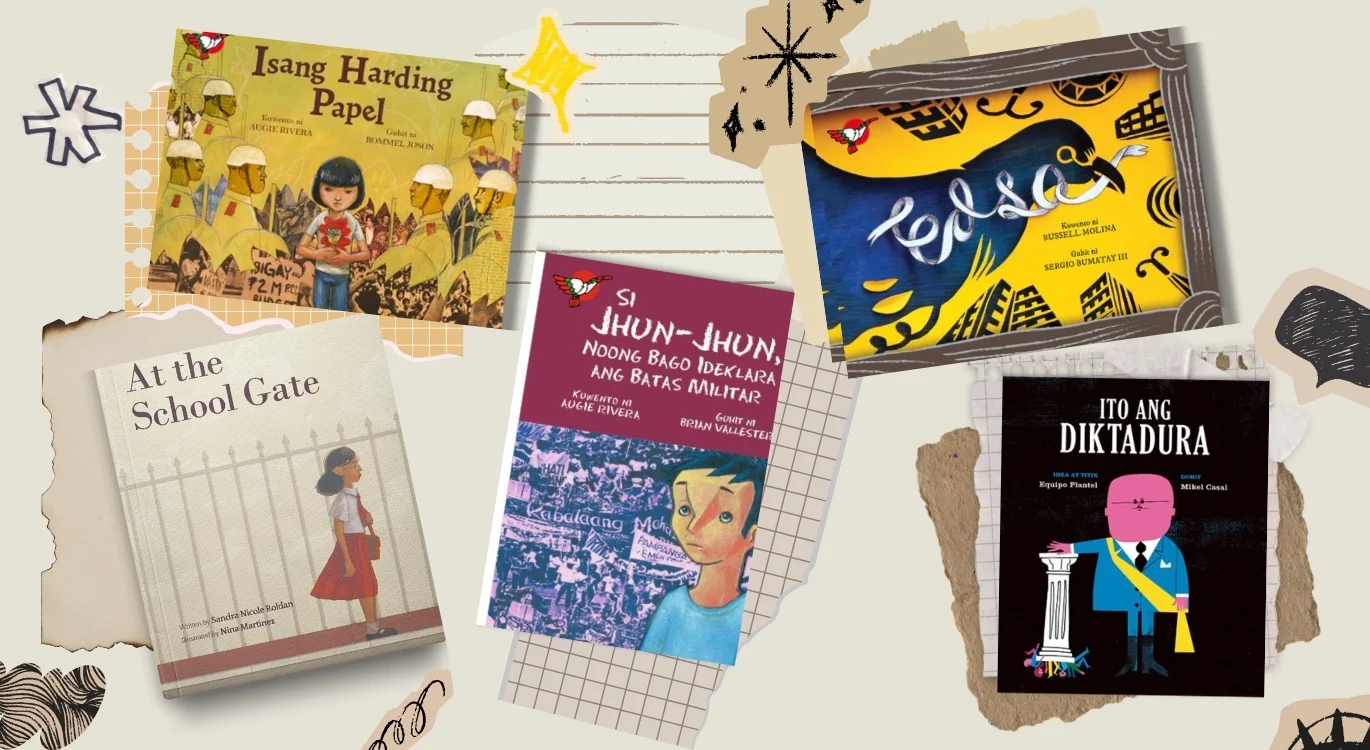

History repeats itself when we stop paying attention. That’s why it matters to start early, while kids are still forming their sense of what is fair, what is true, and what it means to be brave. People Power is often taught as a headline, but for families who lived through it, it was also quiet fear at home, unanswered questions, and small acts of courage that added up. These books give Filipino children a gentler way in, through stories that protect them from overwhelm while still honoring what happened. Here are five titles worth adding to your family shelf.
1.EDSA
This book helps children see People Power the way it should be remembered, not as a single dramatic scene, but as many ordinary people choosing to show up. The illustrations let kids “feel” the crowd, the movement, and the togetherness, even if they don’t understand every detail yet. It’s a beautiful starting point for talking about hope that’s shared, not solitary. Read it slowly, because kids often notice the most important things in the background.
Best for: Ages 8+ and family read-alouds
Conversation starter: “What do you think the people came for? If you were there, who would you hold hands with?”
2.Si Jhun-Jhun, Noong Bago Ideklara ang Batas Militar
This story is about the moment life starts to change, and a child can sense it before they can explain it. It shows how rules can creep into everyday life, how the world becomes smaller, and how fear can hide in ordinary days. Because it’s told through a child’s perspective, it’s easier for young readers to understand without being frightened. It’s also a reminder that even kids carry memory, even kids deserve truth.
Best for: Grade school kids who learn through everyday scenes
Conversation starter: “If your day suddenly changed and you didn’t know why, what would you feel first? Who would you ask for help?”
3.Isang Harding Papel
This quiet book aptures what many families lived through, the waiting, the worrying, the trying to stay normal when nothing feels normal. Kids will recognize the emotions even if they don’t fully understand the politics, because uncertainty is something children feel deeply. It’s a book that invites empathy, and it gently shows that “history” isn’t only outside the home. Sometimes it walks right into your living room and sits with you.
Best for: Sensitive, observant kids and parent-guided reading
Conversation starter: “What would you say to the child in the story? What do you do when you miss someone and you don’t have answers?”
4. Ito ang Diktadura
Some kids don’t just want a story, they want clarity. This book gives them words for what happens when power stops listening, when truth is controlled, and when fear becomes a tool. It explains dictatorship in a way that’s direct but still appropriate, so children can name what they’re seeing and hearing in the world around them. It’s also a strong parent resource, because it helps you answer questions honestly without spiraling into lectures. More than anything, it teaches a simple truth: rights matter because people do.
Best for: Older grade school kids and curious kids who ask big questions
Conversation starter: “What does a fair leader look like? How should leaders treat people who disagree with them?”
5. At the School Gate
A young girl is trying to hold onto normal life after her father disappears, but grief has a way of following you into places that used to feel safe, like the walk home from school. When she sees someone waiting at the school gate, it becomes a moment loaded with fear, confusion, and the sharp realization that danger can look ordinary. The book helps older kids understand that abuse of power doesn’t stay in government buildings, it reaches families, classrooms, and even children. Read it with your child, not to shield them, but to remind them they’re not alone when stories get heavy.
Best for: Older kids and teens (best read with a parent, especially if your child is sensitive)
Conversation starter: “Where do you feel safest? If something scary happened, who would you want beside you right away?”
You don’t have to wait until your child is older to start these conversations because the best time to teach kids to value truth is before the world asks them to trade it for comfort. End your reading with something simple and honest, “If you were there, how would you help, and who would you help first?”