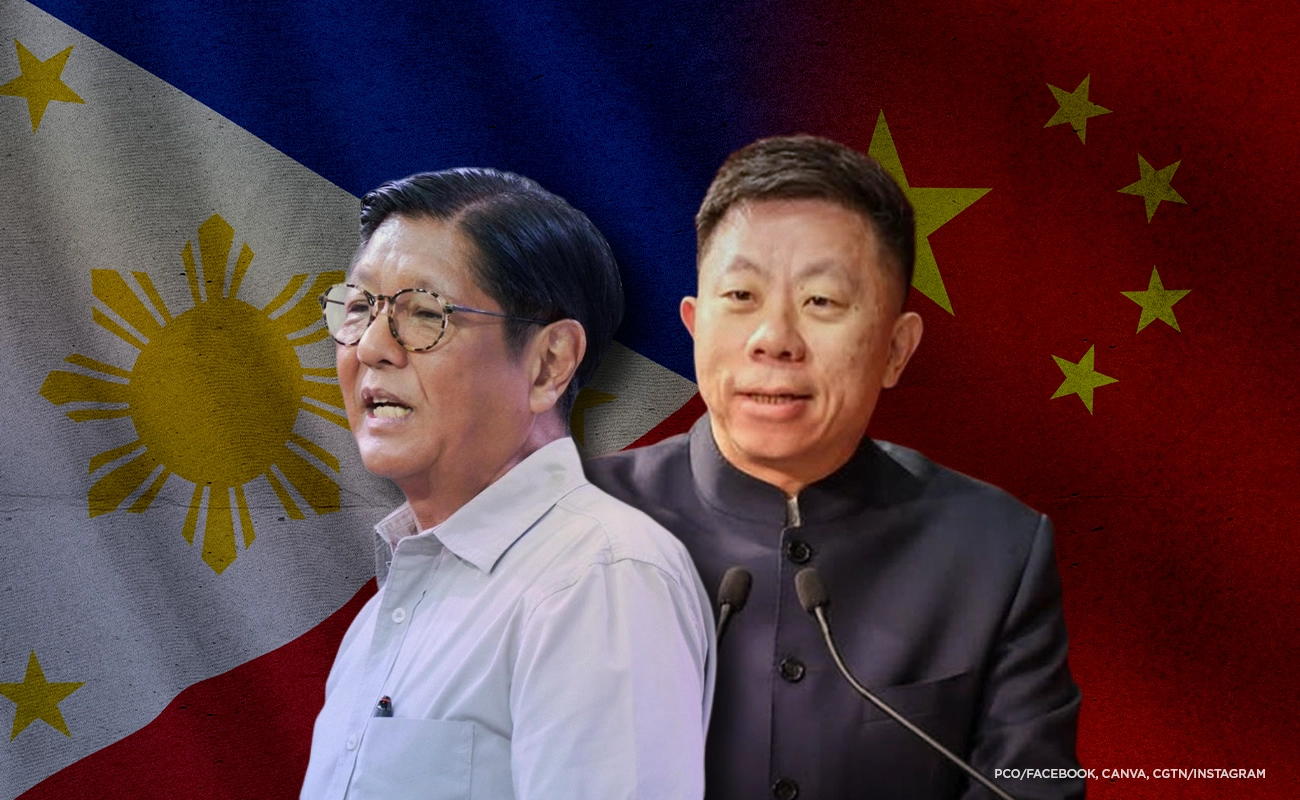

Cebu, Philippines – The Philippines has been navigating increasingly assertive public diplomacy from China in recent weeks, as officials exchanged sharp statements over activities in the West Philippine Sea.
Amid growing domestic calls to take stronger action against Beijing, President Ferdinand Marcos Jr. has opted for restraint, rejecting demands to declare China’s ambassador persona non grata.
Communications Undersecretary Claire Castro confirmed that when asked about expelling a foreign diplomat, Marcos’ response was unambiguous.
“Basta sagot ng pangulo patungkol sa panawagan na ideklarang persona non grata ang isang ambassador, ‘No,’” she said.
[Translation: Asked about calls to declare an ambassador persona non grata, the president’s answer was simply, “No.”]
The decision came as tensions between the Chinese Embassy in Manila and Philippine officials, including Philippine Coast Guard West Philippine Sea spokesperson Jay Tarriela, went out in the open.
Lawmakers criticized the embassy’s language as crossing diplomatic norms and interfering in the country’s internal affairs.
Chinese Ambassador Jing Quan said he would leave the country immediately if ordered by the president. In a statement issued Wednesday, Jan. 28, embassy spokesperson Ji Lingpeng emphasized:
“There is but one person who has the authority to ask Ambassador Jing Quan to leave, and that is President Marcos. If he were to receive such notice from President Marcos, he would depart immediately.” Ji added that Jing would leave “with immense pride and honor,” saying the ambassador had fulfilled his duty to defend China’s interests and dignity.
Diplomatic reset
The controversy follows a series of public exchanges that the National Maritime Council (NMC) described as asymmetric, with China allegedly targeting individual officials rather than engaging in state-to-state dialogue.
NMC spokesperson Alexander Lopez characterized the exchanges as reflective of what he called a “wolf warrior” approach, noting that the rhetoric had shifted from policy-focused discussion to personal attacks.
“Ang sa amin naman, actually we want to put a stop to this rhetoric kasi asymmetric eh,” Lopez said.
[Translation: For our part, we want to put a stop to this rhetoric because it is asymmetric.]
“Wolf warrior diplomacy” is a term used to describe China’s increasingly assertive and confrontational approach on the international stage. It involves blunt public statements, aggressive rebuttals of criticism, and a combative defense of national interests.
Lopez added that the government’s strategy remains focused on resetting discussions to state-to-state channels and keeping the spotlight on documented incidents rather than personal disputes.
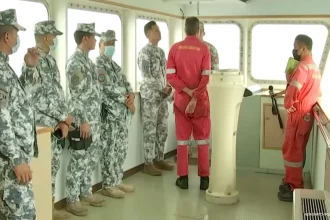
The coast guard and other uniformed services continue to record and publicize activities in the West Philippine Sea, providing a transparent, legally grounded account of events.
“Yung transparency initiative… ito ay nagpapatunay dahil properly documented, properly chronicled yung mga nangyayari sa West Philippine Sea at nakikita naman natin kung sino ang nagpoprovoke,” Lopez said.
[Translation: The transparency initiative proves, because it is properly documented and chronicled, what is happening in the West Philippine Sea and shows who is provoking whom.]
Even as lawmakers debated stronger measures – including calls to declare Chinese diplomats persona non grata – the Department of Foreign Affairs cautioned that such steps should be a last resort. The DFA noted that declaring a foreign diplomat persona non grata is among the most severe forms of diplomatic action, with potentially serious consequences including reciprocal measures and the downgrading of bilateral relations.
Expert observers have echoed the need for measured action. Lucio Pitlo, president of the Philippine Association for Chinese Studies, said:
“A sustained public or social media feud between neighbors should not be fought and cannot be won. The casualty in a war between megaphone diplomacy and assertive diplomacy is real diplomacy.”
For Manila, the focus remains on restraint, transparency, and legal documentation of events at sea.
“Ang ating actions po ay restrained at lahat po ng ginagawa natin ay legal base sa international law at based sa tinatawag nating law space international order,” Lopez said.
[Translation: Our actions are restrained and everything we do is legally based on international law and the international law of the sea.]