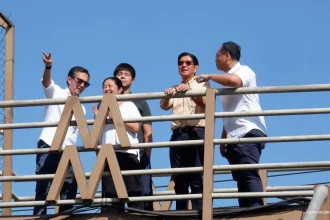

Metro Manila, Philippines – The country has struck a natural gas reservoir east of the Malampaya field, a significant discovery in over a decade that could boost power supply, President Ferdinand Marcos Jr. announced Monday, Jan. 19.
In a video message, Marcos said the Malampaya East 1 (MAE-1) reservoir is estimated to contain around 98 billion cubic feet of gas that could translate to nearly four billion kilowatt-hours of electricity in a year.
“Ibig sabihin, makakapag-supply ito ng kuryente sa mahigit 5.7 milyon na milyong kabahayan, 9,500 na gusali, o halos 200,000 paaralan sa loob ng isang taon,” he said.
[Translation: This means it could supply electricity to more than 5.7 million households, 9,500 buildings, or almost 200,000 schools within a year.]
“This helps Malampaya’s contribution and strengthens our domestic gas supply for many years to come,” he said.
The Department of Energy hailed the landmark achievement as a “strong signal that sustained, science-based exploration unlocks indigenous energy resources that directly strengthen our long-term energy security.”
“Natural gas is a critical bridge in our energy mix, supporting power reliability while we scale renewables, energy shortage, and grid upgrades,” Energy Secretary Sharon Garin said.
The discovery comes as supply from the Malampaya project, which supplies 40 percent of Luzon’s energy requirements, is expected to decline by 2027.
The government has yet to tap Service Contract 72 with Forum Energy in the disputed Recto Bank, also called the Reed Bank, which reportedly holds the most oil and gas reserves in the West Philippine Sea.
It is within the exclusive economic zone northwest of Palawan, but also claimed by China as it does not recognize the 2016 arbitral award that rejected its expansive claims in the South China Sea.
What was discovered?
Marcos said initial testing showed the well flowed at 60 million cubic feet per day.
“This indicates that the well has the potential to produce even more, confirming it is a high-productivity resource comparable to the original Malampaya wells,” the chief executive said.
He also said the discovery includes condensate, a high-value liquid fuel, which can also help support the government in stabilizing power supply.
Where is MAE-1?
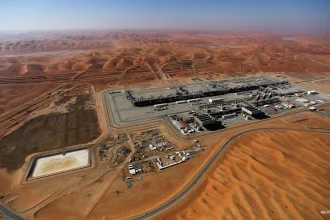
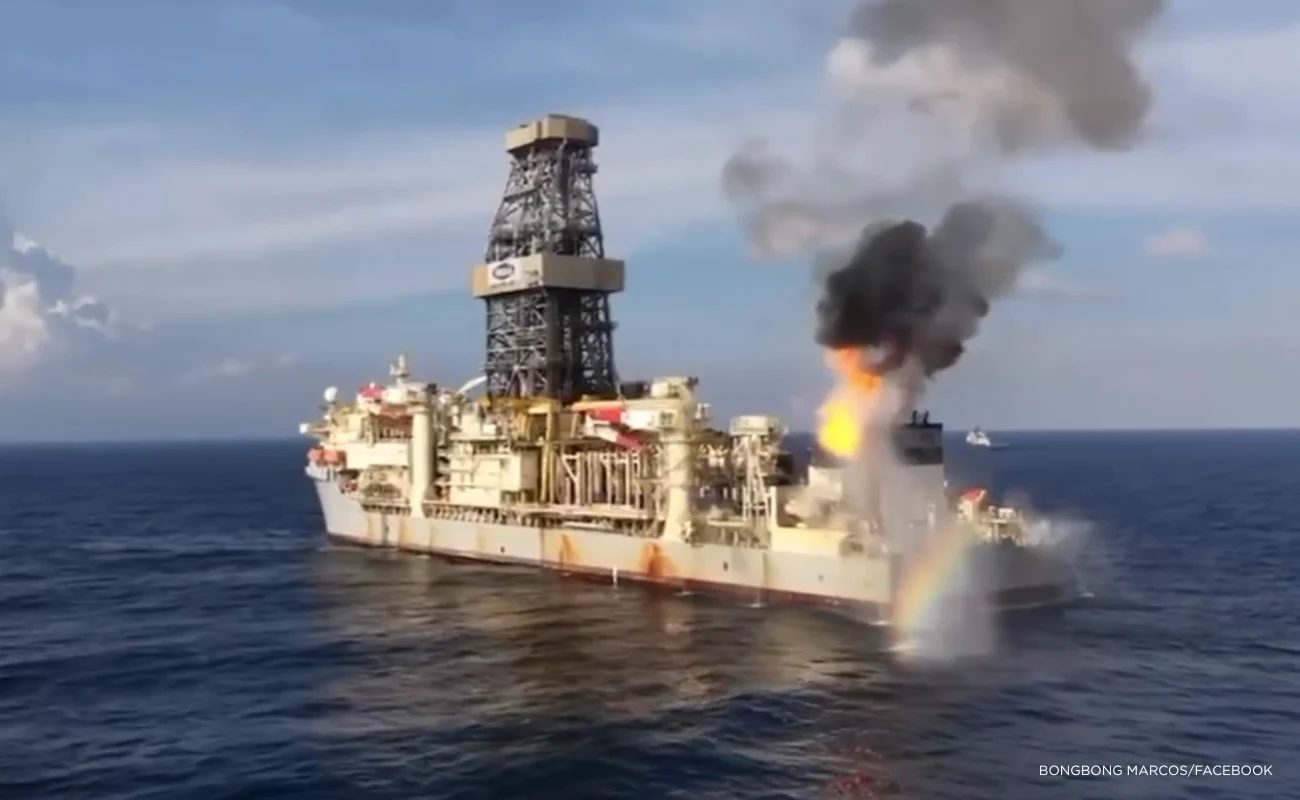
The MAE-1 was discovered around five kilometers east of the existing Malampaya gas field in offshore Palawan in the West Philippine Sea.
“Ipinagmamalaki rin natin na Pilipino ang nanguna sa drilling na ito. Higit sa lahat, natapos nila ito na walang aksidente or environmental incident,” Marcos said.
[Translation: We take pride in that Filipinos led the drilling. Most important of all, the drilling was concluded without any accident or environmental incident.]
He said the work was done through the SC-38 Consortium, led by Prime Energy, in partnership with UC-38, PNOC Exploration Corporation, and Prime Oil and Gas Incorporated.
MAE-1 was the first milestone under the Malampaya Phase 4 drilling campaign, which also includes the Camago-2 and the Bagong Pag-asa wells.
In seeking more potential gas resources, the Philippines is eyeing the completion and testing of the Camago-3 well and the drilling of the Pag-asa Exploration well.