
Metro Manila, Philippines – China has lodged a formal protest against remarks and social media posts by Philippine Coast Guard spokesperson Jay Tarriela, accusing him of attacking and smearing Chinese leaders and crossing what Beijing described as a “red line.”
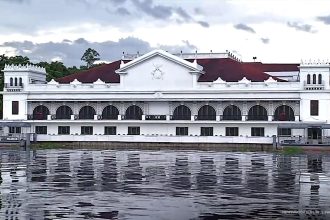
In a statement, the Chinese Embassy in the Philippines said Tarriela’s recent posts constituted “a serious violation of China’s political dignity and a blatant political provocation.” The embassy said it has filed “solemn representations” with Malacañang, the Department of Foreign Affairs
and the Philippine Coast Guard.
The embassy said “solemn representations” are tantamount to diplomatic protests.
It accused Tarriela of repeatedly “hyping up maritime issues,” “misrepresenting facts,” and “inciting confrontation,” adding that China “has been and will continue to take firm countermeasures.”
The Chinese embassy also questioned whether Tarriela’s statements reflect official policy and why he has not been held accountable, urging the Philippine government to provide clarification.
“As a spokesperson of the Philippine Coast Guard, do his smears and slanders against China and Chinese leaders represent the stance of the Philippine government?” the statement said, while calling for “peace over conflict, dialogue over confrontation, and cooperation over tension” in China–Philippines relations.
On Saturday, Jan. 17, the National Maritime Council (NMC) said it took note of the embassy’s statement but reiterated the Philippines’ “clear and settled” position.
“Our actions in the WPS (West Philippine Sea) are lawful, responsible, and firmly grounded in international law. They are consistent with the United Nations Convention on the Law of the Sea (UNCLOS) and the 2016 Arbitral Award, which is final and legally binding,” the NMC said.
The country remains committed to the “peaceful management of differences” and to prevent misunderstandings and miscalculations at sea, the NMC said.
“At the same time, the Philippines will continue to speak clearly and consistently when its sovereignty, sovereign rights or jurisdiction is challenged, and to work with the international community in upholding a rules-based maritime order,” the council said, adding it is ready to “engage constructively.”
For his part, Tarriela rejected the accusations, saying the embassy’s demand itself violates diplomatic norms.
“This is not legitimate diplomacy. It is an effort to intimidate and suppress truthful reporting on matters of Philippine sovereignty,” he said, citing the Vienna Convention on Diplomatic Relations, which he said bars diplomatic missions from interfering in a host country’s internal affairs.
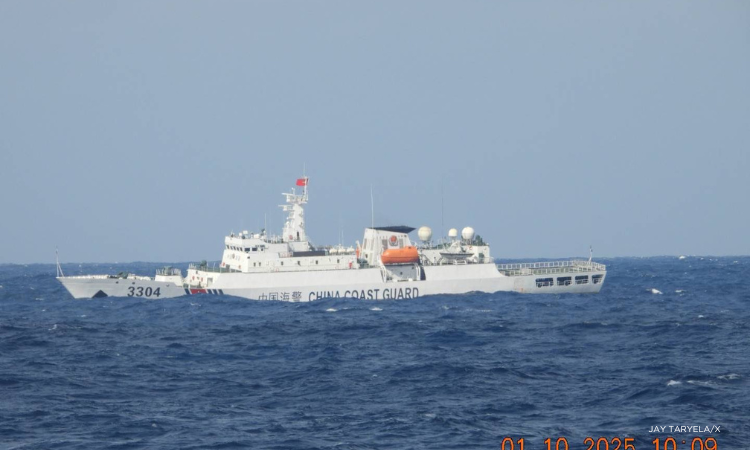
He said China should instead explain what he described as “well-documented incidents” in the West Philippine Sea, including “dangerous maneuvers, intentional ramming, and water cannon attacks” against Philippine vessels, as well as actions he said violate the 2016 arbitral ruling that invalidated Beijing’s expansive maritime claims.
“These are not ‘smears’ or ‘slanders,’” Tarriela said. “These are factual accounts backed by video evidence, photographs, official Philippine Coast Guard reports, and third-party observations.”
He added that his role is to “transparently communicate these realities to the Filipino people and the world,” stressing that the Philippines will continue to document and assert its sovereign rights “peacefully, factually, and without fear.”
The exchange followed Tarriela’s Jan. 14 appearance at an academic forum where he showed images of Chinese President Xi Jinping while discussing tensions in the West Philippine Sea.
Tarriela said the event, hosted by local academic institutions, aimed to encourage informed public discourse and youth engagement on national security and maritime issues.