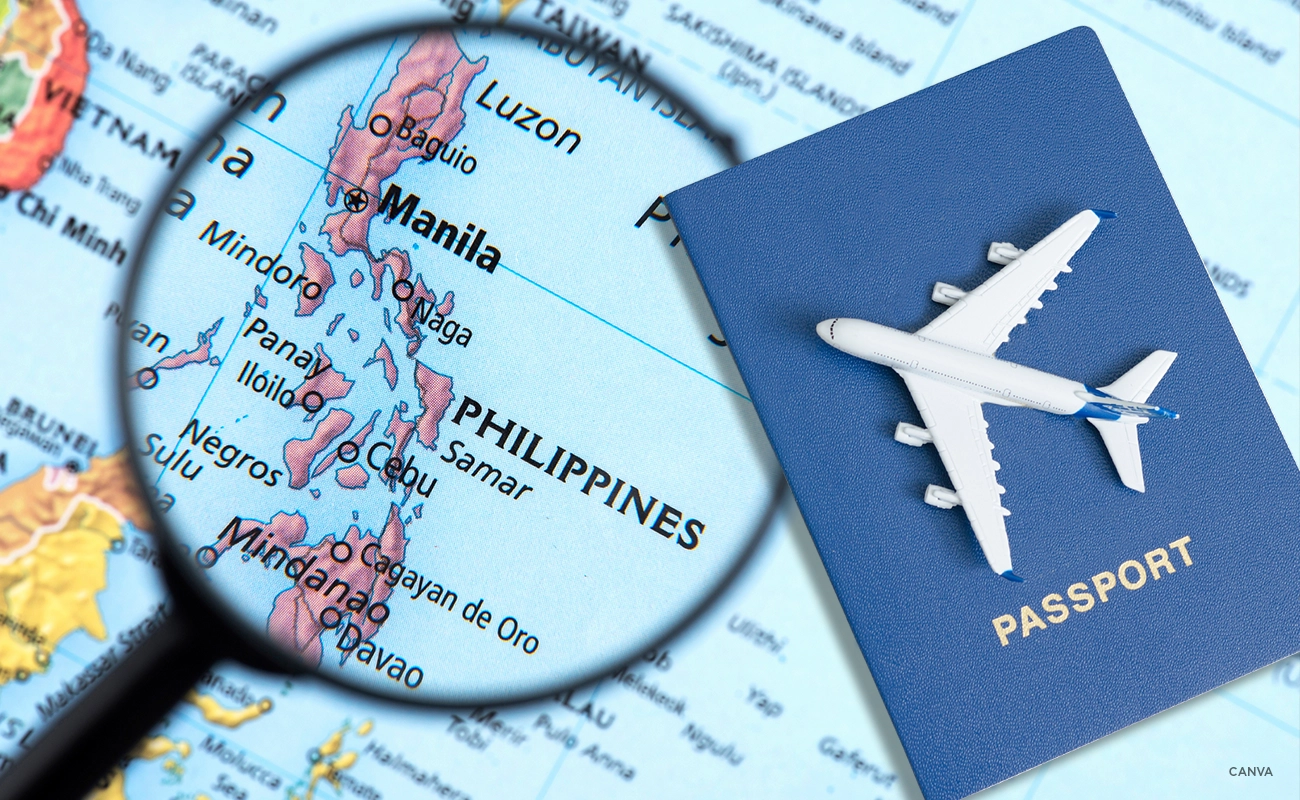

Metro Manila, Philippines – The Department of Foreign Affairs announced Wednesday that Chinese nationals will be allowed to enter the Philippines visa-free for up to 14 days starting Jan. 16, as the government moves to boost tourism, trade, and people-to-people exchanges with China.
The new policy allows Chinese passport holders traveling for tourism or business to enter the country without securing a visa, provided their stay does not exceed 14 days. The visa-free stay is non-extendable and cannot be converted to another visa category, the DFA said.
“This measure is in line with the President’s directive to facilitate trade, investments, and tourism while strengthening people-to-people exchanges between the Philippines and China,” the department said in a statement.
Under the arrangement, visa-free entry will be allowed only through the Ninoy Aquino International Airport in Metro Manila and the Mactan-Cebu International Airport in central Philippines.
Chinese travelers must present a passport valid for at least six months beyond their intended stay, confirmed hotel accommodations, and a return or onward ticket. The DFA said security screening and checks against derogatory records will continue to apply.
“Checks on security and public order will remain in place to ensure that only legitimate travelers are allowed entry,” the department said.
The visa-free arrangement will initially be valid for one year and will be reviewed before its expiration.
The move comes as the Philippines looks to regain momentum in its tourism sector. The country recorded 5.6 million foreign visitor arrivals as of Dec. 20, nearly matching its 2024 total, according to the Department of Tourism.
While still below pre-pandemic levels in 2019, tourism officials expressed optimism for 2026, citing improved access for Chinese travelers following the resumption of the Philippine e-Visa system for China in November.
China ranked sixth among source markets in 2025 with 262,144 arrivals, trailing South Korea, the United States, Japan, Australia, and Canada. The DOT said the weaker performance was driven by visa disruptions, security concerns, and limited air connectivity.
Tourism Secretary Christina Frasco previously said the suspension of e-Visas and currency weakness in key markets contributed to declines in Chinese and South Korean arrivals, traditionally the country’s top tourism sources.
The DOT said recovery has also been constrained by reduced flight capacity, with China–Philippines routes operating at only about 45% of pre-pandemic levels, though talks with airlines are ongoing to restore routes and seat capacity.