
Metro Manila, Philippines – Education officials said reforms to the K-12 program are underway to address President Ferdinand Marcos Jr.’s long-standing concerns over job readiness, skills mismatch, and the failure of senior high school to deliver its promised economic benefits.
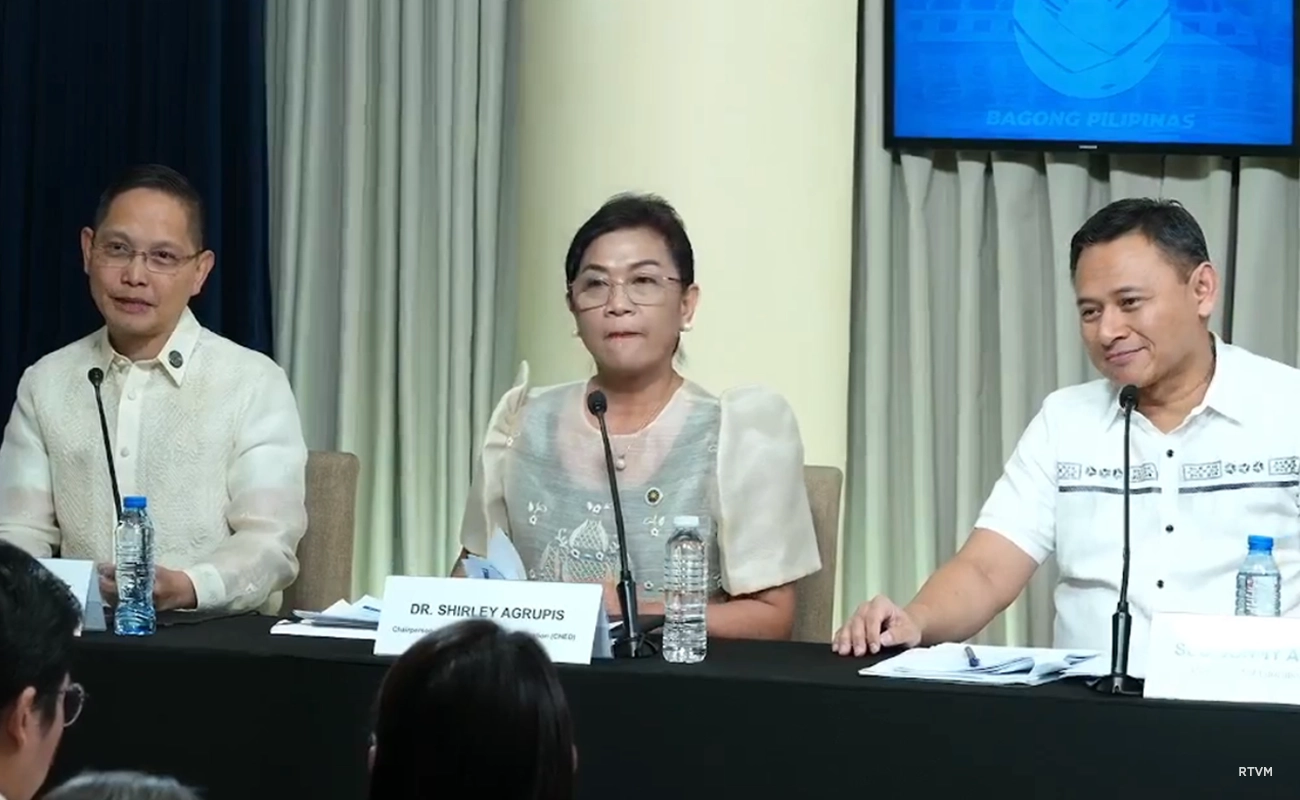
Officials from the Department of Education (DepEd), the Technical Education and Skills Development Authority (TESDA), and the Commission on Higher Education (CHED) said the revised approach focuses on employability, curriculum flexibility, and stronger alignment with industry and higher education.
TESDA Secretary Kiko Benitez said the agency has zeroed in on employability as the core issue raised by the president.
“From our side, the major issue with the K to 12 for TESDA at least is whether or not those that graduate from senior high school are employable,” Benitez said in a press briefing at Malacañang on Tuesday, Jan. 6..
He said TESDA rolled out free competency assessments for senior high school students in 2025, funded by both Malacañang and Congress, and the program will continue this year.
“We have reached almost a hundred and ninety thousand senior high school students that have been properly assessed and certified as employable with the appropriate NC IIs and NC IIIs,” Benitez said, referring to national certificates required by employers.
Benitez said TESDA is confident it can certify graduating students willing to undergo assessment as job-ready.
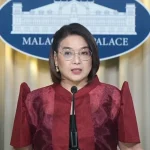
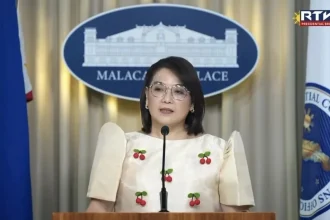
CHED Chairperson Shirley Agrupis said the K-12 issue has been elevated as a joint priority among DepEd, TESDA, and CHED, with the three agencies recently holding their first joint management committee meeting.
Agrupis said one of the biggest challenges is the readiness of students entering college.
“Ang challenge namin dito sa K to 12 is iyong readiness ng estudyante na pupunta sa pinili niyang kurso,” she said.
[Translation: Our challenge in K-12 is the readiness of students for the course they choose.]
To address this, CHED is implementing bridging programs and working with TESDA to harmonize evaluation standards for incoming college freshmen.
“This will address the mismatch in the world of work,” Agrupis said.
Education Secretary Sonny Angara said DepEd has also overhauled the senior high school curriculum following criticism that it was overcrowded and inflexible.
“Iyong curriculum, inayos natin dahil iyong criticism ay masyadong cluttered, 33 subjects; ginawa na lang nating five required subjects,” Angara said.
[Translation: fixed the curriculum because it was criticized for being too cluttered, with 33 subjects; we reduced it to five required subjects.]
Angara said the revised curriculum allows students to mix academic and vocational subjects, a shift he said is necessary in the age of artificial intelligence.
“Hindi natin kinakahon iyong bata… kailangan may flexibility tayo,” he said.
[Translation: We are no longer limiting students to one track… we need flexibility.]
In June, Marcos publicly admitted that the K-12 program failed to deliver on its promise of making graduates employable and instead added financial burden to parents.
“Wala naman naging advantage, hindi rin nakukuha sa trabaho,” Marcos said at the time.
[Translation: There was no advantage, and graduates still could not get jobs.]
While saying it is up to Congress to amend or repeal the K-12 law, Marcos ordered education officials to improve the system while it remains in place, directing agencies to work closely with the private sector to address skills mismatch and classroom shortages.