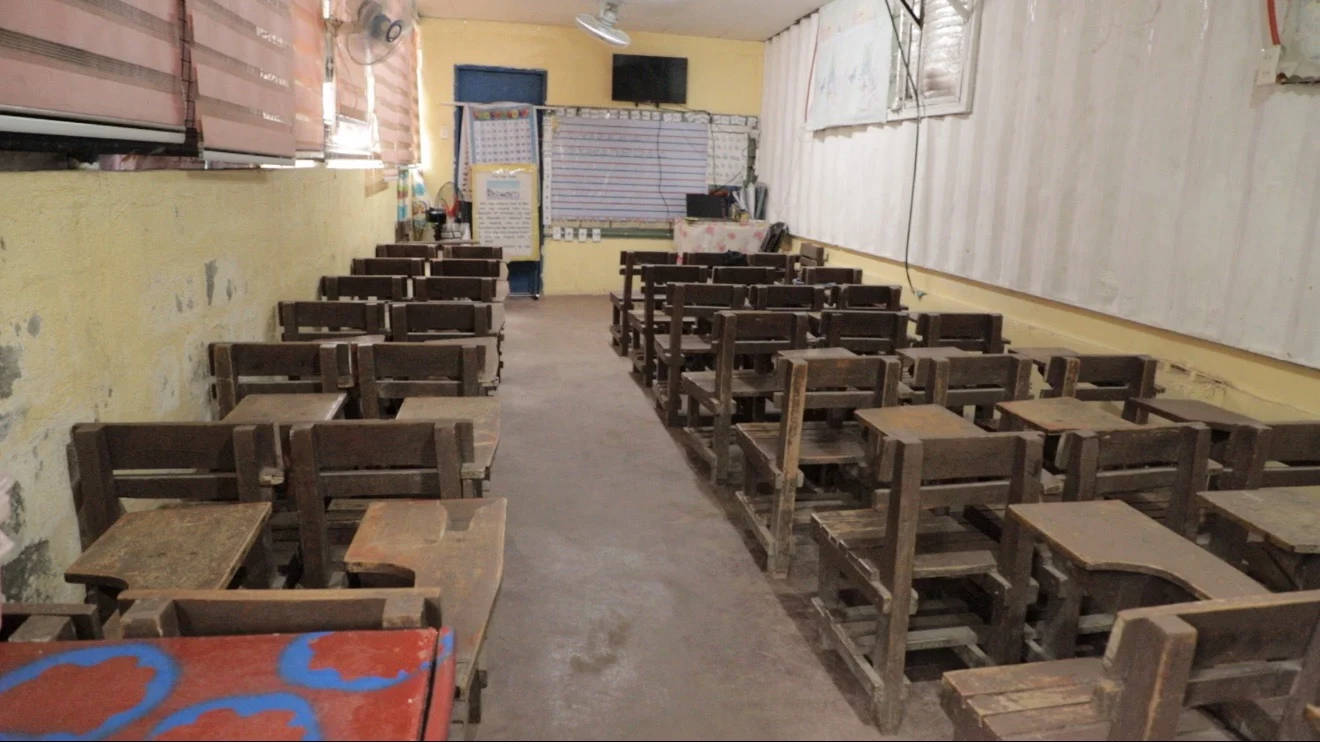

Metro Manila, Philippines – The Department of Education does not expect all 24,000 classrooms funded under the new budget to be completed within a year, Education Secretary Sonny Angara said, citing long-standing construction bottlenecks, funding release schedules, and capacity limits among government partners.
Angara said the goal is to begin construction rather than complete them within a year.
“Just to clarify, we don’t expect all of those 24,000 to be constructed in 365 days kasi historically hindi talaga nangyayari iyon,” Angara said.
[Translation: To clarify, we don’t expect all 24,000 to be constructed in 365 days because historically that does not happen.]
He said classroom construction often takes time, particularly when funds are released late in the year.
“Nakikita natin it takes sometimes even two to three years to finish these classrooms kasi iyong release ng pera hindi January – minsan sa June or sa October – so it carries over to succeeding years,” Angara said.
[Translation: We see that it sometimes takes two to three years to finish these classrooms because the release of funds is not in January – sometimes in June or October – so it carries over to the following years.]
President Ferdinand Marcos Jr. earlier highlighted a significant increase in the education budget to address the classroom shortage, with DepEd receiving its largest budget in history. Angara said the funding allows the department to pursue the 24,000-classroom target, but not to complete all units within a year.
The Department of Public Works and Highways (DPWH) will handle a portion of the construction, though the final number of classrooms to be built by the agency remains under discussion.
“Initially, we were talking about maybe 6,000 classrooms, but Sec. Vince wants to be conservative and is looking at around 2,000,” Angara said.
[Translation: We initially discussed about 6,000 classrooms, but Public Works Secretary Vince Dizon prefers a more conservative estimate of around 2,000.]
The remaining classrooms will be built through partnerships with local government units (LGUs), civil society organizations, and non-government groups with a proven track record in school construction.
“Gustung-gusto ng LGUs na i-take on ang construction… hopefully mabigay ng DBM kaagad iyong pera para ma-download namin sa local government,” Angara said.
[Translation: Local governments are eager to take on construction… hopefully the Budget Department can release the funds quickly so we can download them to the LGUs.]
Angara said the department is considering tapping up to 80 provinces, 160 cities, and a number of municipalities with the capacity to implement construction projects. He added that accredited civil society groups and business organizations may be tasked to build classrooms in geographically isolated and disadvantaged areas.
“Iyong last-mile schools, iyon ang puwede nating ibigay sa kanila dahil wala masyadong takers doon,” he said.
[Translation: We can assign last-mile schools to them because these areas often have fewer takers.]
Last-mile schools are remote, underserved public schools characterized by few classrooms, no electricity/internet, difficult access, fewer teachers, small student populations, and lack of funding.
Asked about addressing issues flagged in the Congressional Commission on Education report, including failed biddings, planning delays, and design changes, Angara acknowledged that challenges remain but said the new approach would be more efficient.
“May growing pains dahil first time gagawin ito, pero mas magiging episyente ito sa dating sistema,” he said.
[Translation: There will be growing pains because this is the first time we are doing this, but this will be more efficient than the old system.]
On equity and access, Angara said DepEd allocated more than P1 billion for last-mile schools to ensure remote and underserved areas benefit from the classroom construction program.
“Para doon talaga ang pondo para sa last mile schools, so hindi sila mako-crowd out ng urban areas,” he said.
[Translation: The funding is really for last-mile schools so they will not be crowded out by urban areas.]
The DepEd is also planning to hire around 65,000 teaching and non-teaching personnel in 2026, Angara said, adding that the supply of applicants is expected to exceed demand.