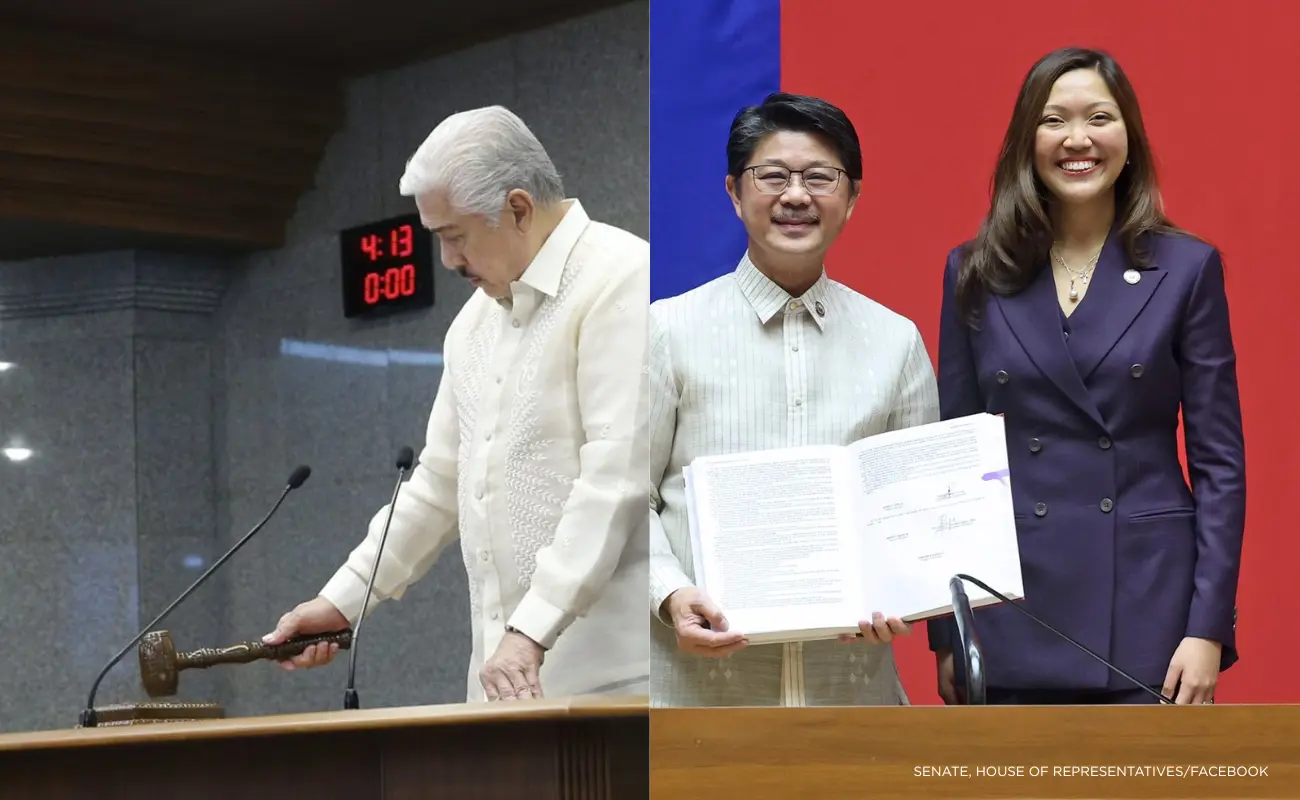

Metro Manila, Philippines – Congress on Monday, Dec. 29, ratified the bicameral conference committee report on the proposed P6.793-trillion budget for 2026, but not without issues still raised by some lawmakers despite the safeguards in place.
President Ferdinand Marcos Jr. is expected to sign the General Appropriations Bill on Jan. 5, which will put government operations under a reenacted budget for the first five days of the new year.
Continued reservations for MAIFIP, unprogrammed funds
The budget bill has an “anti-epal” provision that will do away with political patronage in the distribution of cash aid.
Despite the safety nets to prevent a repeat of the current corrupted budget, Senate President Pro Tempore Ping Lacson raised reservations on the funding for the Medical Assistance to Indigent and Financially Incapacitated Patients (MAIFIP) and the Assistance to Individuals in Crisis Situation (AICS), said Senate President Vicente Sotto III.
The MAIFIP budget is at P51 billion, while the AICS has ₱63.9 billion.
Sen. JV Ejercito suggested the gradual phaseout of the MAIFIP.
“Dapat hindi pagpapalaki ng pondo ng MAIFIP kung hindi direkta na paglagak ng pera sa ospital at PhilHealth,” Ejercito said.
[Translation: The MAIFIP fund should not be raised if the money does not go directly to the hospital or health insurance.]
“Ang patuloy na pagtaas ng pagpopondo ng MAIFIP ay isang malaking detour mula sa landas na tinatahak ng UHC (Universal Health Care),” he said.
[Translation: Increasing the funding for MAIFIP is a big detour from the universal health care path.]
Sen. Risa Hontiveros said it was “unfortunate” that the “overwhelming cut” in unprogrammed appropriations was not included in the committee report.
Unprogrammed funds remained at P243 billion.
“Still, it’s an improvement that the bicam version includes safeguards aimed at preventing unprogrammed funds from becoming slush funds,” Hontiveros said.
In an interview with reporters, Caloocan City Rep. Edgar Erice said “unprogrammed funds [are] unconstitutional,” citing the recent opinion of Supreme Court Associate Justice Ramon Hernando.
“Kung hindi ivi-veto ni presidente ang unprogrammed funds at aaprubahan niya ito, dadalhin natin sa Korte Suprema,” Erice said.
[Translation: If the president does not veto the unprogrammed funds, we will raise this before the Supreme Court.]
No votes
The two issues were among the reasons raised by those who voted against the budget bill, namely, ML party-list Rep. Leila de Lima and Davao City Rep. Isidro Ungab.
At the Senate, Sen. Rodante Marcoleta and Sen. Robin Padilla voted no, with Padilla calling it a “Manila-centric budget” and questioned the inadequate funding for indigenous peoples.
Gatchalian told reporters before session resumed that Senators Imee Marcos, Bong Go, and Ronald dela Rosa did not sign the committee report. He was unaware of the reason.
Meanwhile, he said he will talk with the Department of Budget and Management about fast-tracking the budget schedule to minimize the risk of a reenacted budget in the next cycle.