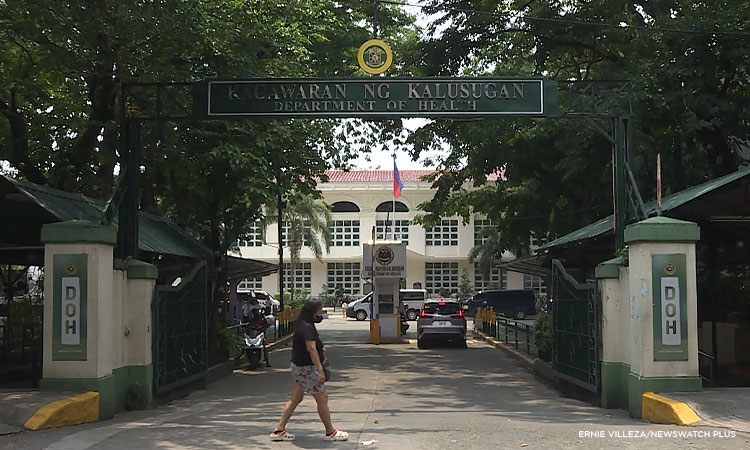

Metro Manila, Philippines – The Department of Health (DOH) is proposing to put a special provision in the budget bill wherein 80 percent of the funding for the medical assistance program for poor patients will go to the expansion of the “zero-balance billing” policy.
The DOH floated the suggestion on Monday, Dec. 15, after the Medical Assistance to Indigent and Financially Incapacitated Patients (MAIFIP) received a significant funding boost during the bicameral conference committee finalizing the proposed 2026 budget.
Lawmakers have increased the program’s allocation next year to P51.648 billion, more than double the amount of P24 billion under the National Expenditure Program.
The implementation of the zero-balance billing policy was among the government initiatives touted by President Ferdinand Marcos Jr. in his 4th State of the Nation Address in July.
Church and civil society groups have slammed the move, describing MAIFIP as a “health pork barrel” for politicians.
Cardinal Pablo Virgilio David said the MAIFIP operates through a guarantee letter system, adding that getting access to health through a politician’s endorsement was “a violation of human dignity.”
In a manifestation to his colleagues in the bicam, Senate Deputy Majority Leader JV Ejercito said the sharp hike might be interpreted as “politically mediated access to healthcare.”
Ejercito appealed to allocate the money directly to state health insurer PhilHealth or to hospitals implementing the zero-balance billing policy.
Malacañang said the bicam-approved increase will be used to expand the zero-balance billing policy, which only currently covers DOH-run hospitals.
“Hindi kasi dadaan sa mga politiko ang pondo na ito,” Communications Undersecretary Claire Castro said in a briefing on Monday.
“Didiretso ito sa local government units, sa LGU hospitals, at ang magpapatupad din po nito ay DOH,” she said.
[Translation: The fund will not go through politicians. This will go directly to LGU hospitals to be implemented by the DOH.]
DOH proposal
The DOH, for its part, showed to the media on Monday a letter it sent to Senate President Vicente Sotto III and Senate finance committee chairperson Sherwin Gatchalian in October presenting the proposal.
“This proposed special provision aims to provide not only catastrophic health funding shall be used for expanded implementation of the ZBB Initiative to LGU hospitals, ensuring that more Filipinos have access to health services and are protected from financial risk,” Health Secretary Ted Herbosa said in the letter dated Oct. 17.
In his proposal, Herbosa said 20 percent of the total amount appropriated to MAIFIP will go to “Catastrophic Health Fund.”
This fund will cover “inpatient services, outpatient services, comprehensive checkups, emergency services, dental services, ambulatory care services, ophthalmology services, drugs, and medicines as approved by the FDA (Food and Drug Administration), and professional fees.”
He said two percent of the CHF may be used for administrative expenses.
The remaining 80 percent is proposed to go to LGU Level 2 and Level 3 hospitals to implement the zero-balance billing policy.
The policy covers services provided to patients under basic or ward accommodation, but it is only currently applied to 87 DOH-run hospitals.