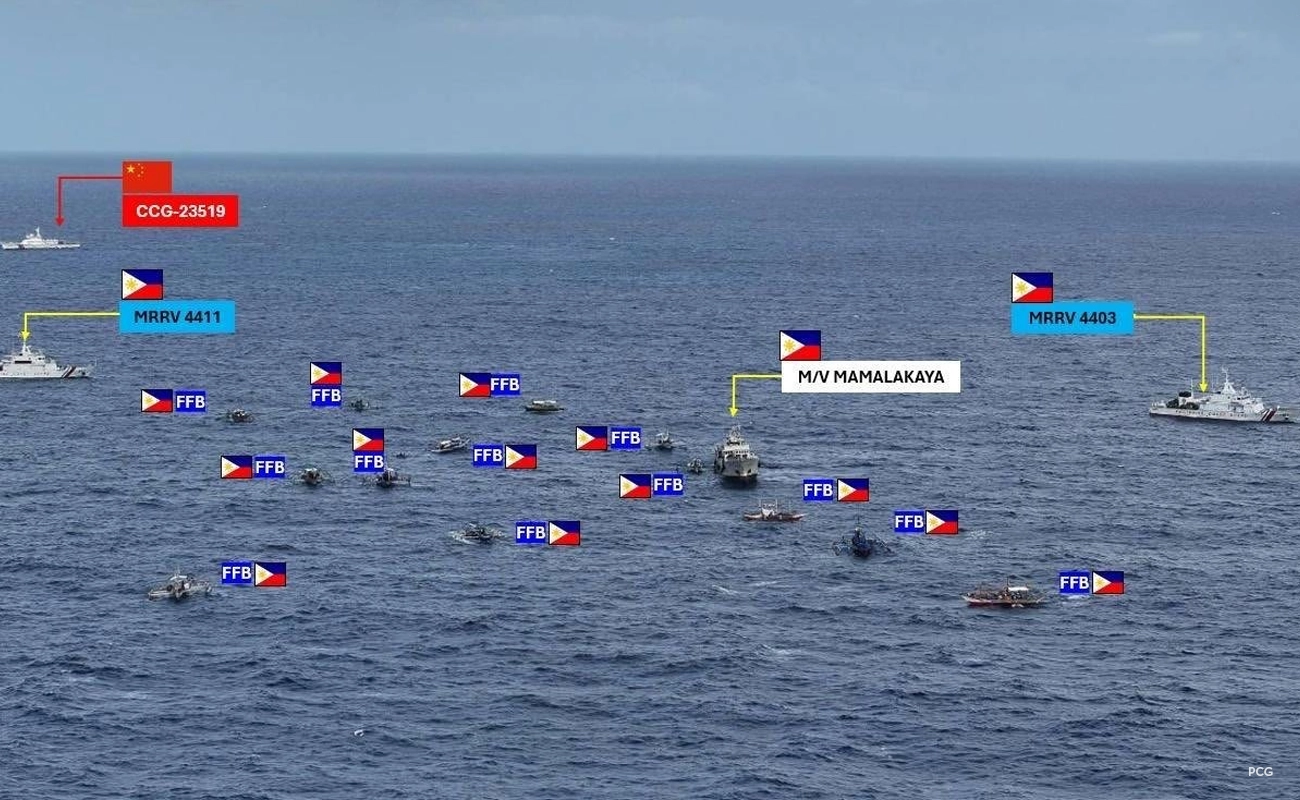

Metro Manila, Philippines – The Philippines has formally lodged a demarche against China following a water cannon hit in the West Philippine Sea that left three Filipino fishermen injured, the Department of Foreign Affairs (DFA) confirmed Monday, Dec 15.
“Yes, we gave a demarche to the Chinese embassy today,” DFA spokesperson Angelica Escalona said in a message.
A demarche is a formal diplomatic representation or protest made by one government to another to express concern, displeasure, or objection over a specific issue or action. It is typically delivered through diplomatic channels such as an embassy.
The diplomatic action comes after the China Coast Guard fired water cannons at Filipino fishing boats near Escoda Shoal – which China calls Xianbin Jiao – during a confrontation on Friday, Dec. 12.
National Maritime Council Undersecretary Alexander Lopez said the Philippine Coast Guard (PCG) is finalizing its incident report, which served as the basis for the DFA’s move.
Three Filipino fishermen were wounded and bruised after Chinese vessels attempted to drive them away from the shoal, which is around 70 nautical miles west of Palawan and well within the Philippines’ 200-nautical-mile exclusive economic zone (EEZ).
“There were previous water cannon incidents involving our fishermen and PCG vessels, but this latest one was the worst because it was close-range and directly targeted civilians,” Lopez, a former Western Command chief, said during a state-owned television interview.
“Yung nangyari sa Escoda ay talagang malapitan at direkta kaya nasugatan na ang ating mga mangingisda at nasira ang kanilang mga bangka. Kinokondena namin ito,” he added.
[The scene at Escoda was a close encounter and direct that resulted in injuries on our fishermen and their boats heavily damaged. We condemn this act.]
The PCG reported that aside from water cannon blasts, Chinese rigid-hull inflatable boats cut the anchor lines of Philippine fishing vessels amid strong currents and rough seas, endangering the fishermen.
In a statement issued over the weekend, the Chinese People’s Liberation Army and the China Coast Guard claimed their actions were “necessary control measures” to expel Philippine vessels that they alleged had “illegally intruded” into the area.
China continues to assert sovereignty over the Nansha Qundao, including Escoda Shoal, despite a 2016 international arbitral ruling that invalidated its sweeping claims in the South China Sea.
Manila rejected Beijing’s claims, saying China’s presence and actions violate Philippine sovereignty and international law.
“Illegal ang kanilang presensya sa Escoda Shoal at wala silang legal na basehan sa international law para ipatupad ang kanilang tinatawag na control measures,” Lopez said, adding that the incident reflects China’s broader ambition to dominate the South China Sea, including the West Philippine Sea.
Despite the incident, the National Maritime Council encouraged Filipino fishermen to continue their livelihood in the West Philippine Sea, assuring them of government protection.
“Sa ating mga mangingisda, huwag tayong matakot. Ipagpatuloy natin ang pangingisda. Nasa panig natin ang batas,” Lopez said.
“All maritime resources in our waters should benefit Filipinos alone,” he added.
NewsWatch Plus anchor Lois Calderon and lead correspondent Tristan Nodalo contributed to this report.