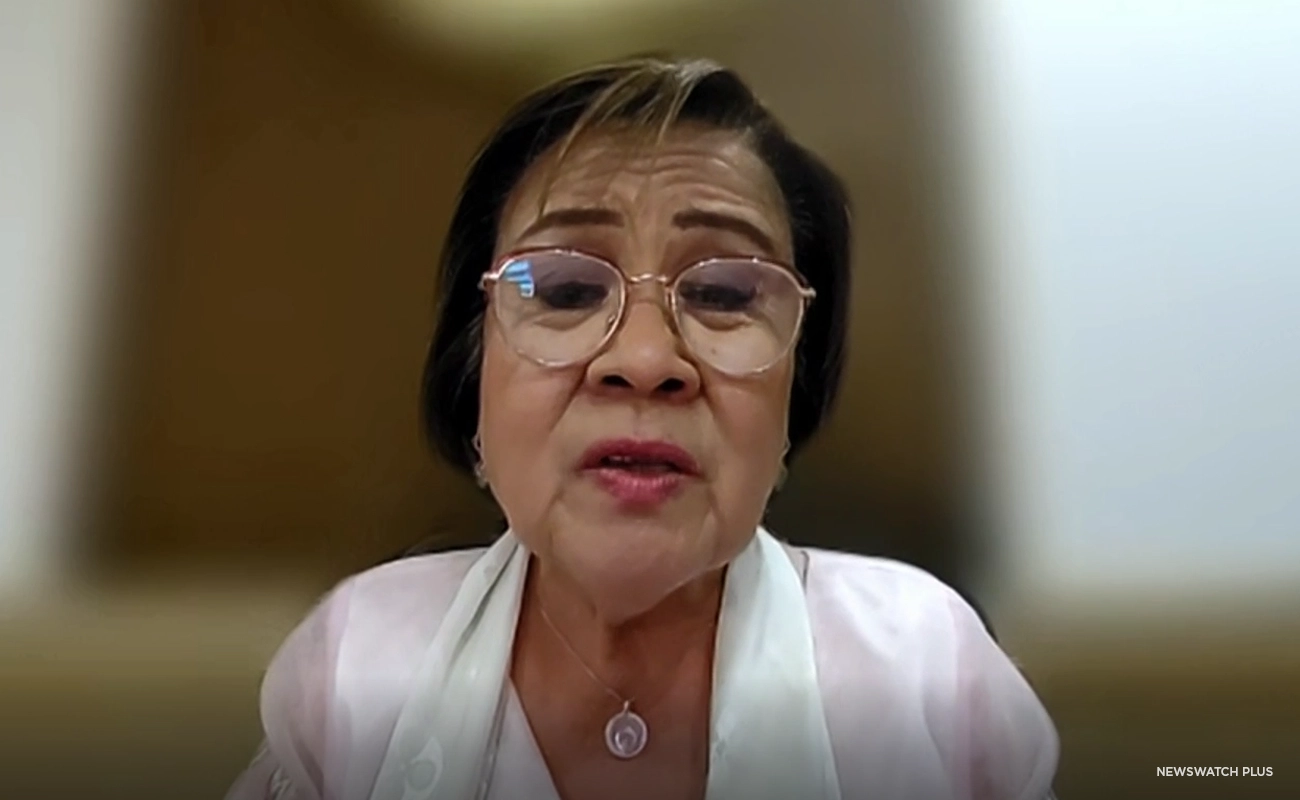

Metro Manila, Philippines – House Deputy Minority Leader and Mamamayang Liberal Party-list Rep. Leila de Lima said she plans to file legislation prohibiting political intervention in the delivery of government social services, following renewed controversy over health-related aid embedded in the proposed 2026 national budget.
De Lima made the statement after the bicameral conference committee approved the over P51.6-billion Medical Assistance to Indigent and Financially Incapacitated Patients (MAIFIP) fund, which critics describe as a form of “health pork barrel” vulnerable to political patronage.
In an interview on The Newsmaker, De Lima said social service programs should be administered exclusively by the executive branch, warning that political involvement in aid distribution entrenches patronage politics and undermines public trust.
“There should be no post-budget intervention by politicians,” De Lima said, noting that lawmakers’ participation in identifying beneficiaries violates the principle of separation of powers.
She acknowledged, however, that lawmakers often intervene because of weak institutional systems for delivering aid.
“People go to politicians because government mechanisms are inadequate,” she said, adding that a law is needed to institutionalize a corruption-proof system for social services similar to the Pantawid Pamilyang Pilipino Program (4Ps).
De Lima said her office is preparing a bill that would bar lawmakers and non-executive officials from influencing the implementation of social welfare programs after the budget is enacted.
The bicam approved a higher allocation for MAIFIP despite concerns raised by church leaders and civil society groups. Kalookan Bishop Pablo Virgilio Cardinal David criticized the system of requiring “guarantee letters” from politicians, calling it a violation of human dignity.
The budget deliberations also saw a deadlock over the proposed budget of the Department of Public Works and Highways (DPWH), with senators pushing for across-the-board cuts due to corruption concerns, while House members and the DPWH leadership argued for targeted reductions instead.
De Lima said she opposed blanket cuts, warning that excessive reductions could slow infrastructure spending and hurt the economy, but stressed that stricter monitoring of large projects is necessary to prevent corruption.