
Metro Manila, Philippines – Taking off from the recommendation of the finance committee, the Senate began deliberations on the proposed 2026 national budget on Thursday, Nov. 13, with substantial cuts in two items that have been tagged in the flood control controversy and realignments to favor priority sectors.
The president’s overall recommended budget stayed at ₱6.793 trillion but the committee further cut the allocation for the Department of Public Works and Highways (DPWH) by ₱56 billion, while unprogrammed funds were slashed to ₱174.5 billion from ₱243 billion as approved by the House of Representatives
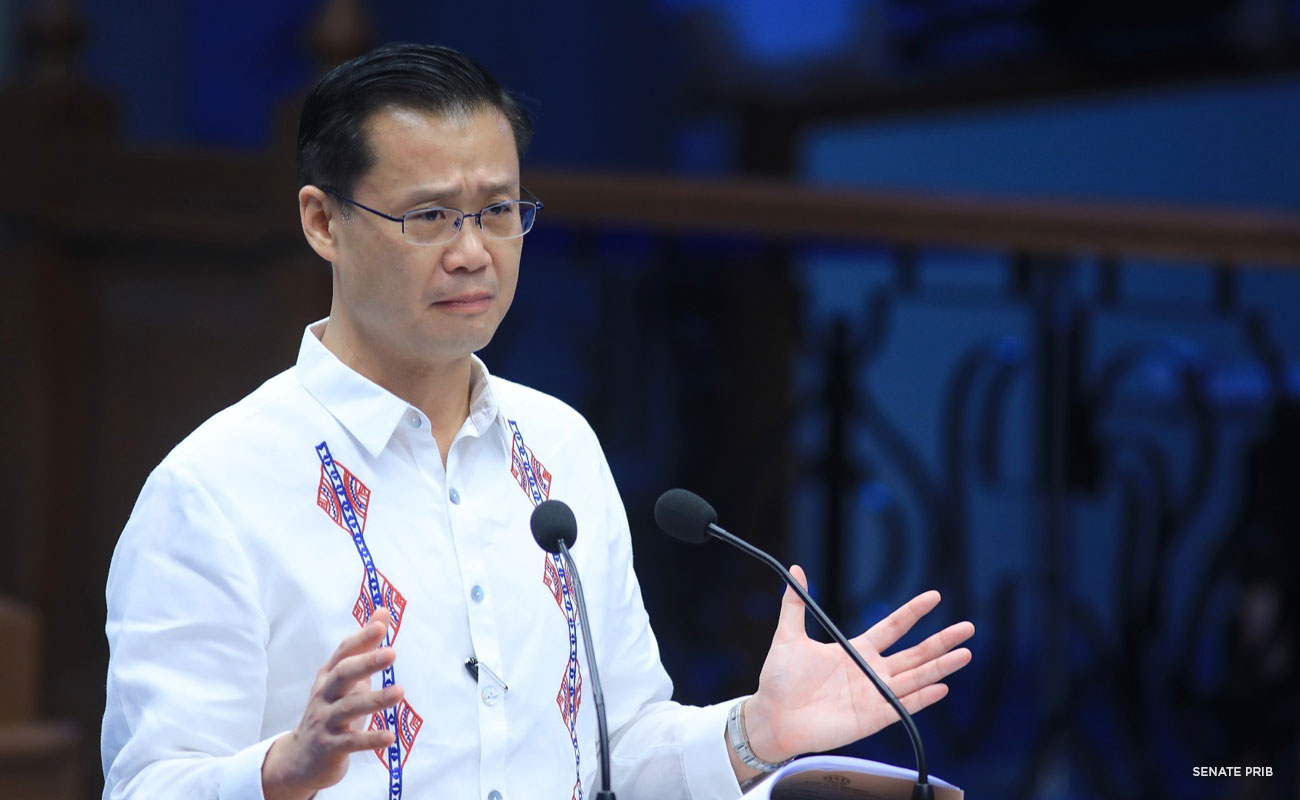
Finance committee chairman Win Gatchalian presented in plenary Wednesday evening, Nov. 12, the recommended budget – the latest version with adjustments to the General Appropriations Bill (GAB) that passed the House.
Gatchalian and Senate President Vicente “Tito” Sotto III previously said they would push for a lower total budget than the ₱6.793 trillion set by Malacanang under the National Expenditure Program (NEP).
In a chance interview after the filing of the report, Gatchalian assured the public that the proposed budget underwent strict scrutiny.
“Kumbaga itong budget na ito tipid na tipid na at siguradong pupunta sa mga projects na mai-implement,” he said.
[Translation: This budget is already very lean, and we made sure that funds will go to projects that can truly be implemented.]
DPWH budget
The DPWH budget is at front and center in light of billions of pesos from previous allocations that went to anomalous flood control projects – with government officials and lawmakers pocketing hefty kickbacks in conspiracy with contractors.
The finance committee version recommended a DPWH budget of ₱568.56 billion, down by ₱55.91 billion from the GAB. The House version had already reduced the agency’s original ₱881.3-billion proposal under the NEP.
Gatchalian cited the unaddressed red flags as reason for the cut.
“During the hearings, we discovered several red flags such as roads with no station IDs, duplicate projects, projects in multiple phases, and reappearing projects from previous year’s budget,” he said.
The committee also significantly reduced unprogrammed appropriations – funds that can only be allocated if excess revenues or loans are available – which Gatchalian described as a “magnet for corruption.”
Education budget boost
Meanwhile, the education sector will receive ₱1.38 trillion, equivalent to 20 percent of the national budget and 4.5% of the country’s gross domestic product (GDP).
“More importantly, for the first time, the budget for education meets the United Nations mandated benchmark of allotting at least 4-6% of GDP to the sector,” Gatchalian said.
The breakdown of the education sector budget is as follows:
Department of Education: ₱992.7 billion;
Commission on Higher Education: ₱48.2 billion;
Technical Education and Skills Development Authority: ₱25.3 billion; and
State Universities and Colleges: ₱140.3 billion.
Gatchalian said the DepEd budget was increased by a hefty ₱78.5 billion from the GAB to help address the backlog of 147,000 classrooms, made worse with the impact of destructive storms that damaged or destroyed around 5,000 classrooms.
The classroom construction will have a budget of ₱19.3 billion equivalent to 27,000 new classrooms, while the committee set aside more funds for school-based feeding programs, textbooks, and tutorial sessions.
Other agencies
Gatchalian highlighted the following agency budgets:
Department of National Defense: ₱385.97 billion;
Department of Health: ₱376.5 billion;
Department of Social Welfare and Development: ₱230 billion;
Department of Transportation: ₱189.29 billion;
Department of Agriculture: ₱184 billion;
Department of Trade and Industry: ₱9.7 billion; and
Department of Science and Technology: ₱31.48 billion.