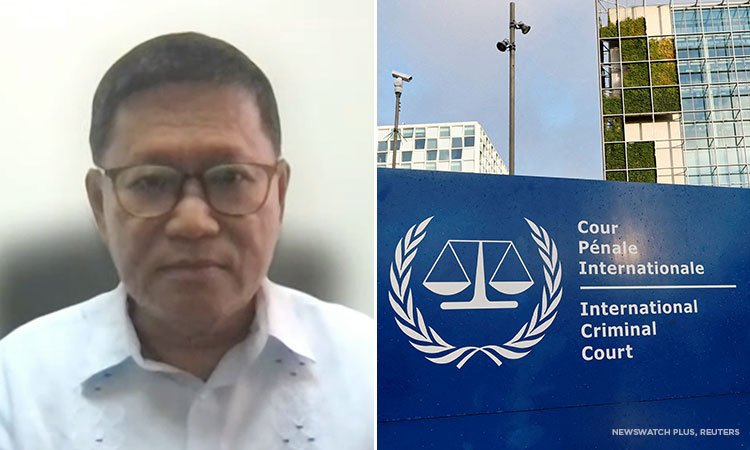

Metro Manila, Philippines – A reversal of the International Criminal Court (ICC) decision denying former Philippine President Rodrigo Duterte’s request for interim release is “very difficult,” said ICC-accredited lawyer Joel Butuyan, who represents some of the families of drug war victims.
Speaking on ‘The Newsmaker,’ Butuyan said the ICC Pre-Trial Chamber’s ruling rests on “solid evidence,” much of which came from Duterte’s own family and allies.“I think it’s difficult because the evidence itself came from his own relatives,” Butuyan said. “It’s hard to take that back. I think they’re just dragging the issue. The decision is very solid.”The ICC Pre-Trial Chamber denied Duterte’s request for interim release on Oct. 10, citing three main risks: that he could flee, influence witnesses, or encourage the continuation of crimes under investigation. Judges also cited public statements by his daughter, Vice President Sara Duterte, who questioned the court’s legitimacy and suggested freeing her father.Butuyan said the family’s repeated claims that the former president was “kidnapped” by the ICC and the vice president’s public remarks “hurt Duterte’s case.”Davao 1st district Rep. Paolo “Pulong” Duterte, the former president’s son, called the ICC decision “a gross and disgraceful miscarriage of justice” and “political theater.”Butuyan said the Duterte family’s public statements and rallies in The Hague are political moves that could undermine their legal arguments.“Everything the Duterte camp is doing, even the rallies in The Hague, is political,” he said. “Those acts aren’t useful in judicial proceedings; they only serve political purposes.”
Appeal unlikely to prosper
Duterte’s lead counsel, Israeli lawyer Nicholas Kaufman, confirmed that an appeal had been filed, citing Duterte’s age and health. On the other hand, Butuyan said the ICC had already rejected those humanitarian arguments, noting that the former president has medical access while in custody.“The court was not convinced that those health arguments justify interim release,” Butuyan said. “It’s clear the judges see no serious medical condition that requires him to leave detention.”Reversals of detention decisions at the ICC are extremely rare. The court’s appeals chamber has upheld most pre-trial chamber rulings in past cases involving Congolese warlords Thomas Lubanga Dyilo and Bosco Ntaganda, as well as former Sudanese President Omar al-Bashir.In the Lubanga case, the appeals chamber affirmed the pre-Trial chamber’s 2006 decision to keep the accused detained, finding that proposed guarantees did not remove flight risk. In Ntaganda, similar appeals in 2015 and 2017 were dismissed for the same reason. And in the al-Bashir proceedings, appeals on jurisdiction and cooperation were rejected unless there was “clear legal error.”
What comes next
Butuyan said two pending petitions could define the next phase of Duterte’s case – one, on his alleged mental unfitness to stand trial, and another challenging the ICC jurisdiction after the Philippines withdrew from the Rome Statute in 2019.“I’m very confident that these will also be denied,” he said. “The interim release ruling already shows how the court is likely to decide on mental fitness and jurisdiction.”He added that the prosecution’s arguments against Duterte’s release hint at continuing investigations that may lead to additional indictments of other high-ranking officials.