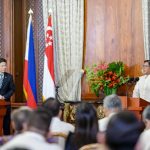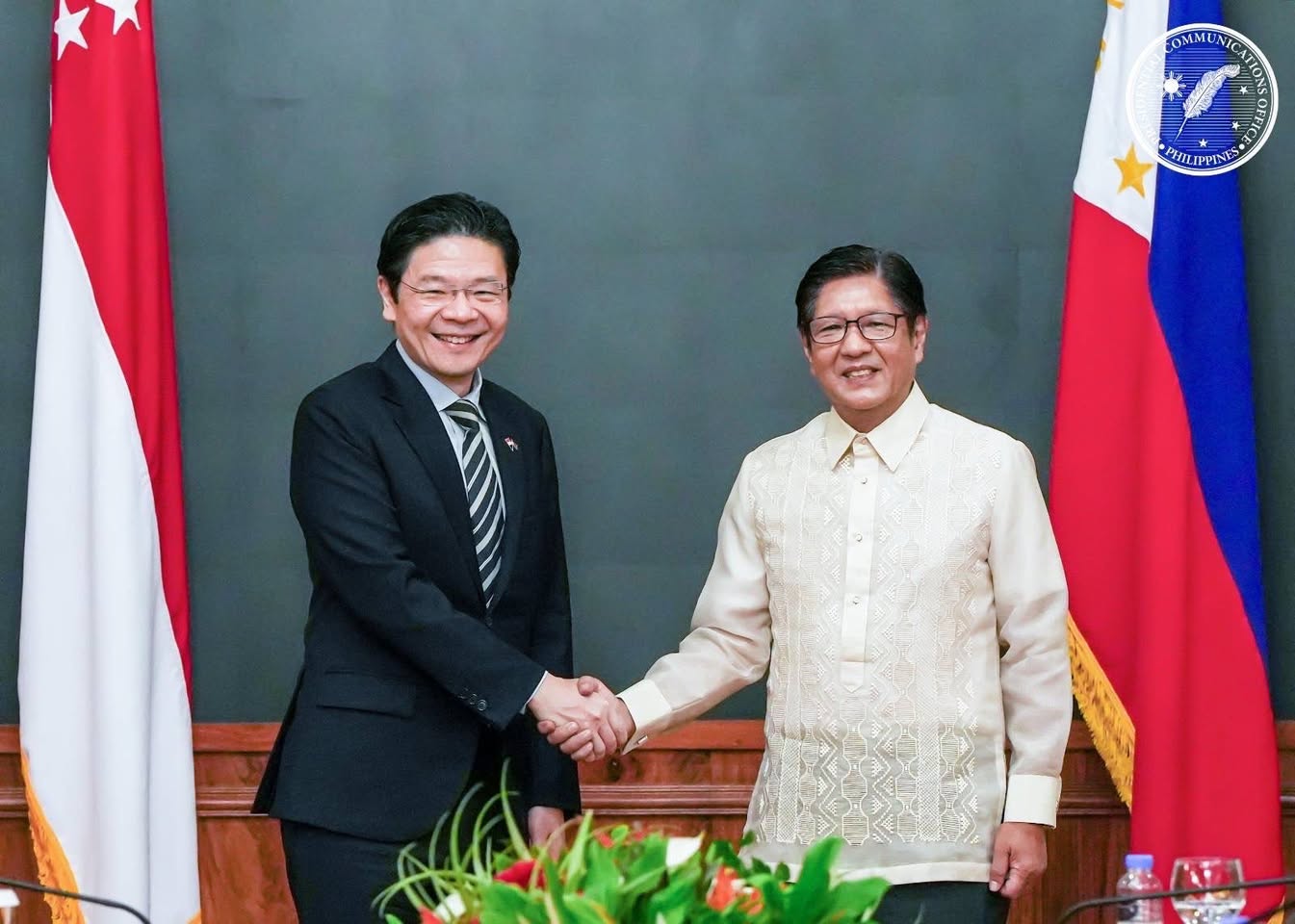

Metro Manila, Philippines – The Philippines and Singapore reaffirmed their strong bilateral ties and committed to expanding cooperation in key areas such as renewable energy, technology, climate action, and regional security during the official visit of Singaporean Prime Minister Lawrence Wong to Manila on Wednesday.
In a joint appearance at Malacañan Palace, President Ferdinand R. Marcos Jr. and Prime Minister Wong highlighted their shared vision for a resilient and inclusive ASEAN community, while agreeing to deepen strategic cooperation on climate resilience, sustainable development, and innovation.“The robust ties between the Philippines and Singapore and the steadfast camaraderie between Filipinos and Singaporeans are strong and remain strong,” Marcos said. This marks Wong’s first bilateral visit abroad since assuming office following a fresh mandate from Singapore’s electorate.Both leaders underscored the urgency of advancing renewable energy cooperation. Marcos emphasized the Philippines’ commitment to diversify its energy sources, inviting Singapore to scale up investments in clean energy technologies such as wind and solar.“We are seeking further achievements in our renewable energy sector, acknowledging how Singapore will remain a major partner in our aspiration to diversify our energy sources,” Marcos said.He also confirmed that both countries have begun negotiations on an implementing agreement for a carbon credits mechanism under Article 6.2 of the Paris Agreement. The deal aims to foster climate-friendly initiatives and boost green investments that benefit both local communities and national economies.Wong echoed this commitment, noting that Singaporean firms are actively exploring renewable projects in the Philippines and that their success would contribute to regional sustainability while generating economic opportunities.“Such projects can generate economic opportunities for the Philippines while supporting the Philippines’ renewable energy targets,” Wong said.Marcos also pointed to the Digital Leadership Program, a partnership between the Philippine Civil Service Commission and the National University of Singapore, as a key initiative to modernize public service through training and knowledge-sharing.The two leaders reaffirmed their shared commitment to ASEAN centrality, multilateralism, and regional stability. Both emphasized the importance of working toward the ASEAN Community Vision 2045—a roadmap for a resilient, people-centered, and dynamic Southeast Asia.“We exchanged views on what we can further do together to make ASEAN communities stronger and more resilient,” Marcos said, referencing their discussions following the recent ASEAN Summit in Kuala Lumpur.In line with the Philippines’ advocacy for a rules-based international order, President Marcos stressed the country’s stance in the West Philippine Sea, reiterating the importance of upholding international law and equity in regional maritime issues.