To sum up:
+ Enhanced defense cooperation: The RAA enhances defense cooperation and joint military exercises between the Philippines and Japan.
+ Strategic significance: Japan’s first Southeast Asian defense pact, the RAA was signed within a year of negotiations that began in November 2023.
+ Distinct from US VFA: Unlike the US VFA, the RAA with Japan focuses on procedural cooperation without establishing military bases.
Metro Manila, Philippines — The Philippines and Japan are enhancing defense cooperation through the fast-tracked Reciprocal Access Agreement (RAA).
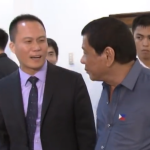
President Bongbong Marcos personally witnessed the signing of the landmark deal in Malacanang on July 8.
“Your presence here increases our confidence and the importance that the Japanese government puts on these extremely important agreements that we have. And I’m very glad that we have come to this day,” said Marcos during the courtesy call of Japanese Foreign Minister Yoko Kamikawa and Defense Minister Minoru Kihara. The military agreement is Japan’s first in Southeast Asia and third worldwide after similar deals with Australia and the United Kingdom.Official negotiations for the RAA began in November 2023, following the meeting of President Bongbong Marcos and Japanese Prime Minister Fumio Kishida. The pact was signed in less than a year.“There are no real challenges in principle. It’s just a question of getting the language down and how the logistical system works,” said Marcos in an interview with reporters in April.
What is the Reciprocal Access Agreement (RAA)?
The RAA is a security pact to significantly boost defense cooperation between Manila and Tokyo. It establishes a legal framework for facilitating mutually beneficial defense cooperation between the two parties.The agreement will establish procedures and guidelines for Philippine forces visiting Japan for training and joint exercises, and vice versa. It further aims to maintain regional peace and stability in the Indo-Pacific region.
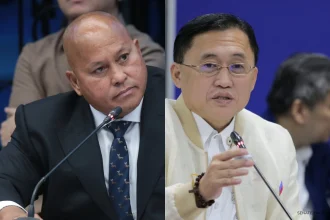
Defense Secretary Gibo Teodoro said the RAA allows interoperability between the Japan Self-Defense Forces and the Armed Forces of the Philippines.
“The way forward is for our armed forces to come up with mutually-acceptable confidence building measures between the troops themselves which include training, interoperability and exercises,” he added.
In a previous statement, Marcos said the RAA extends beyond defense cooperation, potentially enhancing the country’s capabilities in disaster preparedness, alleviation, and adjustment.
“The RAA covers visiting procedures, cost-sharing for visiting and receiving states, and possible tax exemptions for equipment used in these exchanges, thus eliminating cumbersome clearance procedures,” said Japanese Press Secretary Maki Kobayashi in a previous interview with CNN Philippines.
During the 70th anniversary celebration of the Japan Self-Defense Forces, Japanese Ambassador to the Philippines Endo Kazuya said Tokyo views the situation in the South China Sea with interest.“It’s only natural for Japan to express serious concern if and when China’s behavior in the South China Sea is dangerous,” Kazuya said.
Aaron Jed Rabena, a University of the Philippines lecturer and foreign relations expert, told NewsWatch Plus that Japan is a traditional security partner of the country.
“A VFA-like template with Japan will enhance our interoperability with the Japanese Self-Defense Forces, allowing us to learn from each other’s experiences,” Rabena said.
“It’s right for us to broaden our relations with countries like Japan,” he added.
Who led the negotiations for the RAA?
The Department of National Defense led the negotiations for the access agreement, in collaboration with the Department of Foreign Affairs and the Department of Justice.Foreign Affairs Secretary Enrique Manalo said in a joint briefing with Japanese officials in July that negotiators worked double time for the early conclusion of the RAA. “There were prior commitments and understandings that helped the negotiations to proceed, of course there are challenges but I think through the skill of our negotiators they were able to overcome these issues in a diplomatic way,” said Manalo. Once signed, the RAA needs to be ratified by the Philippine Senate and the Japanese parliament for the troop access pact to take effect.Former Senate President Migz Zubiri mentioned to CNN Philippines that the majority of senators support the agreement, which, he added, would enhance the country’s capabilities in security, disaster preparedness, alleviation, and adjustment.
Is Japan’s RAA similar to the Visiting Forces Agreement (VFA) with the US and Australia?
Teodoro said there are no significant differences between the RAA and other security pacts with the United States and Australia.
“It’s just tailored to conform to the domestic laws of each country,” the defense chief said.
Under the RAA, “the authorities of the Receiving State shall have criminal jurisdiction over the members of the Visiting Force and the Civilian Component with respect to offenses committed within the Receiving State and punishable by the law of the Receiving State.” But on issues relating to national security, the Sending State will have jurisdiction over erring personnel. “(The) Sending State shall have the right to exercise exclusive jurisdiction over the members of the Visiting Force and the Civilian Component with respect to offenses, including offenses relating to the security of the Sending State, punishable by the law of the Sending State but not by the law of the Receiving State,” the agreement stated. The RAA considers treason, sabotage, espionage or violation of any law relating to official secrets or secrets relating to the national defense as security offenses.
WIll the RAA lead to a mutual defense treaty with Japan?
Manalo said it will all depend on how the circumstances will develop. “The RAA is an important document because it enables the Philippines and Japan to have a framework on defense cooperation and I think whether we need to expand it to other areas it all depends on the situation,” said Manalo.
Will the RAA lead to militarization of the West Philippine Sea?
The National Security Council refutes the claims that the RAA will lead to the militarization of the West Philippine Sea.
“Definitely not, hindi ito magiging [this will not result in] militarization ng [of the] West Philippine Sea dahil unang una hindi maglalagay ng military facilities ang Japan dito [because in the first place Japan will no put up military facilities in the country],” NSC Deputy Director General Jonathan Malaya said.
“Nothing in this agreement shall be construed as providing a basis for a party to establish its military facilities in the territory of the other Party,” the RAA stated,Malaya said the agreement highlights the principle of consent from both sides. “The Sending State may submit to the Receiving State requests for access to and use of facilities, areas and related services necessary for the Visiting Force and the Civilian Component for the conduct of cooperative activities in the Receiving State. The Receiving State shall make reasonable efforts to address such requests. The conditions of such access and use shall be determined by the Receiving State through consultation with the Sending State,” the RAA stated. China insists that any exchanges or cooperation between countries should “not threaten regional peace and stability, target any third party, or harm the interests of any third party.”