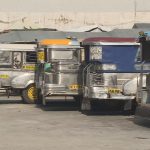
Metro Manila (CNN Philippines, January 22) — The Land Transportation Franchising and Regulatory Board (LTFRB) assured commuters there will be enough modes of transportation by Feb. 1, when unconsolidated public utility vehicles (PUV) will no longer be allowed to ply the road.
“We have two backup plans. On February 1 on the assumption na kulang na talaga (there is really shortage), there are what we call rescue vehicles. Number two, jeepneys plying the adjoining route… we will allow now those jeeps to ply that existing route na kinukulang (with few jeepneys) and will be issuing special permits for them,” LTFRB Chairman Teofilo Guadiz told CNN Philippines’ The Source on Monday.
He said the rescue vehicles will only be deployed for 1-2 weeks as he expects an adequate number of special permits to be issued by then.
Guadiz said they have also coordinated with local government units and the Metropolitan Manila Development Authority regarding the possible scenario on Feb. 1.
In a separate statement on Monday, a transport group said over 500 public utility vehicles (PUVs) routes lacking in consolidated entities in Metro Manila will cause a “transport disaster” to the public by Feb. 1, when the unconsolidated operation extension ends.
“There are 395 jeepney routes and 108 UV Express routes in the capital region that have no consolidated units. Additionally, there are 337 jeepney routes and 68 UV Express routes in Metro Manila that have less than 60% consolidation,” the Pagkakaisa ng mga Samahan ng Tsuper at Operator Nationwide (PISTON) said in a statement.
LTFRB data on Jan. 19 showed 300 routes that are yet to have consolidated transportation franchises even as the agency said these are “only short routes” that can be covered by PUVs traversing longer distances.
In December, authorities allowed unconsolidated drivers to operate until Jan. 31 to allow the LTFRB to follow due process for the noncompliant. Beginning next month, the jeepneys units will be considered illegal.
The LTFRB remains firm that it does not see any transport crisis specifically in the National Capital Region despite over 300 routes having no consolidated entities.
“In one route, we only look into the jeepneys, but remember in a certain route, there are buses, there are UVs, there are tricycles, there are TNVS going on those routes,” Guadiz said, adding there is actually a surplus in the number of PUVs since some routes have duplicated franchises that is why there is a need to trim down.