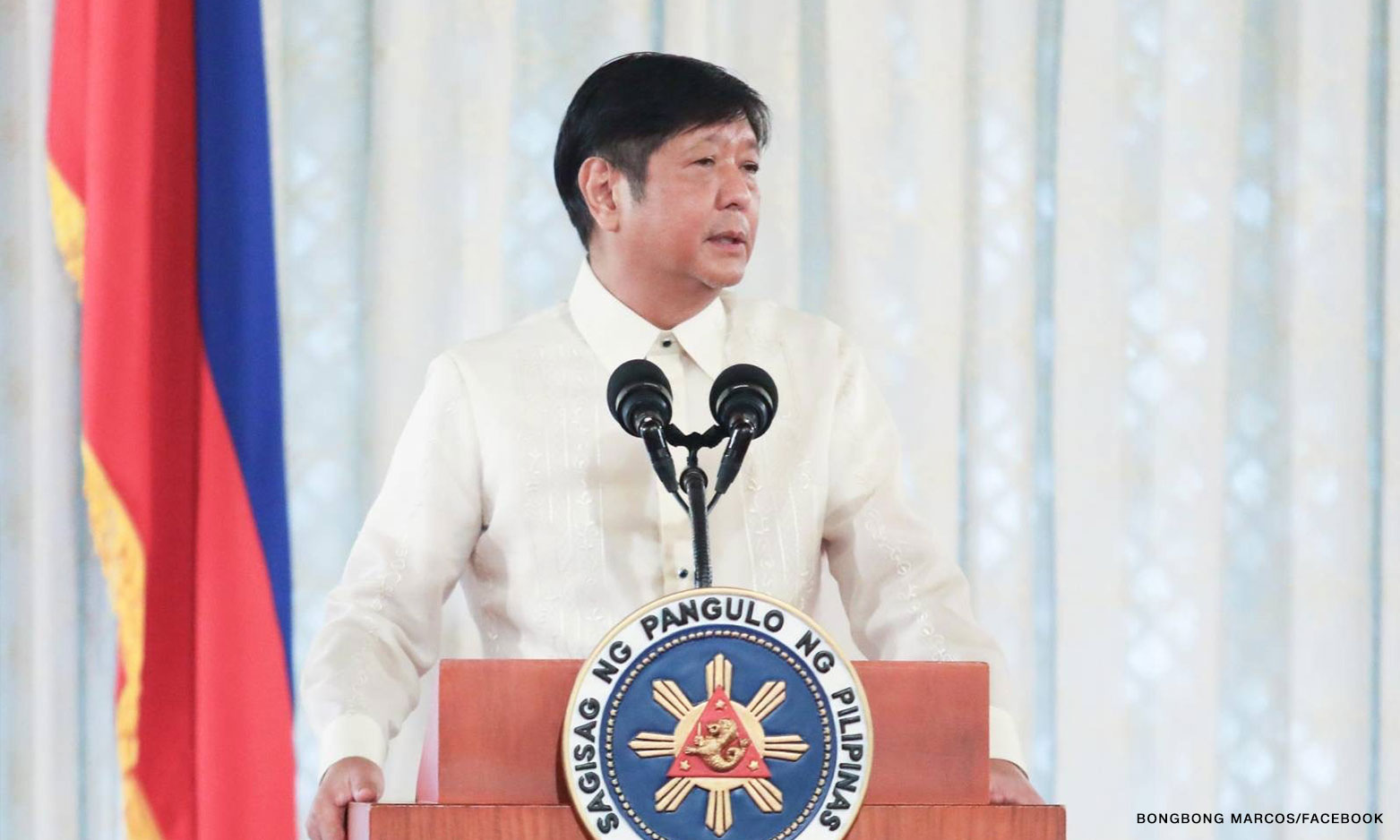

Metro Manila (CNN Philippines, December 25) — President Ferdinand Marcos Jr. has ordered national government agencies to study the operationalization of the devolution initiative and to come up with a list of functions that can be devolved to local government units (LGUs).
The Presidential Communications Office (PCO) on Monday said the funding and schedule of implementation will be determined after priority core functions and services to be devolved are determined.
“Should the LGUs lack the funds to implement the functions and services, the National Government should have a program to assist them,” the PCO quoted Marcos as saying during a Dec. 21 meeting.
He ordered the National Economic and Development Authority (NEDA) to conduct a sensitivity analysis to determine the benefits the government can get from its investments, which include the functions and services to be performed by LGUS.
He also instructed NEDA to recommend ways to better implement a phased-in devolution, which should include a timeline based on the LGUs’ capacity.
Marcos gave NEDA until the end of February 2024 to complete and submit its study to the Office of the President.
He also instructed the Department of the Interior and Local Government (DILG), in collaboration with the Union of Local Authorities of the Philippines, to list the basic functions and services that LGUs should be performing based on their Devolution Transition Plans, and of the national government.
The DILG was given until January 2024 to comply. In an interview with CNN Philippines, Interior Secretary Benhur Abalos said that the devolution transition plan has been years in the making.
He said that one of the problems of the initiative was that many functions of local governments provided for under the Local Government Code are “not really practical.”
“You must contend that you got fourth, fifth and sixth-class municipalities and even barangays na technically talagang hirap sila at di lang yun, maski sa pera hirap sila [that are technically struggling, even financially],” he explained.
Marcos’ directive comes almost two years after the landmark Mandanas ruling took effect in 2022, which commanded the national government to give provinces down to the barangay level a bigger slice of national taxes.
He said the DILG has been drawing up a comprehensive technical survey to ask local executives which of these functions they can feasibly deliver.
“We’ve been doing this for the last several months. It’s a very intricate issue, a complex one given that the Local Government Code was made in 1991, close to 30 years, and we’ve seen so many gaps that should be addressed,” Abalos said.
The Interior Secretary clarified that the move for devolution is not a push for federalism and “more of an amendment of the Local Government Code.”
Abalos also said it was unlikely that devolution would hurt plantilla positions in national government agencies.
“You can’t tell. They need also interventions, eh. We’re trying to align things so we cannot say na may mawawalan ng trabaho [that some will lose jobs],” he said.
He continued: “Hindi naman siguro, hindi naman [It’s unlikely]. We’re trying to align functions and practicality to have a more efficient and effective form of governance.”
He added that the DILG will reconcile the results of its local government survey with the NEDA’s findings in early 2024.
CNN Philippines’ senior correspondent Lois Calderon contributed to this report.