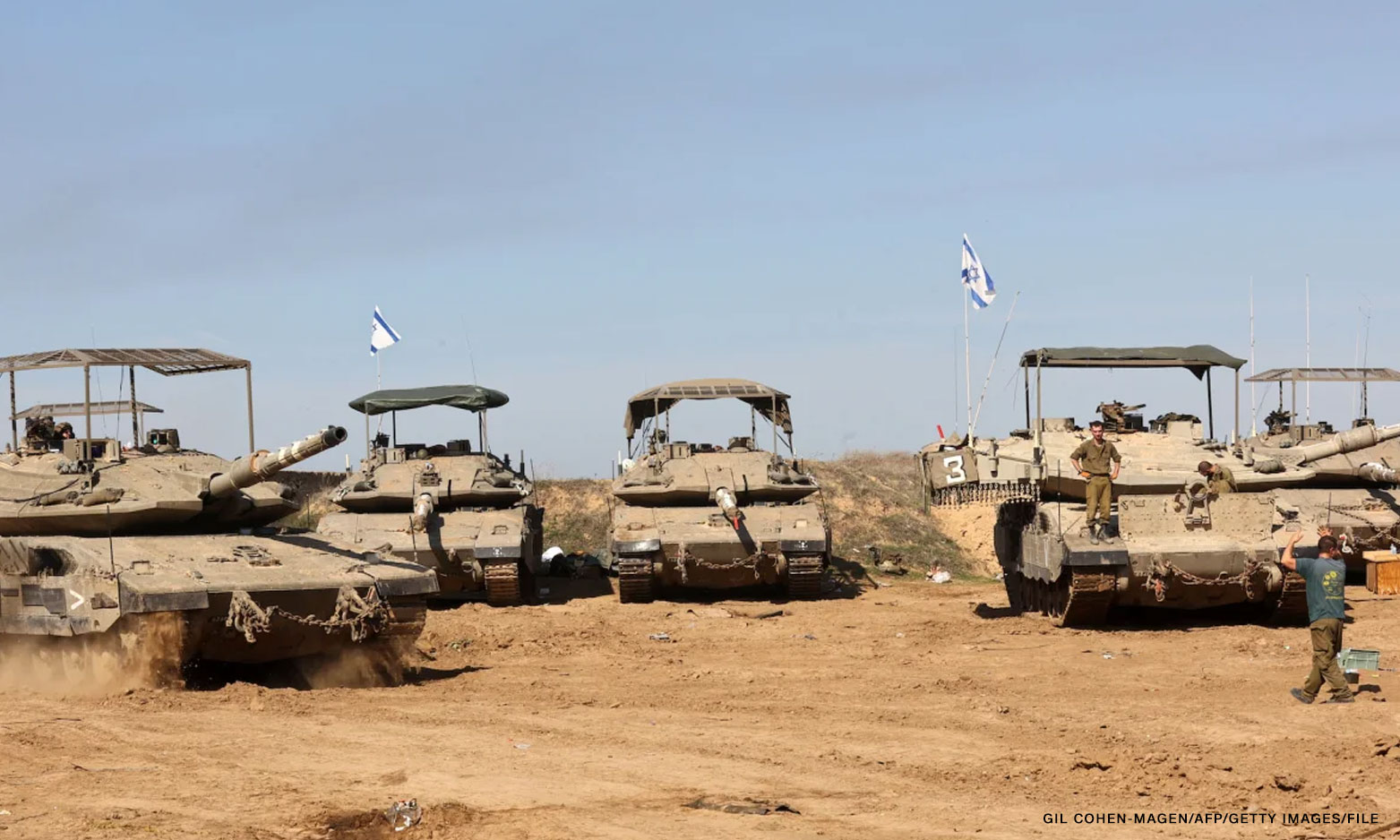

(CNN) — Deadly fighting broke out across Gaza on Friday as Israel’s military resumed combat operations after the temporary truce with Hamas that had paved the way for a week of hostage releases broke down.
Smoke could be seen billowing across parts of the densely populated enclave as Israel’s military declared it was once again “out to destroy” the group.
Israeli strikes resumed in areas across Gaza and military vehicles were firing in the northwest, minutes after the truce expired on Friday, according to a statement from the Hamas-control Ministry of Interior in Gaza.
In a statement released from his office, Israeli Prime Minister Benjamin Netanyahu said fighting resumed against Hamas after the militant group broke the outline of the truce and “didn’t respect its obligation to release today all the abducted women and launched rockets towards the citizens of Israel.”
Netanyahu his government would “accomplish the targets of the fighting,” which included the release of hostages, “to liquidate Hamas” and to ensure the citizens of Israel are never again threatened by an attack from Gaza.
The Hamas-controlled Government Media Office blamed the US and the international community for the resumption of fighting in Gaza.
The Ministry said that America and the international community “bears responsibility for the crimes of the ‘Israeli’ occupation and the continuation of the brutal war against civilians, children and women in the Gaza Strip.”
The statement added that Palestinians had a right to defend themselves “by all means” and to establish a Palestinian state with Jerusalem as its capital.
If the truce is now permanently broken, the resumption in fighting could reignite a festering conflict that has wrought devastation to Gaza and triggered a humanitarian catastrophe that was described by the UN Secretary-General as “a crisis of humanity.”
The brief pause in hostilities allowed for more than 2,700 trucks carrying thousands of tons of desperately needed aid to cross from Egypt into Gaza since October 21, according to an Egyptian official. But even that was completely inadequate to meet the needs of the more than two million people in Gaza – many of whom are displaced, aid agencies said.
Renewed fighting threatens once again to shut off that one supply line into Gaza – where residents were already struggling to find shelter, food and clean water while under constant bombardment from Israeli airstrikes.
Hours before the latest fighting erupted, the United States pressured Israel to shield Palestinian civilians in one of the most significant diplomatic moves yet in the more than 50-day conflict.
Secretary of State Antony Blinken laid out American requirements in private talks in Jerusalem with Netanyahu and his war cabinet. But he also made the Biden administration approach clear in unmistakable language in public.
“I underscored the imperative of the United States that the massive loss of civilian life and displacement of the scale that we saw in northern Gaza not be repeated in the south,” Blinken said in a televised press conference in Tel Aviv.
End of brief respite
Israel had repeatedly stated it would resume its military assault in Gaza if Hamas could not produce 10 hostages for each extra day of pause. As the 7 a.m. local time deadline (midnight ET) passed, the hostilities resumed almost immediately.
The hard-negotiated temporary truce, which began last Friday, was extended by two days following the release of some captives held by Hamas. An agreement to extend to a seventh day came down to the wire on Thursday.
It marked the first major diplomatic breakthrough in the latest conflict which began when Hamas gunmen stormed into Israel on October 7, killing some 1,200 people, mostly civilians, and seizing more than 200 hostages, the deadliest such attack faced by the country since its 1948 founding.
The truce brought temporary respite to the besieged enclave of Gaza, which had been relentlessly pounded by Israel’s military since the Hamas attack.
Since October 7, more than 14,800 people, including 6,000 children, have been killed in Gaza, according to the Palestinian Ministry of Health in the West Bank, which draws its data from Hamas-run health authorities in the Strip.
According to a spokesperson for the Hamas-controlled Ministry of Health, 32 people had been killed in Gaza and dozens injured by Israeli strikes on Friday.
As the truce expiration loomed, both Israel and Hamas indicated they were prepared for fighting to resume.
“We should be prepared for a quick transition into full scale fighting at any point, today, tomorrow, at any moment. As soon as we maximize the move to return hostages we will resume fierce fighting across the whole Gaza Strip,” Israeli Defense Minister Yoav Gallant said Thursday.
Hamas’ armed wing on Thursday also told their forces to “remain on high combat readiness” in the final hours of the truce, the Al-Qassam Brigades said on Telegram.
Egyptian and Qatari negotiators had been pushing to extend the pause in fighting in Gaza for an extra two days to facilitate the release of further hostages and Palestinian prisoners, and to allow more aid into the strip, according to Egypt’s State Information Service.
But negotiators warned that continuing to extend the truce into an eighth day could be challenging. The previous day, Hamas had claimed until the last minute that it was having trouble locating 10 women and child hostages — a condition that Israel insisted must be met — to extend the truce.
According to a source briefed on the talks, negotiations are still ongoing with Qatari and Egyptian mediators despite the resumption of Israeli airstrikes on Gaza.
A member of Israel’s parliament told CNN the government would be willing to discuss a different framework for the release of men and soldiers held by the militant group — so long as the hostage releases continue.
“Hamas wants to set new terms for the men and the Israeli soldiers,” Danny Danon said, adding that “we are close to the end” of the current phase of the deal.
“They want a different equation. Now we have one Israeli hostage for three Palestinian prisoners, and they want to try and change that ratio. As long as they can provide hostages, we are willing to talk,” he said.
In the seven-day pause in fighting, 80 Israelis — primarily women and children and some of whom are dual citizens — and another 24 foreign nationals have been released. Another Israeli dual citizen was also freed outside of the agreed-upon deal.
As of Thursday, 240 Palestinians had been freed from Israeli prisons – mainly women and minors. Under the terms of the truce deal, Israel has to free three Palestinians for every Israeli hostage released.
This story was first published on CNN.com, “Fresh fighting erupts as Israel resumes Gaza combat operations following hostage truce collapse”