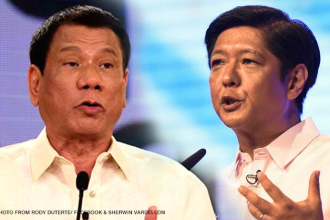

Metro Manila (CNN Philippines, October 16) — President Ferdinand Marcos Jr. on Monday said his government stands solidly behind the country’s cooperatives, adding that they play a crucial role in the country’s food security.
In a speech during the 2023 National Cooperative Day held in Malacañang, Marcos said he strongly advocated for cooperatives even when he was a young lawmaker. He said, one of his first projects when he became the representative of the 2nd District of Ilocos Norte was to ask cooperatives to help teachers who experienced delays in receiving their salaries.
As a congressman, Marcos also said he worked to establish cooperatives to help farmers.
Strong, well-funded, well-managed cooperatives will help farmers thrive, Marcos said. Cooperative movements can unite all cooperatives to form a bigger body, which can help in making the farming process easier, lower cost of production, and yield better
“Cooperative movement is very closely related to agriculture, for the simple reason that we need to consolidate our farmers,” Marcos said.
He added one farmer may find it difficult to have his concerns heard, but a cooperative made up of many farmers will have a stronger voice.
“Pag marami-rami na yan, kahit na yung congressman ninyo, yung governor ninyo, yung mayor ninyo makikinig na sa inyo dahil marami na ang cooperative, the cooperative has some influence,” he said.
[Translation: When there are more people, even your congressman, your governor, your mayor will listen because there are more cooperatives and they have some influence.]
The president said the country’s agricultural operations must be strengthened and that cooperatives play an integral role in this.
“I look forward to the continued partnership between the cooperative movement, and even the heightened participation in executing these programs including those that concern food, transportation, security, financial literacy, and social services,” he said.
Labor costs, calamities drive up prices
The president also mentioned several factors that bring up the prices of rice, among them high labor costs, the price of the grain overseas, and calamities that affect production.
Marcos said the cost of production locally was double the labor cost per hectare compared to Vietnam, Thailand and Indonesia.
Mechanization of the sector, with the help of cooperatives, would help bring down costs, he added.
At a separate event, Marcos said high prices of the grain overseas, calamities, and criminal activities such as hoarding and illegal importation affect rice production in the country.
“Seeing the complexities of the situation, we strive to approach it in a comprehensive and holistic way based on science,” he added.
Marcos said the country is also working with international institutions and foreign governments to ensure a steady supply of rice as well as to enhance the sharing of crucial developments and strategies.
The president encouraged government agencies and the private sector to continue collaborating with the International Rice Research Institute and its partners to identify creative solutions and mechanisms to improve the rice industry.
CNN Philippines’ Pia Garcia and Rex Remitio contributed to this story.