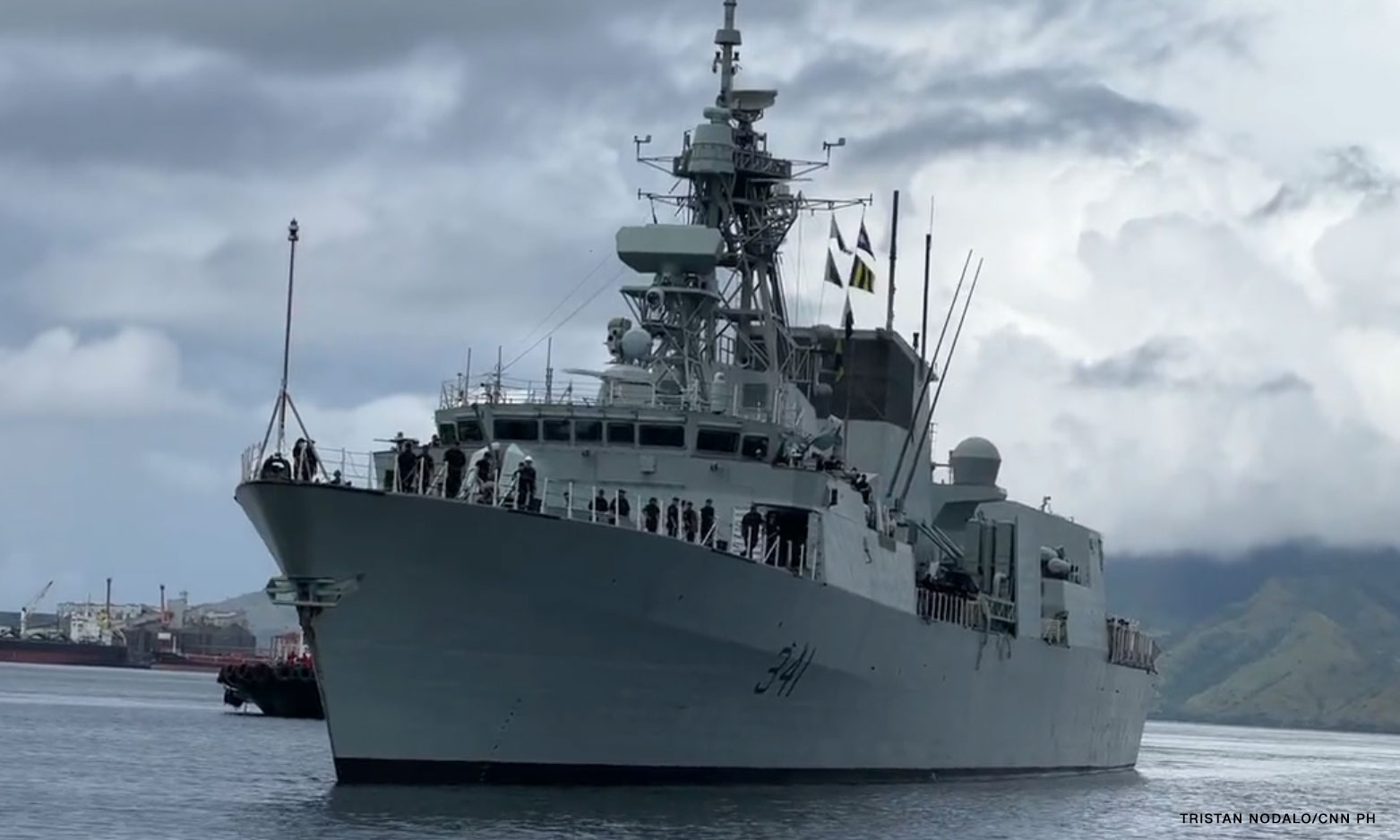

Metro Manila (CNN Philippines, September 14) — The Royal Canadian Navy warship, His Majesty’s Canadian Ship (HMCS) Ottawa, arrived in the Philippines on Thursday.
The arrival of the ship began the series of visits from Canadian vessels this month. The guided-missile frigate will be staying in the Philippines until Sept. 19.
HMCS Ottawa came from Japan and traversed to Taiwan Strait before proceeding to Subic Bay in Zambales.
“Our transit to the Taiwan strait and the Indo-Pacific shows that we stand with rules-based international order and this is a physical manifestation of what we believe in,” said Samuel Patchell, commanding officer of HMCS Ottawa.
Patchell said they didn’t experience any significant encounters or challenges during their travel across Taiwan Strait. They only spotted a Chinese Navy ship but both sides were professional in conducting navigational activities.
“No significant encounters when we were in transit from the 14th of August, nothing of significance,” said Patchell.
Two more Canadian vessels are expected to come to the Philippines: MV Asterix, an auxiliary supply vessel, and the HMCS Vancouver, which will arrive in Manila at the end of the month.
Canada offers ‘dark vessel detection’ satellite technology
Apart from increasing military presence in the region, Canada is in final negotiations over a satellite technology called “Dark Vessel Detection.”
“It is a space-based platform that provides situational awareness and real time update to officials of who is in your territorial waters, it’s a very significant, very advanced technology, multi-layered and multi-faceted,” said Canadian Ambassador to the Philippines David Hartman.
The technology will boost the capability of maritime officials in detecting foreign vessels even if they turn off their automatic identification system transponders.
Hartman also said Ottawa is closely monitoring the developments in the West Philippine Sea.
“Canada has been unequivocal in our condemnation in the activities taking place in the West Philippine Sea. The [2016 Arbitral Award] of UNCLOS is binding and final,” he added.