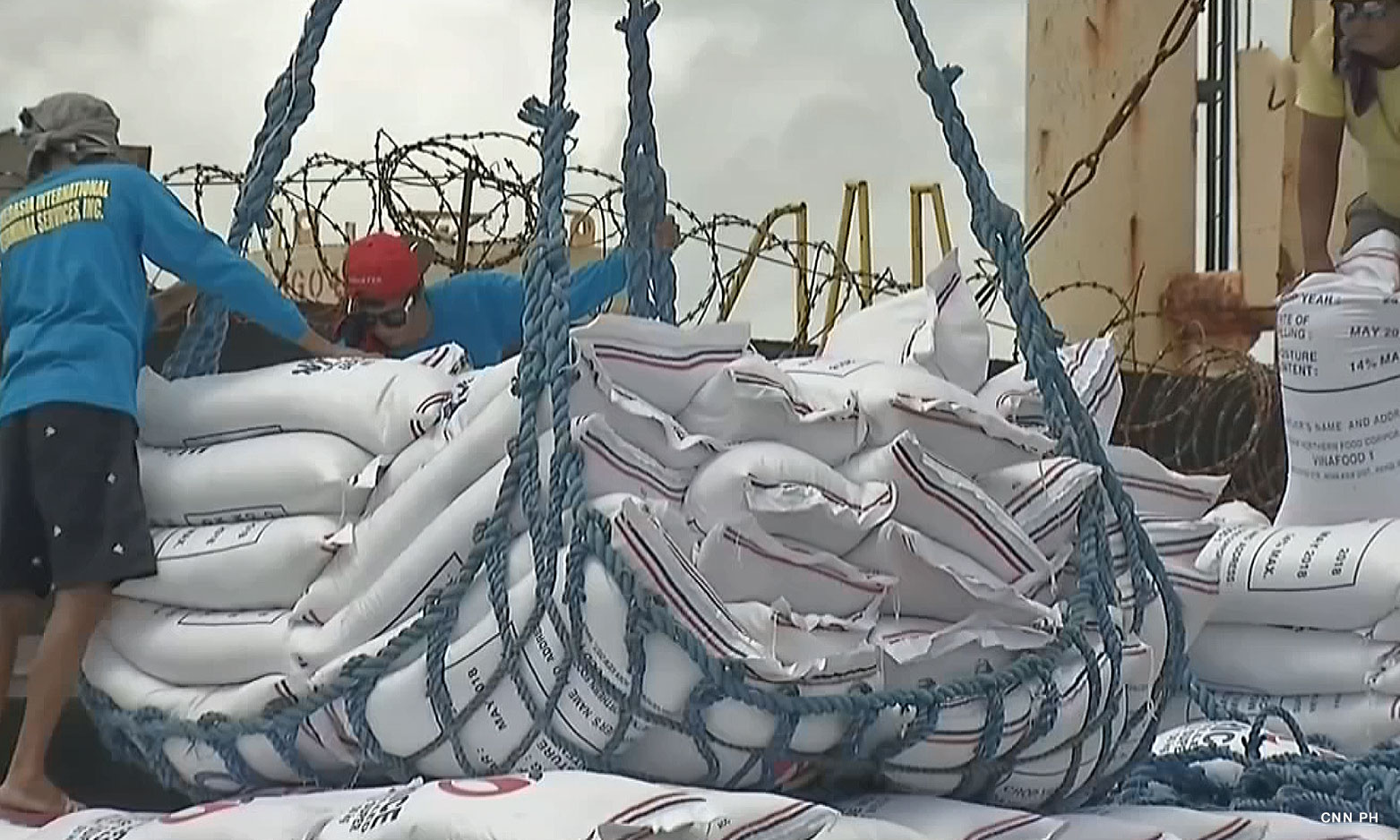

Metro Manila (CNN Philippines, September 11) – The proposal to temporarily cut tariff rates on imported rice from 35% to 10% or even zero drew criticisms from lawmakers on Monday.
Lower rates will not benefit farmers and would only worsen the problems of the country’s rice industry, said Rep. Arlene Brosas, assistant House of Representatives’ minority leader and Gabriela Women’s Party.
“Four years ago, the government promised that the RA 11203 or Rice Liberalization Law would improve farmers’ productivity and food security. But now, with the current state of our rice industry, import dependency and the trade deficit worsened, while rice self-sufficiency and farm gate prices plummeted,” Rep. Brosas in a statement.
Brosas said that the proposal of the Department of Finance (DOF) was another nail in the coffin of the dwindling local rice industry. She said farmers are asking for production subsidies to lower the cost of rice, and bringing down the tariff rates would only benefit the big cartels.
READ: DOF proposes zero tariff on rice imports to curb grain prices
https://www.cnnphilippines.com/business/2023/9/11/dof-zero-tariff-rice-imports.html
In another statement, Senator Risa Hontiveros said Secretary Diokno’s reaction to the price ceiling on rice was not surprising anymore and it seemed like the administration was making it appear that the industry was in “emergency” and “rice calamity,” so the tarrif adjustment can be implemented.
Diokno earlier said the economic team was “surprised” and not consulted when President Ferdinand Marcos Jr. ordered a price ceiling on rice.
READ: Economic team ‘surprised’ by rice price cap – Diokno
“The NFA’s (National Food Authority) announcement of having less than two days of buffer stock, despite having the budget to buy more, along with actions like shutting down alleged hoarders, implementing rice price caps, and providing subsidies to retailers, all appear to have been strategically planned to generate chaos in the industry, dominate the news for an extended period, and get the public ready for more emergency measures,” Hontiveros said.
“Dahil kung pamumukhaing may “emergency” at “rice calamity,” pinapayagan ng Rice Tariffication Law ang government-to-government deal. Sana mali ang akala ko but such G-to-G deals in the past have been the favored options for people who were seeking to make money out of the deals,” she added.
[Translation: Because if there appears to be an “emergency” and “rice calamity”, the Rice Tariffication Law allows a government-to-government deal. I hope I’m wrong but such G-to-G deals in the past have been the favored options for people who were seeking to make money out of the deals.]
For his part, Rep. Joey Sarte Salceda suggested in a statement on Monday that lowering the tariff on rice imports should be accompanied by “aggressive palay buying operations” by the National Food Authority (NFA) to ensure that it will not depress farmgate prices.
“The long-term and sustainable solution is still to produce more rice domestically, in a way that is resilient to climate risks. Actually, the PBBM administration has achieved a 3% growth in palay harvest for 2023,” Salcedo said.
“We are poised for a bumper crop-year this year. We need to reduce our dependency on rice imports to protect us from rice trade volatility,” he concluded.
Hontiveros added that implementing zero-tariff rice importation at the start of the harvest period would be a disaster for local farmers.