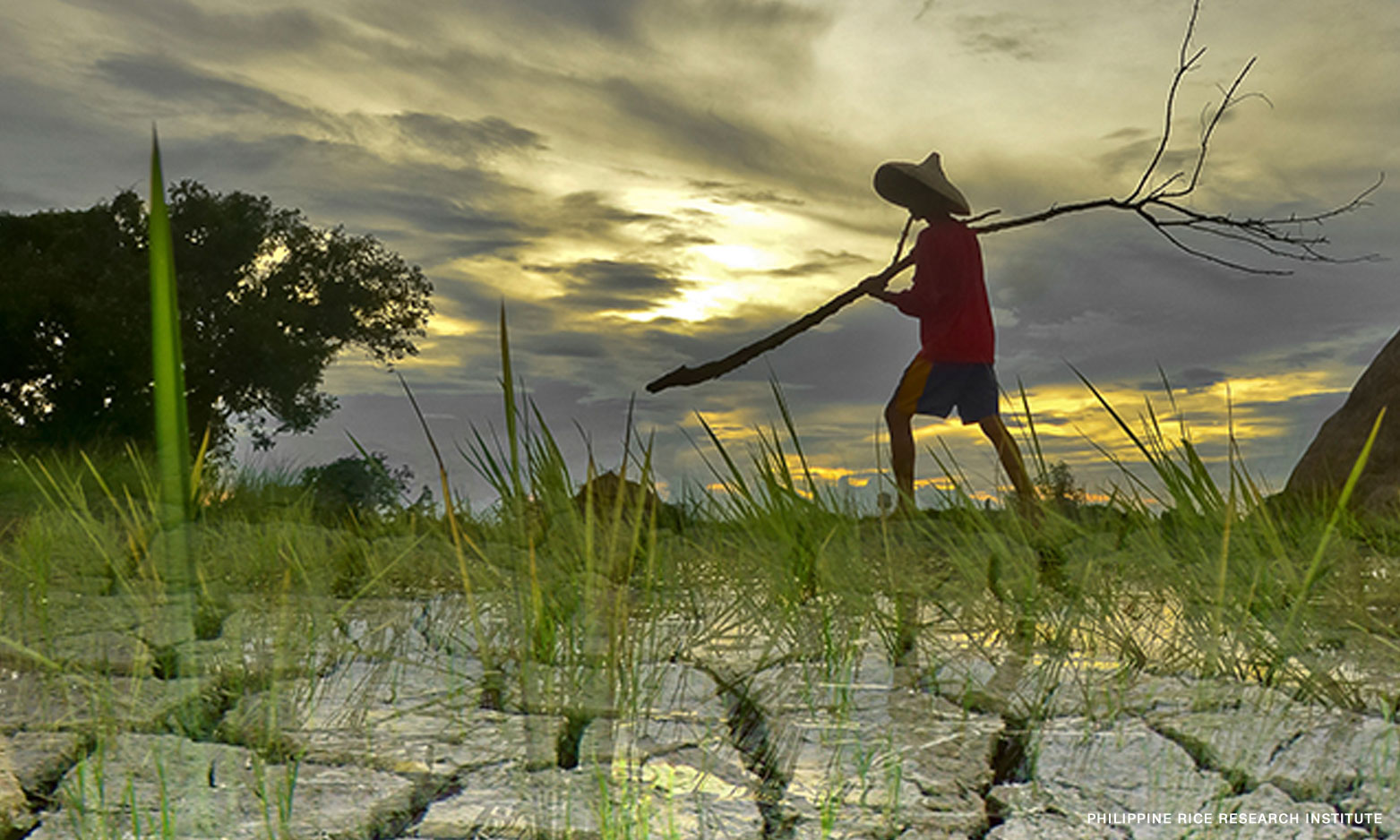

Metro Manila (CNN Philippines, August 30) — A prolonged El Niño will unlikely result in a declaration of a state of calamity to control runaway rice-and-food inflation, disaster management officials said Tuesday.
“The impact of El Nino will be area specific… I doubt we will come to a point where a national state of calamity will be declared but we are prepared for that,” Department of the Interior and Local Government Director Edgar Allan Tabell said.
The Philippine Atmospheric, Geophysical and Astronomical Services Administration (PAGASA) said the El Niño could peak in the last quarter of this year and drag on until February next year.
“Hindi ibig sabihin after February, tapos na ang El Niño. May residual effect kaya mahaba-haba ang dapat paghandaan,” Office of Civil Defense (OCD) Undersecretary and Administrator Ariel Nepomuceno said.
[Translation: It does not mean that after February, the El Niño is over. There is a residual effect so you have to prepare for a long time.]
As of Aug. 21, PAGASA said the dry spell already reached 10 areas – including Aklan, Capiz, and Mindanao.
It added that at least 40 provinces and cities will be hardest hit, including rice farms and corn fields.
But the so-called “El Niño Team” convened by the OCD could not offer exact data on the expected agricultural losses, especially on rice output.
The OCD said unfavorable weather conditions in the past months – with Super Typhoon Goring’s impact not yet counted – already cut rice production by 0.6% of annual grain output or 67-thousand metric tons.