
Metro Manila (CNN Philippines, June 29) — The Philippines is seen as a model when it comes to migration policies as remittances from around the world continue to grow even with the impact of COVID-19 pandemic, the International Labour Organization (ILO) said on Wednesday.
In a one-on-one interview with CNN Philippines, ILO Director General Gilbert Houngbo said Manila is doing well in addressing the needs of overseas Filipino workers (OFWs) compared to other countries.
“The OFWs know their major contribution to the economy so this has been one of the take away from my visit and the government is doing fairly well I must say compared to other sending countries that we are working with,” said Houngbo.
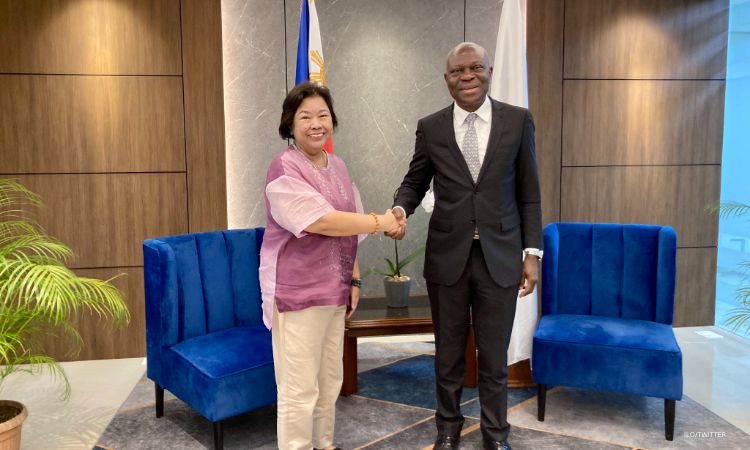
The ILO chief met with Migrant Workers Secretary Susan Ople and with the Department of Migrant Workers (DMW) team to discuss the support the Philippine government is giving to OFWs.
“There are a lot of positive things that the country is doing that can help other countries,” the ILO chief said.
In an interview with CNN Philippines’ Politics as Usual, Ople said the country is also becoming the “model” of other nations in terms of its migration governance.
“Actually, ahead tayo of the curve eh kaya tayo nagiging modelo sa migration governance. Kasi tinitignan nila ‘yung protective mechanisms natin,” she said.
“Maraming requests galing sa ibang bansa, gusto nila magpadala ng teams dito para malaman kung paano natin pinoproteksyunan ang ating OFWs. We should be very proud of that,” she added.
[Translation: Actually, we are ahead of the curve which is why we are being viewed as a model in migration governance. They look at our protective mechanisms. There are a lot of requests from other countries, they want to send teams here to learn how we protect our OFWs. We should be very proud of that.]
Healthcare workers leaving PH a ‘major issue’
Despite the positive review, the ILO also acknowledged that more healthcare workers want to work abroad than in the Philippines due to better compensation and benefits.
“It’s a major issue,” said Houngbo when asked on how to strike a balance between wanting to keep the healthcare workers in the country and yet cannot compete with what is being offered in other countries.
The ILO official said that there is what we call “circular migration.”
“How do we organize economic migration in a way that migrants go to other countries not only to earn a living but we also ensure that their rights are protected, labor rights are protected and human rights are protected and their remittances will be sent back home and some of them could come back with the experience that they have acquired and contribute to the Development of their countries,” Houngbo explained.
“It’s circular migration, some may stay abroad, some may also come back and contribute,” he added.
The Philippines could also work together with countries that have existing bilateral labor agreement deals to come up with “win-win” solutions.
“The Philippines have a Memorandum of Understanding with other countries, so the government should start considering telling the receiving countries to contribute, to step up the number of nurses being trained in education so that there is a minimum that can remain and then some will be coming back. So circular migration is balancing that gap,” he added.