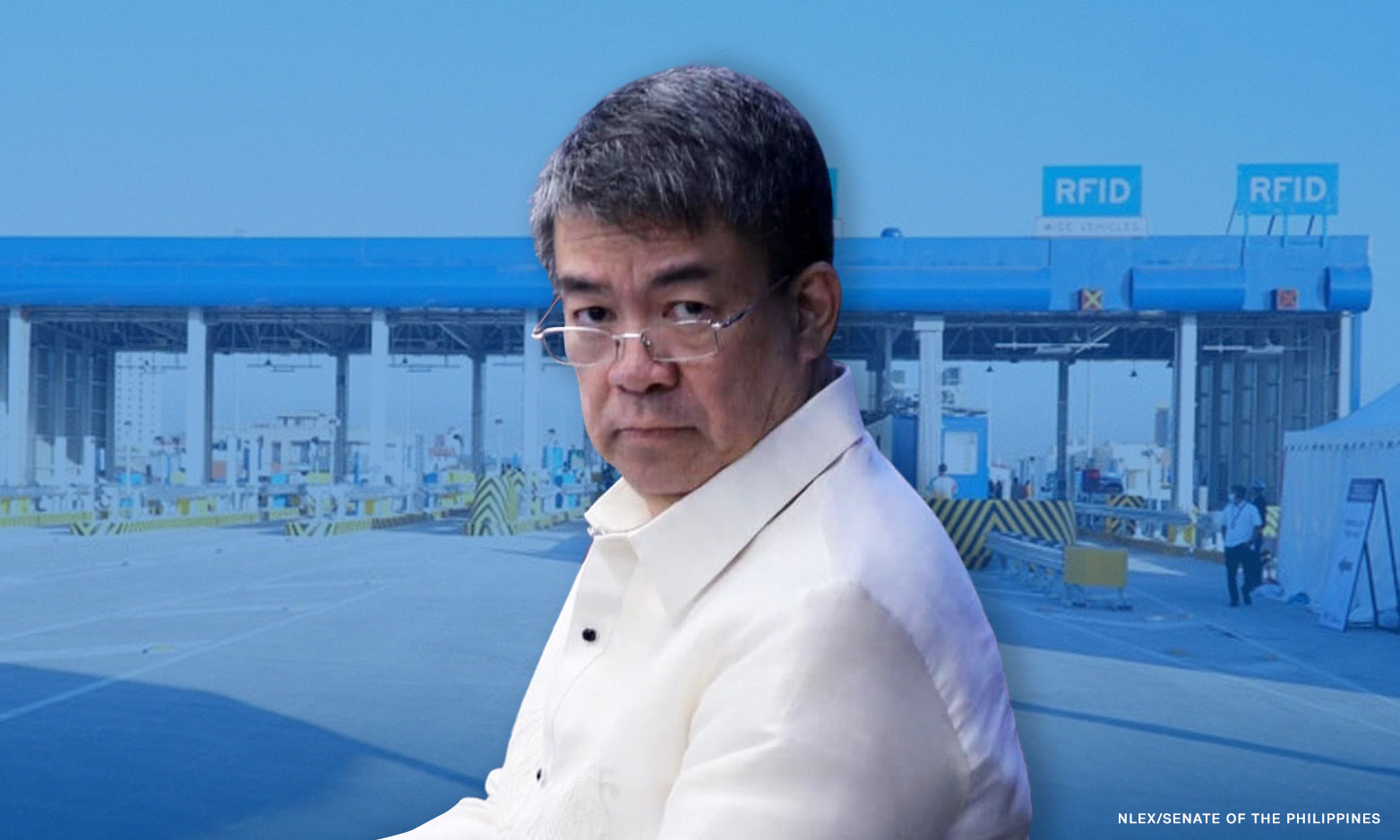

Metro Manila (CNN Philippines, June 13) – Senate Minority Leader “Koko” Pimentel urged the Toll Regulatory Board (TRB) and the North Luzon Express (NLEX) Corporation on Tuesday to halt the increases in toll fees, citing worsening traffic on the expressway.
“Any increase at this point would be unjustifiable and unfair to the motorists who have to deal with sometimes EDSA-like traffic on the expressway, specifically from Balintawak to Meycauayan,” Pimentel said in a statement.
“Bago sila humingi ng dagdag na bayad, ayusin muna nila ang trapik sa NLEX. I call on the management of NLEX to address this perennial traffic buildup on our major expressway,” Pimentel added.
[Translate: Before they [TRB and NLEX Corp.] ask for an increase, they should fix the traffic at NLEX. I call on the management of NLEX to address this perennial traffic buildup on our major expressway.]
Pimentel also said holding off the toll hike will ease the burden of the public who are dealing with inflation.
However, Finance Secretary Benjamin Diokno earlier said the toll fee increase must be implemented to make up for the authorized periodic adjustments due in previous years.
READ: Diokno on sharp rise in NLEX toll rate: Increase piled up due to ‘inaction’ of previous admins
The new toll rates will be implemented starting June 15.
Motorists traveling within the open system will now have to pay an additional ₱7 for Class 1 vehicles (regular cars and SUVs), ₱17 for Class 2 vehicles (buses and small trucks), and ₱19 for Class 3 vehicles (large trucks).
Those going through within the closed system will pay 36 centavos more per kilometer.
The open system is from the cities of Navotas, Valenzuela, and Caloocan to Marilao in Bulacan. The closed system covers the portion between Bocaue, Bulacan and Sta. Ines, Mabalacat City, Pampanga including Subic-Tipo.
NLEX also said those traveling end-to-end between Metro Manila and Mabalacat City will pay an additional ₱33 for Class 1, ₱81 for Class 2, and ₱98 for Class 3 vehicles.
Senator Grace Poe, meanwhile, urged the TRB to explain why the periodic adjustments are only being implemented this year.
“Maybe it is also high time that the government study dynamic pricing. We should not be charging high rates if customer satisfaction is low or performance benchmarks are not met,” Poe said in a statement.