
Metro Manila (CNN Philippines, June 11) — Mayon Volcano emitted an average of 1,205 tons of harmful sulfur dioxide on Saturday which is three times the emission last Friday, the Philippine Institute of Volcanology and Seismology (Phivolcs) reported.
“We recorded 1,205 tons per day of sulfur dioxide emission, which is three times the 417 tons [per day] of [sulfur dioxide] that we measured yesterday (Friday),” Phivolcs Director Teresito Bacolcol told CNN Philippines’ Newsroom Weekend on Saturday.
“Considering that the background level of Mayon is only 500 tons per day of sulfur dioxide emission, itong [this] 1,205 tons of sulfur dioxide is quite significant,” he added.
Sulfur dioxide affects the lungs and may result in irritation in the nose and throat, breathing difficulties, and severe airway obstructions, according to the US Centers for Disease Control and Prevention (CDC).
Mayon Volcano is on Alert Level 3 since noon of June 8. It has been exhibiting signs of intensified unrest or magmatic unrest. Phivolcs explained the current activity is already considered an eruption.
In the past 24 hours, Mayon had one volcanic earthquake and 177 rockfall events that placed lava debris in gullies within 700 meters from the summit crater, according to the 8 a.m. bulletin of Phivolcs on Sunday.
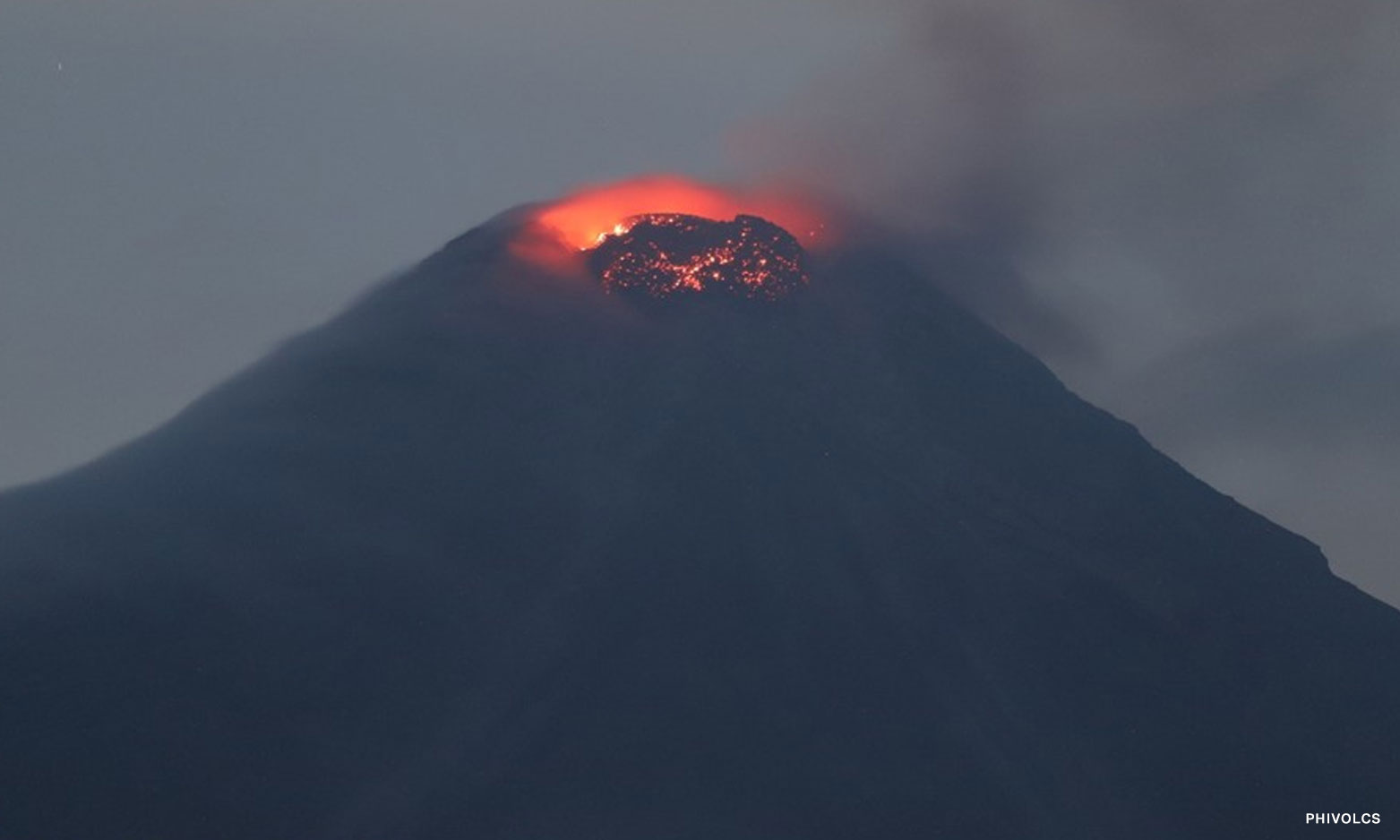
“Fair crater glow or ‘banaag’ and incandescent rockfall shed from new fluidal lava at the summit of Mayon Volcano was observed last night (Saturday),” the agency added.
Bacolcol said if more earthquakes are logged and there’s a low emission of sulfur dioxide, that would mean the hazardous gas is trapped inside the lava dome.
“Kapag walang [If there’s no] emission of sulfur dioxide, there is an increased activity, it means there is a constant supply of magma and if this sulfur dioxide would be suddenly released, this can result in explosive activity,” he explained.
Since July 5, there have been only three volcanic earthquakes, he added.
State volcanologists also warned authorities against pyroclastic density currents, lahars, and sediment-laden streamflows.
Pyroclastic density currents are mixtures of fragmented volcanic particles, hot gases, and ash that rush down the volcanic slopes or rapidly outward from a source vent at high speeds, Phivolcs explained.
“Heavy rainfall could generate channel-confined lahars and sediment-laden streamflows in channels where PDC deposits were emplaced,” it added.
The province of Albay was placed under a state of calamity on Friday.
Evacuation efforts of families living within the 6-kilometer radius Permanent Danger Zone are ongoing.
RELATED: Albay to finish evacuation of residents from Mayon danger zone today