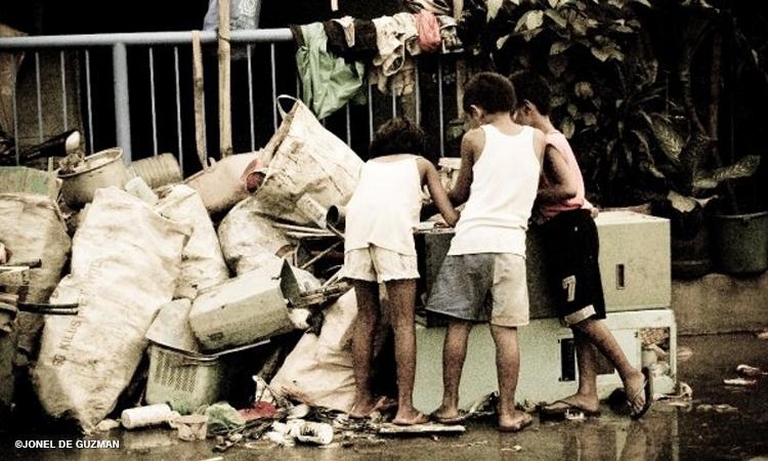

Metro Manila (CNN Philippines, May 8) — A recent survey by the Social Weather Stations (SWS) showed that over half of Filipino families considered themselves poor.
Conducted March 26-29, the poll showed that 51% of Filipino families considered themselves poor, 30% rated themselves as “borderline” (placing themselves on a line between poor and not poor), and 19% categorized themselves not poor.
The SWS noted the results of the March poll are similar to the results of its December 2022 survey that found 51% of Filipino families self-rated as poor, 31% said they were borderline, and 19% considered themselves not poor.
“The estimated numbers of Self-Rated Poor families are 14 million in March 2023 and 12.9 million in December 2022. To arrive at the estimated numbers of Self-Rated Poor families, the percentage of respondent households rating themselves as poor was applied to the Philippine Statistics Authority medium-population projections for 2023 and 2022, respectively,” the pollster explained.
Comparing the December 2022 and the March 2023 data, the SWS noted the latest number of self-rated poor families was due to the increases in the National Capital Region, which rose from 32% to 40%, and in Visayas, which jumped from 58% to 65%. It was combined with a decline in Balance Luzon, which fell from 49% to 43%, as well as a statistically steady trend in Mindanao, climbing from 59% to 62%.
For the data on borderline, the SWS said it “did not statistically change” in Metro Manila from 29% to 26%, in Balance Luzon from 30% to 32%, and in Mindanao from 30% to 33%. In the Visayas, meanwhile, it fell from 34% to 26%.
More families rated themselves not poor in Balance Luzon, which increased from 20% to 25%. It was the opposite in Metro Manila, which declined from 39% to 33% and in Mindanao from 11% to 6%. Data in Visayas remained at 9%.
The SWS also reported that in the last five quarters, the national median Self-Rated Poverty Threshold (SRP Threshold) stayed at ₱15,000, while the national median Self-Rated Poverty Gap (SRP Gap) rose from ₱5,000 in December 2022 to ₱6,000 in March 2023.
“The SRP Threshold, or the minimum monthly budget self-rated poor families say they need for home expenses in order not to consider themselves poor, has remained sluggish for several years despite considerable inflation. This indicates that poor families have been lowering their living standards, i.e., belt-tightening,” it explained.
“In the past, the median SRP Gap has generally been half of the median SRP Threshold. This means that average poor families lack about half of what they need to not consider themselves poor. An increase in the proportion of the median SRP Gap relative to the median SRP Threshold means a worsening in families’ budget for home expenses,” it added.
Per area, the median SRP Threshold in NCR increased from ₱15,000 in December 2022 to ₱20,000 in March 2023 while the median SRP Gap rose from ₱6,000 to ₱10,000.
For Balance Luzon, the median SRP Threshold remained at ₱15,000 while the median SRP Gap rose from ₱5,000 to P6,000.
In Visayas, the median SRP Threshold also stayed at ₱15,000 as well as the median SRP Gap that stayed at ₱7,000.
Mindanao also retained its levels, with the median SRP Threshold remaining at ₱10,000 while the median SRP Gap staying at ₱5,000
The March 2023 survey was conducted through face-to-face interviews of 1,200 adults nationwide. The sampling error margins are ±2.8% for national percentages, ±5.7% each for Metro Manila, Balance Luzon, Visayas, and Mindanao.